POETRY ON PLASTIC
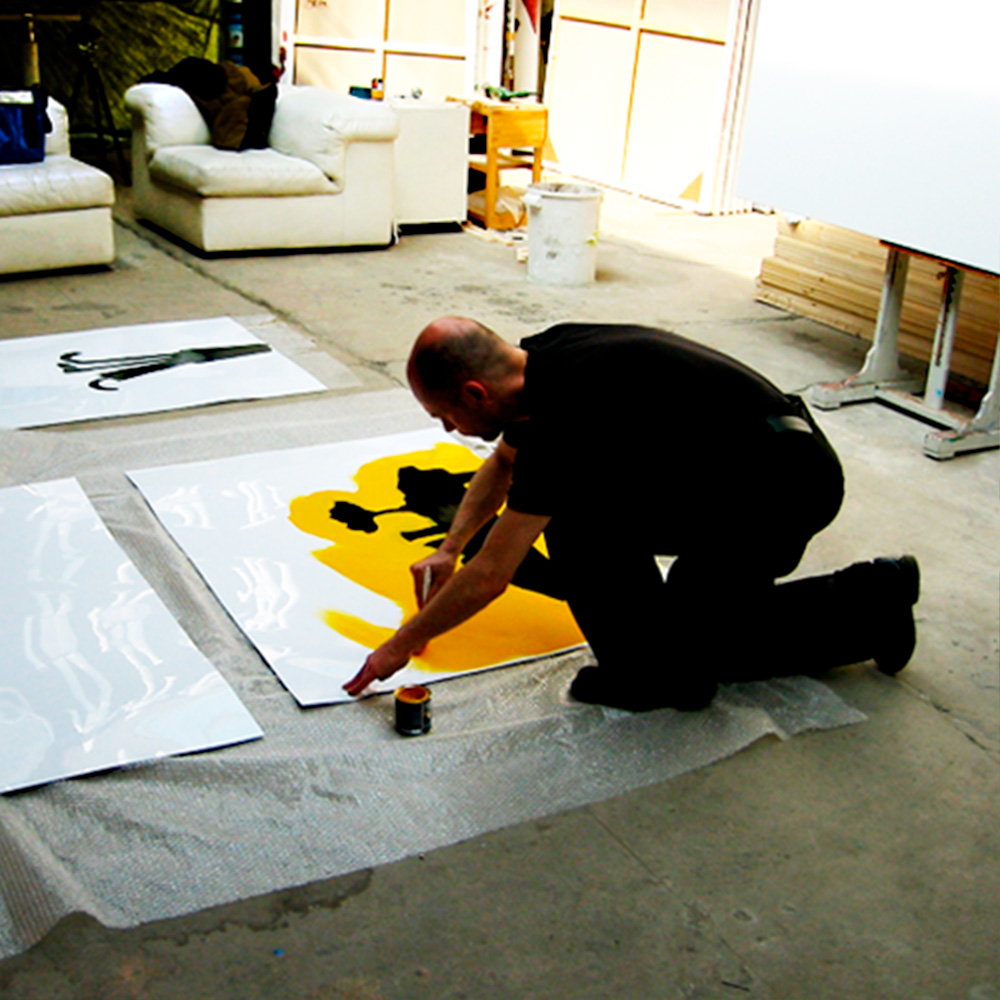
Although I now painted more with oils, that didn't mean I gave up enameling. I simply used it for a different reason: to create affordable art without losing what makes art valuable.
So I started the Sumi series.

They are inspired by traditional Japanese ink drawings called sumi-é, a derivative of calligraphy. The traditional black ink on paper (black on white) has been replaced by two colors. A black-and-white painting in color, so to speak.
The Sumi are painted on PVC cheats for industrial printing. Poetry on plastic, so to speak.
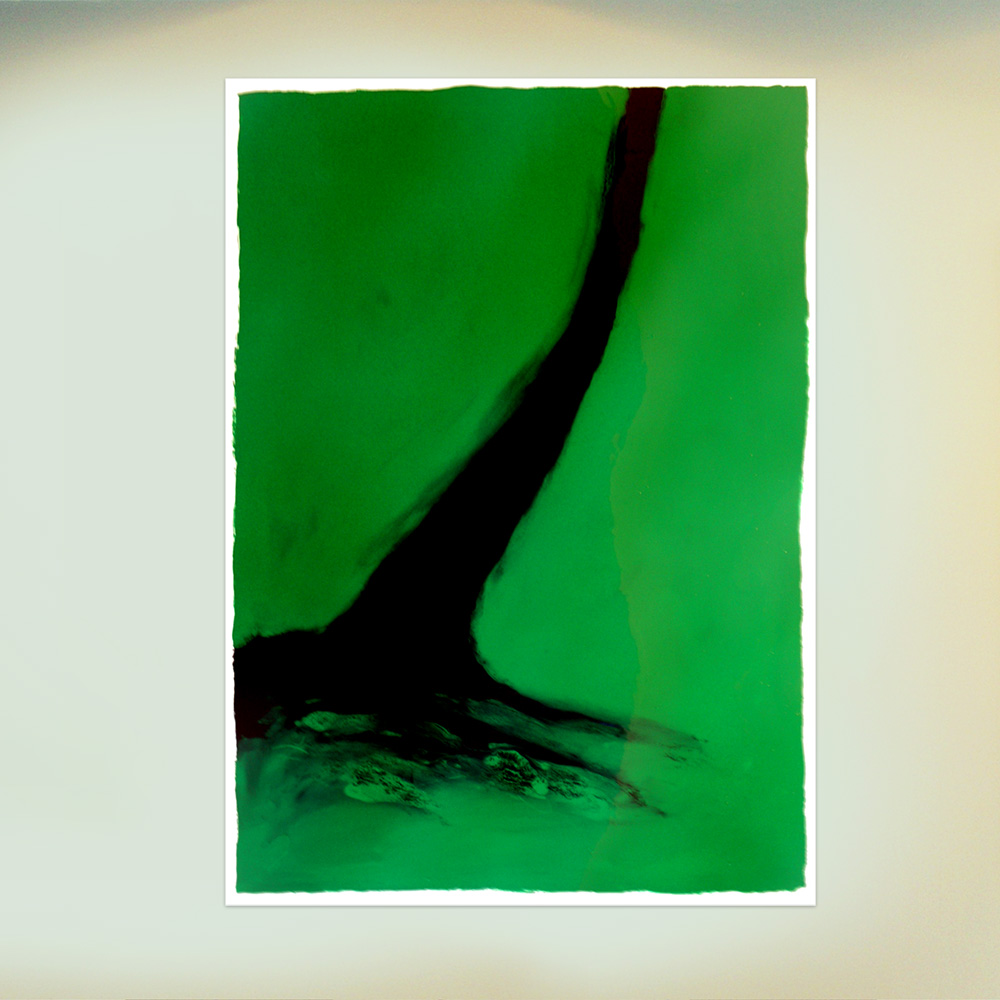
The Sumi series became a bridge between the unique and the affordable, just as it was intended.
MANY PROJECTS
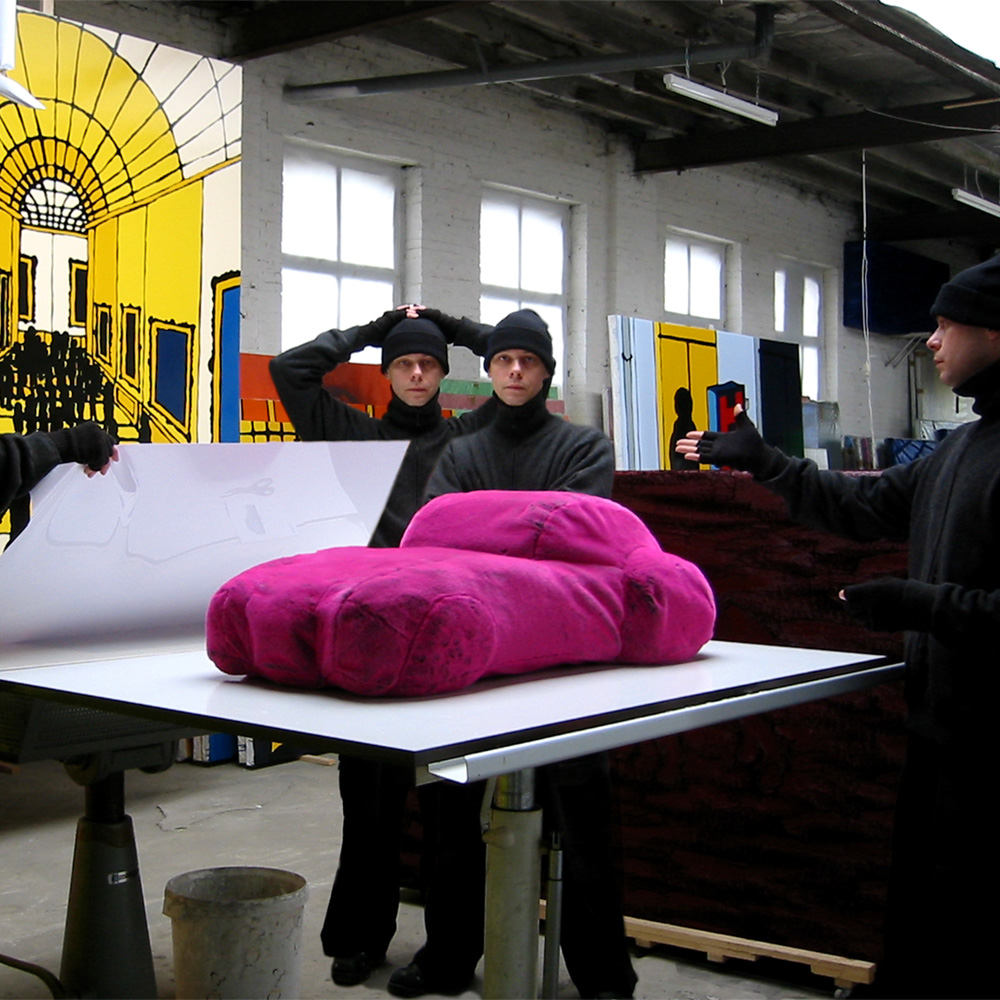
I was busy with all sorts of projects. This one was the model for a life-size replica of a Wiesmann car in fur. It was intended for the presentation of the latest model, so the obligatory showgirls had something to lean on besides cold metal.
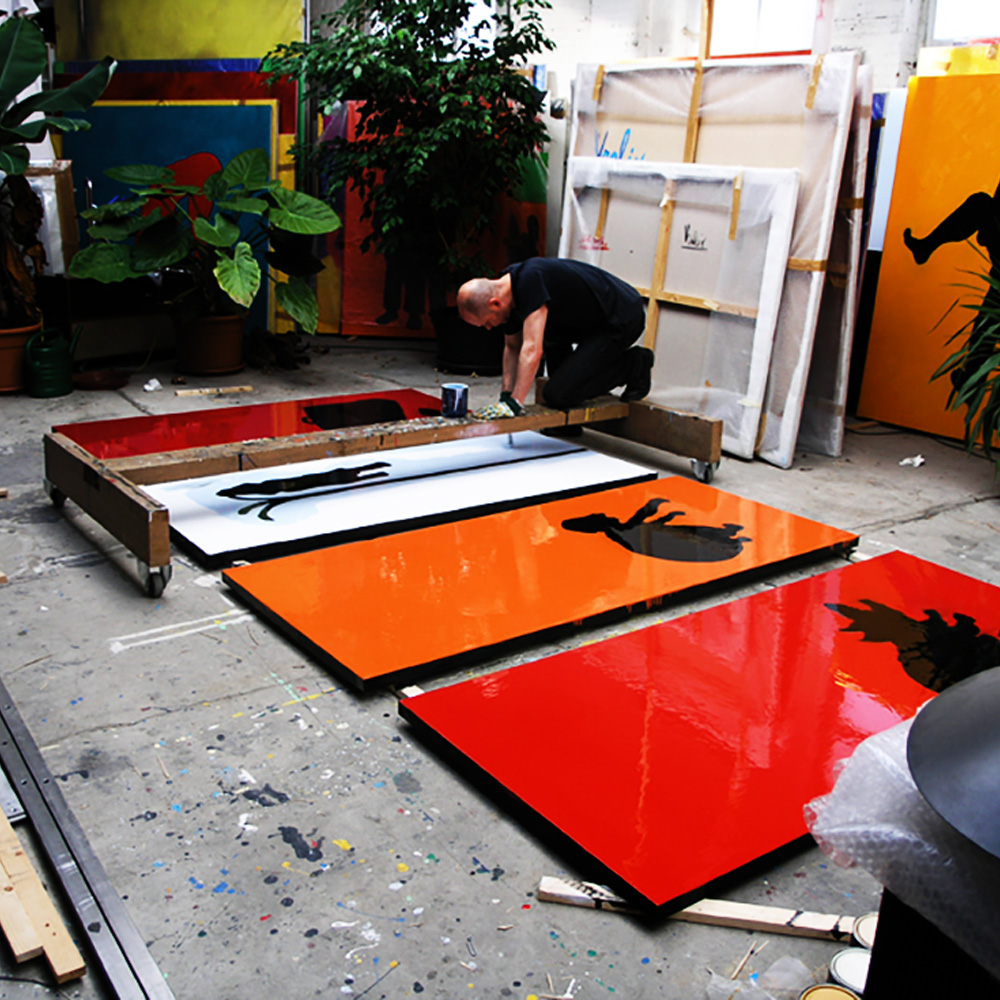
Hard at work on the Cantor series (enamel on wooden panel) for an exhibition in Paris.
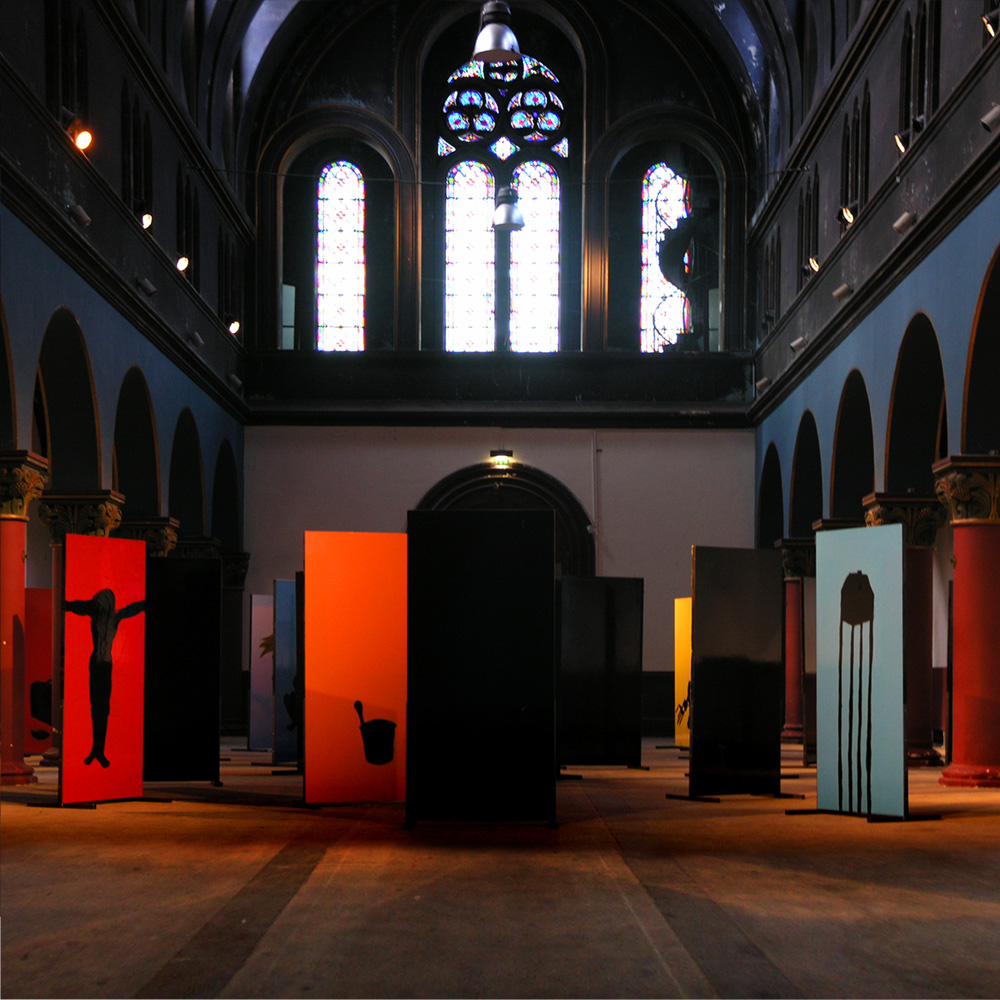
The problem with the Paris location was that the exhibition space is a former church. No walls to speak of, just thick pillars and small stained-glass windows. Quite dark. So I came up with the idea of placing screens throughout the space, like a labyrinth. As if stepping into someone's memories.
Advertising agency JCDecaux Germany was supposed to install the first of their new public bio-toilets on the infamous Reeperbahn (St. Pauli) in Hamburg, but wasn't allowed to advertise on the exterior. So they asked me to come up with an idea. The underlying idea was: if it works in one place, it can work anywhere.
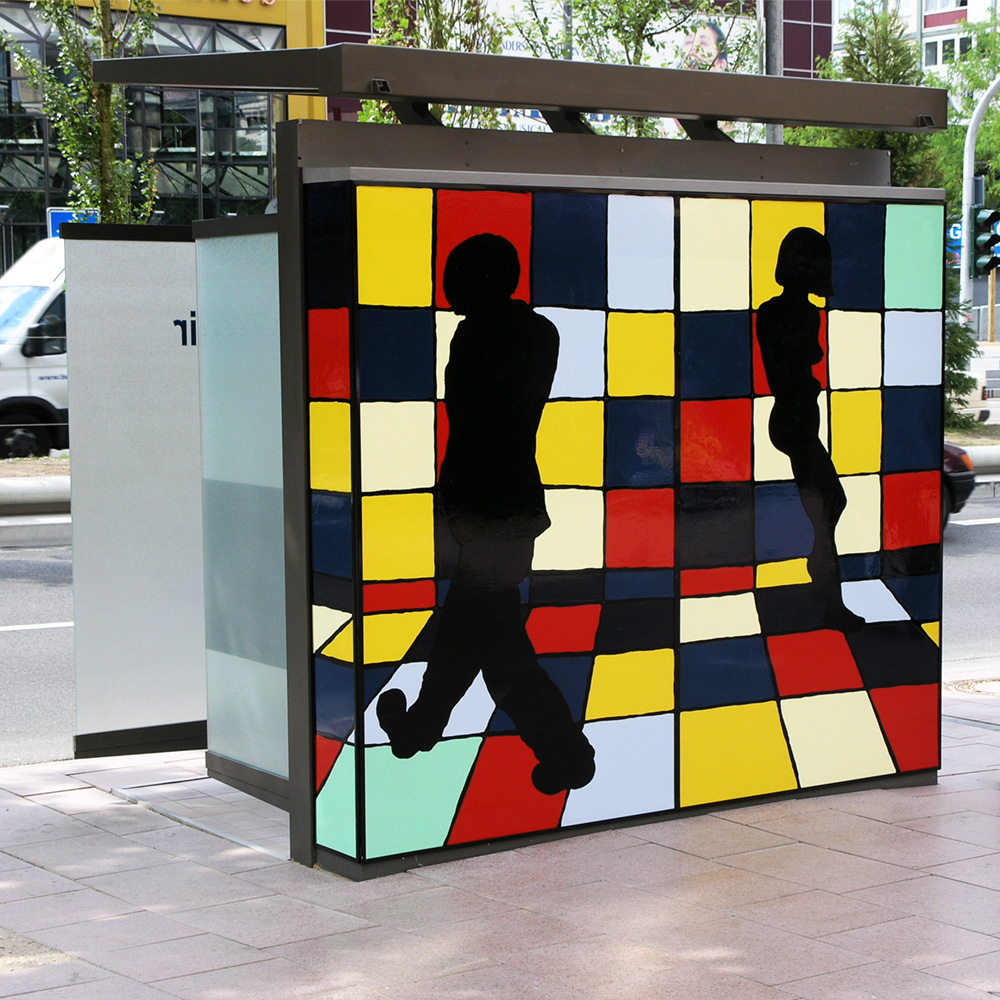
It was a huge success, in that thousands of people walked past it every day without leaving a single graffiti or tag. A year later, I had to create two more.
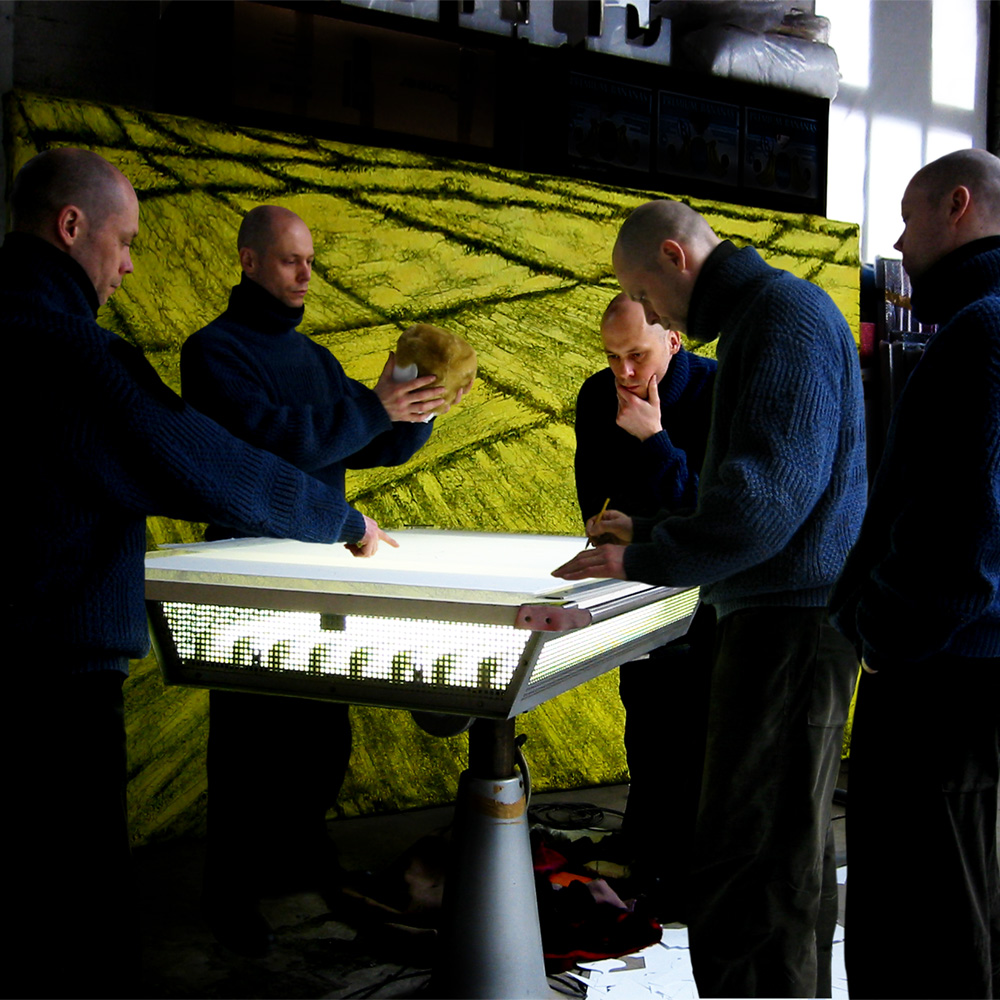
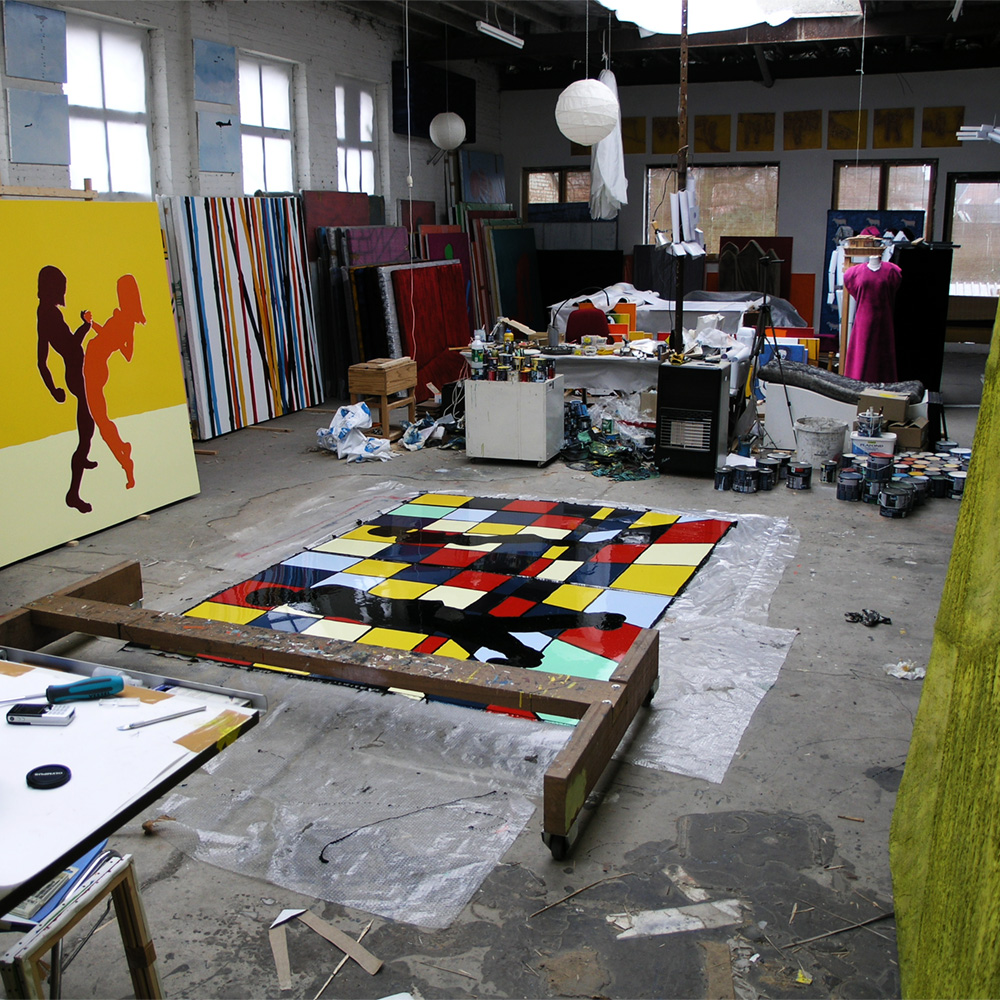
I worked on a lot of projects in that big studio.
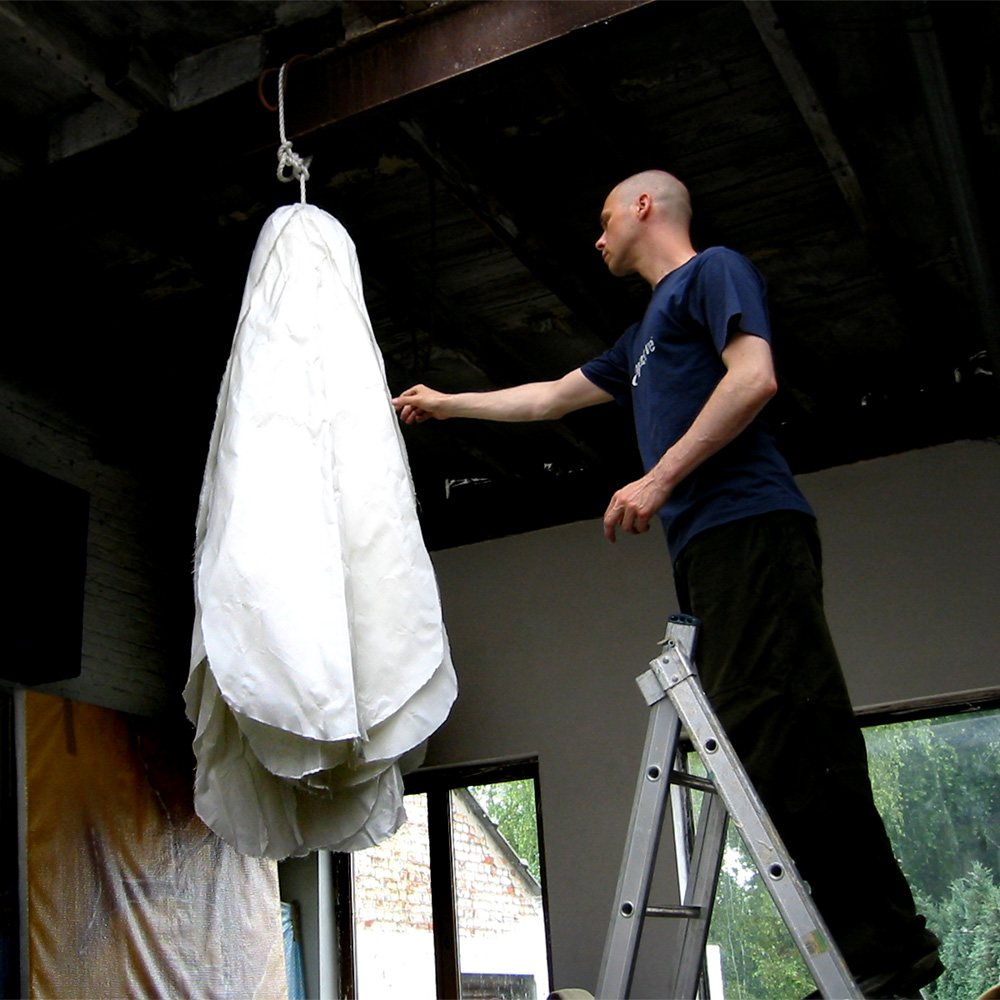
I made some hanging silk flowers. Just for fun. I called them Down Under.

A kind of urban jungle.

"Winter People" (potato, fake fur & wood, ± 10 x 10 x 35 cm).
It's amazing what you can do with a potato and some leftover bits of faux fur.
The choir: Winter People.
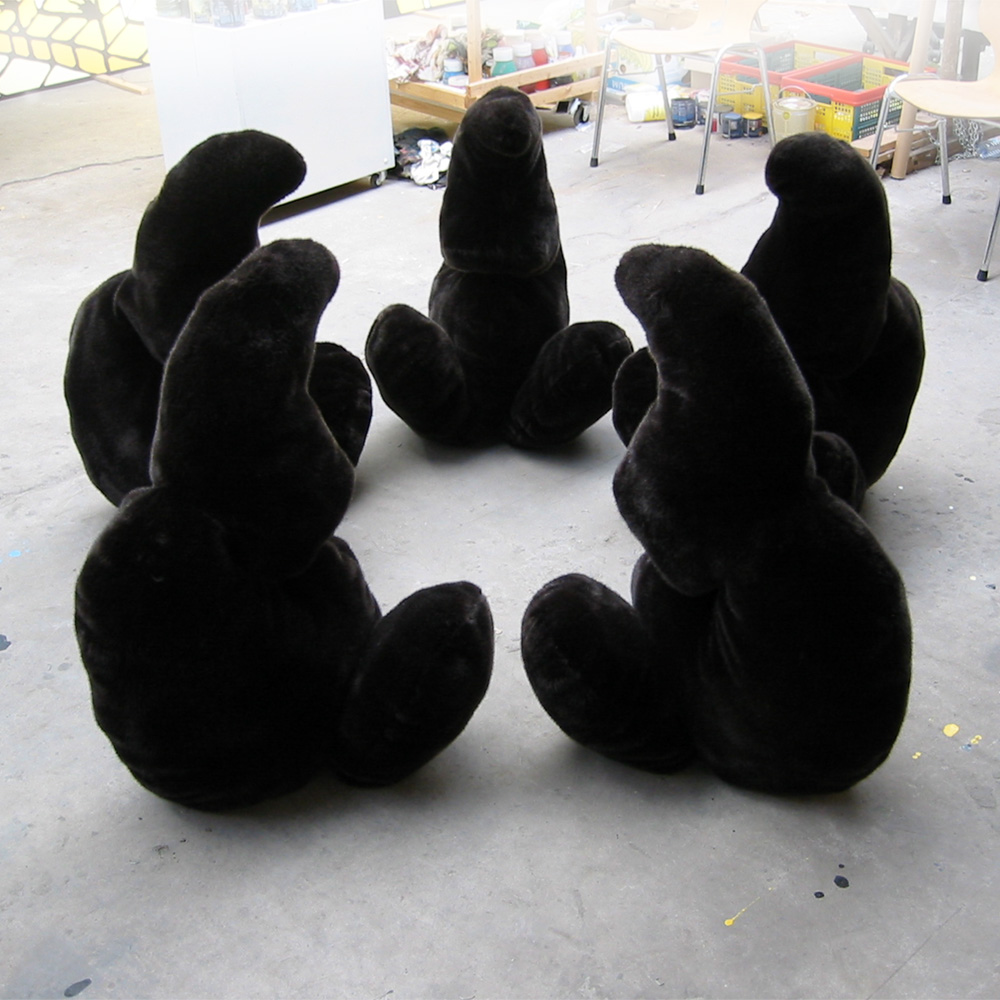
The Momos were originally designed as an installation for a show in 1993, but I created a second generation. These were the larger ones.

The little Momos came in all sorts of colors and furs. And of course, they became real teddy bears.
Once I'd made the little Momo teddy bears, creating an animation wasn't such a big step. How about those apples?!

I became interested in designing things like the Xpillow, a pillow that hugs back.
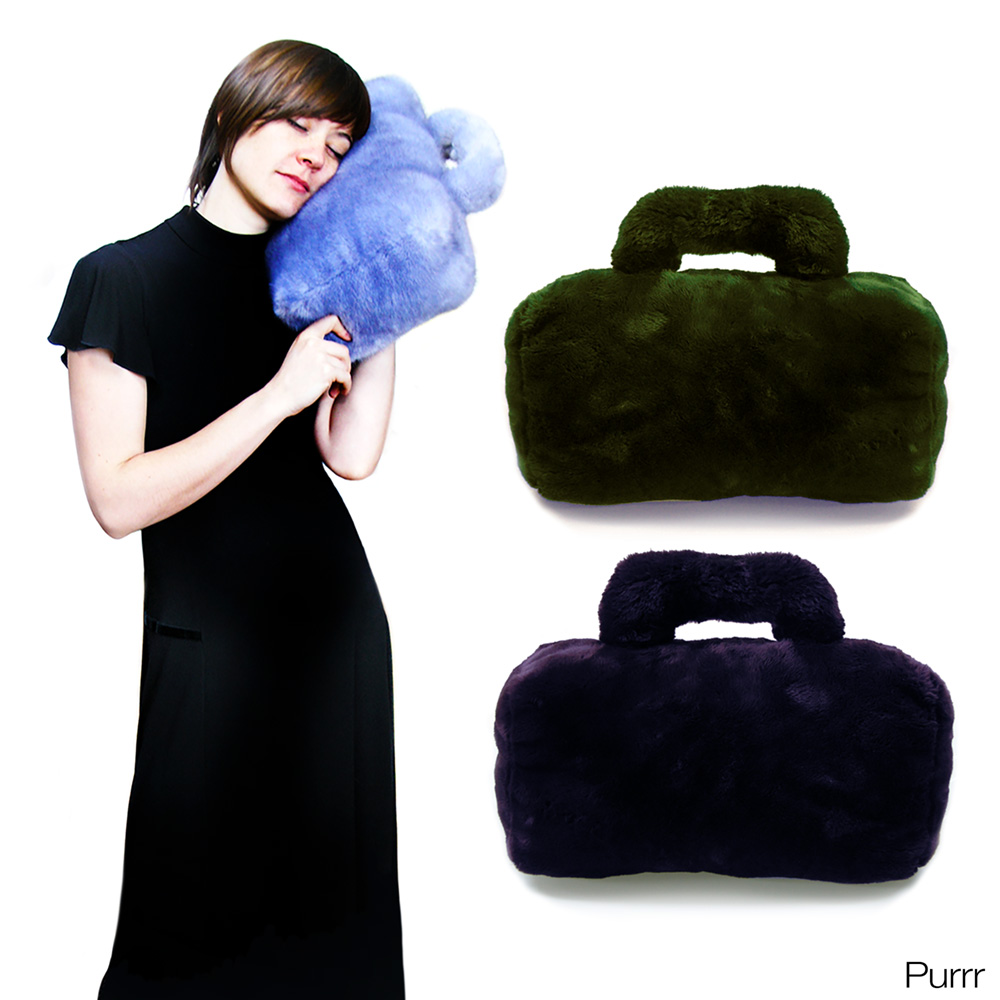
Another design was Purrr, a kind of travel pillow with a handle.
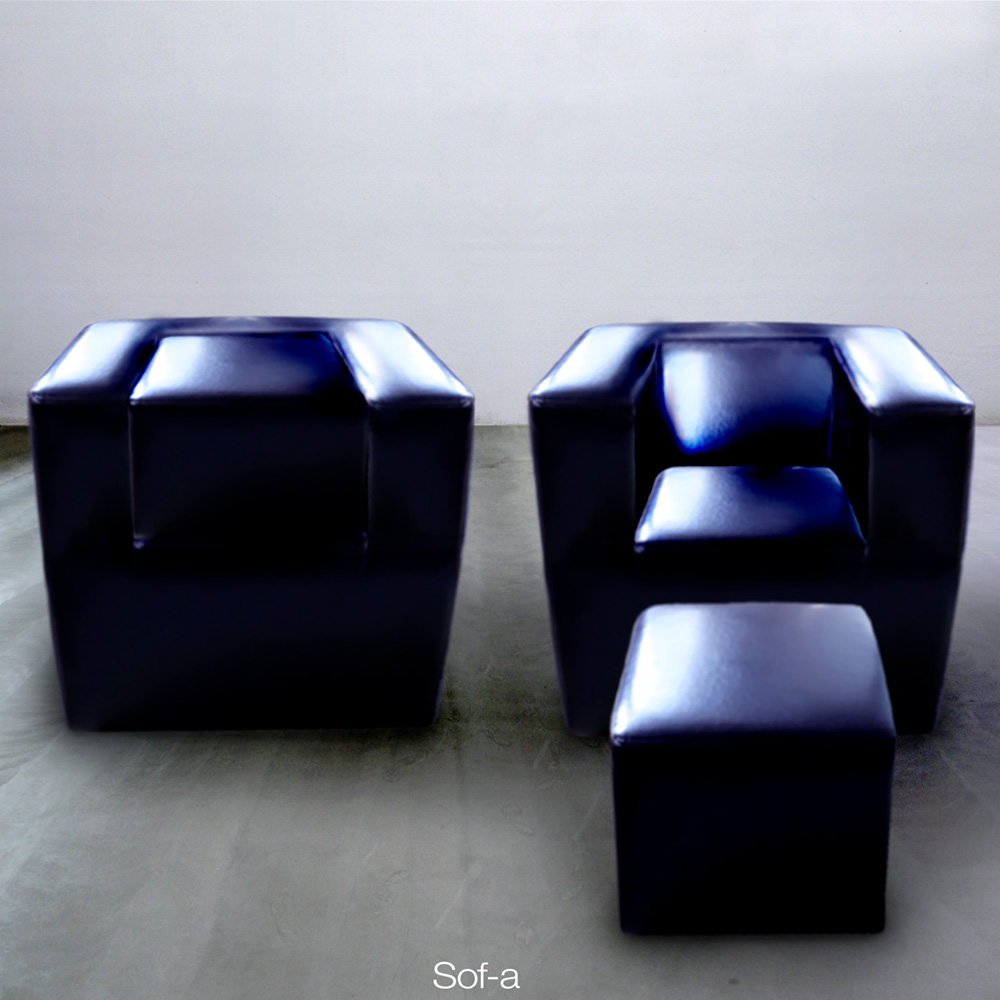
And my favourite design, the Sof-a, a lounge set with a ottoman that can be closed into the cube.
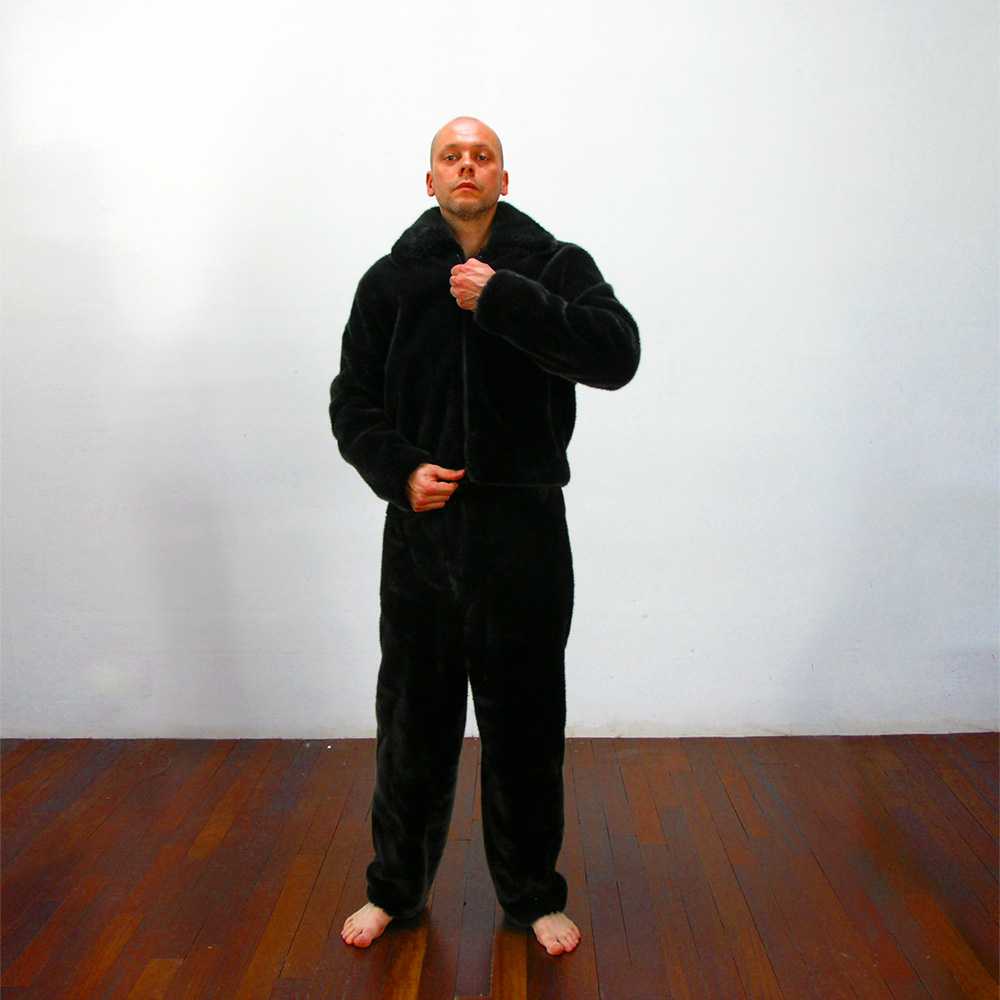
I even designed myself a wolf-suit called: Werewolf.
TOY CITY
Around that time, I completed the series of fur sculptures made from sculpted foam and artificial fur.
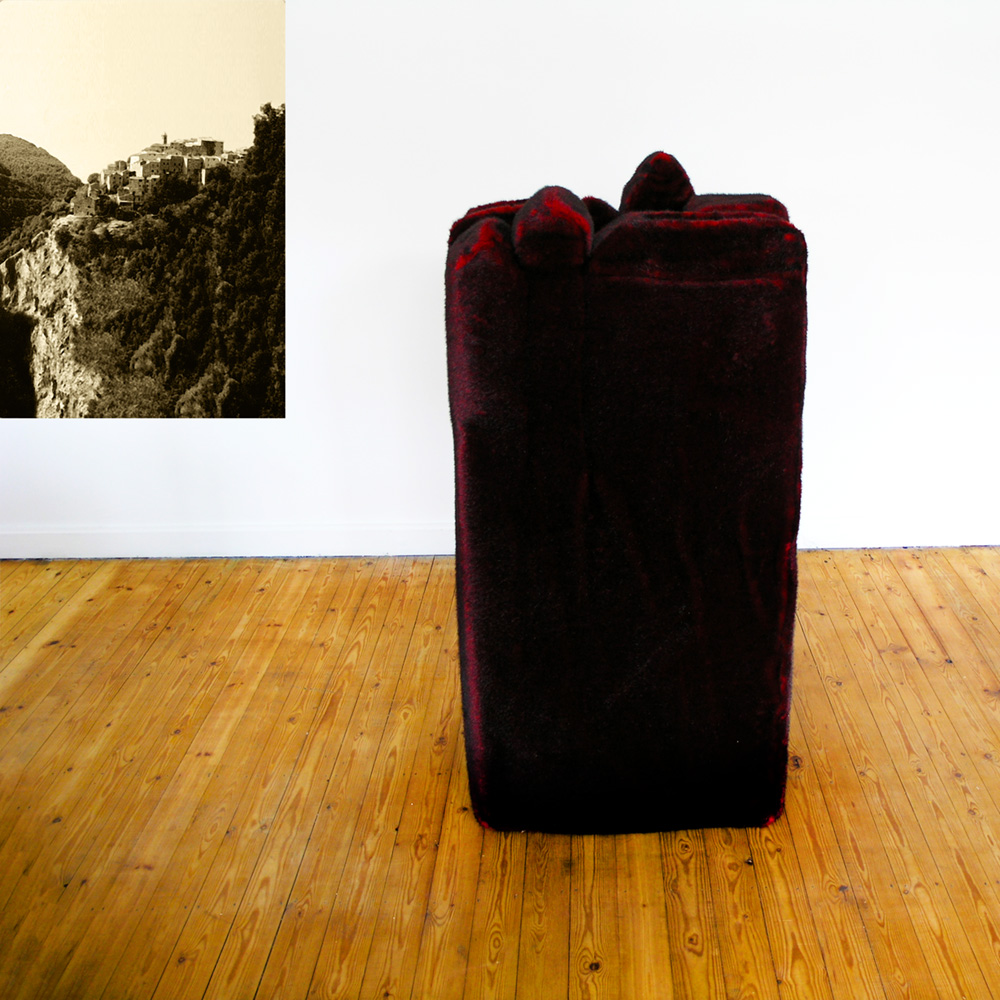
"Mountain Village" (foam and artificial fur, 100 x 100 x 140 cm).
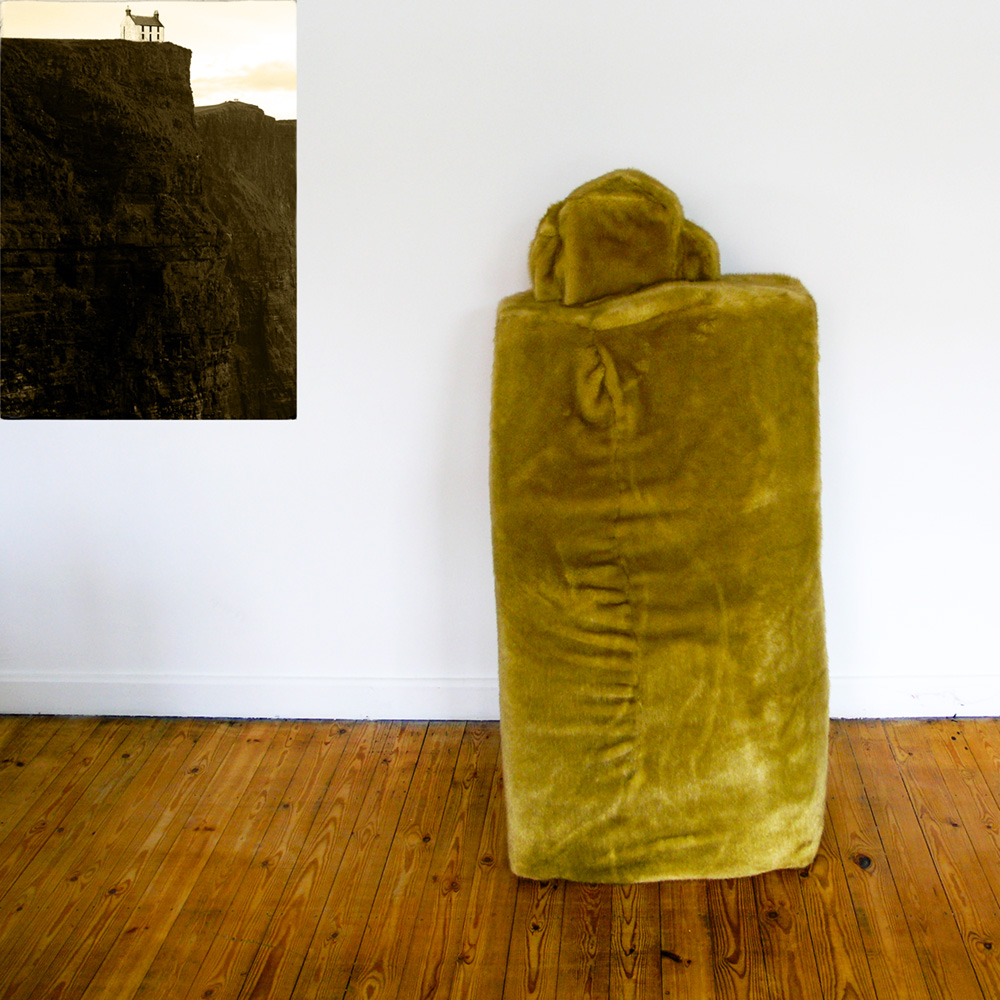
"Cottage" (foam and artificial fur, 70 x 100 x 130 cm).
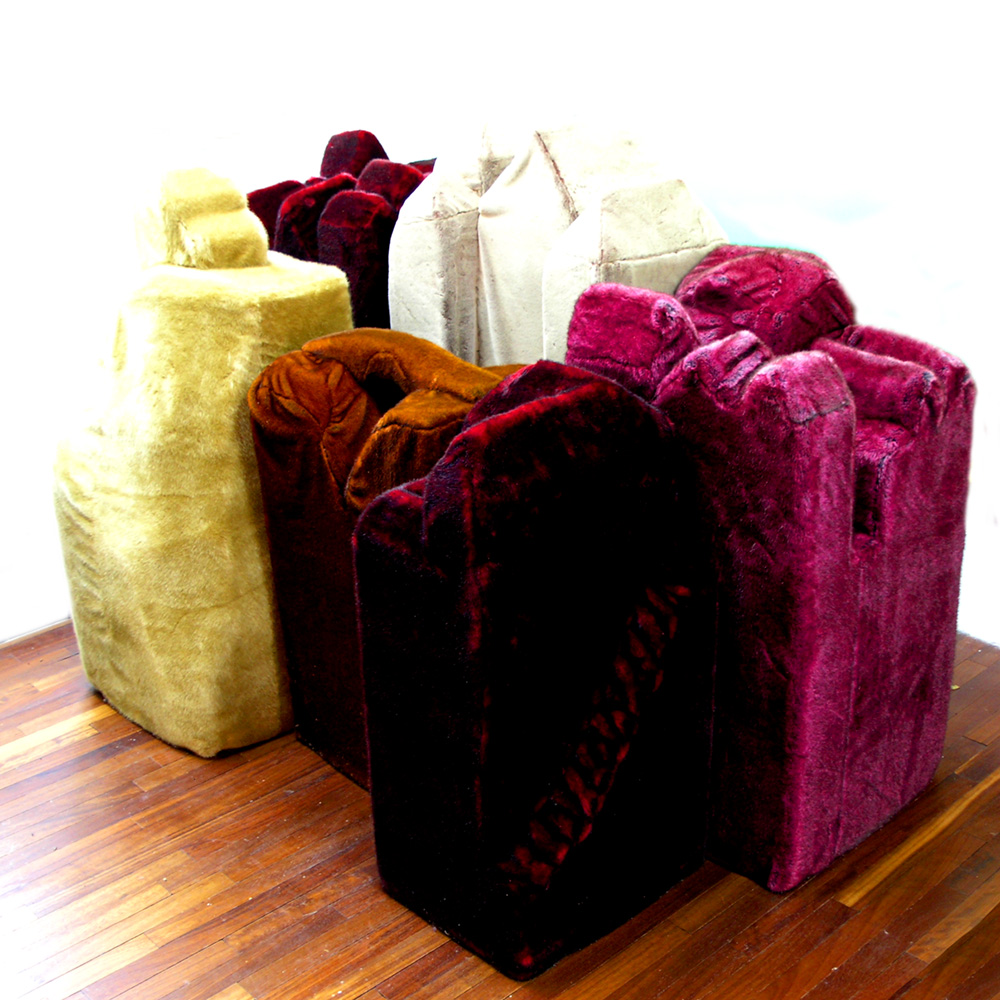
All together they formed a city.
DOUBLE STUDIO
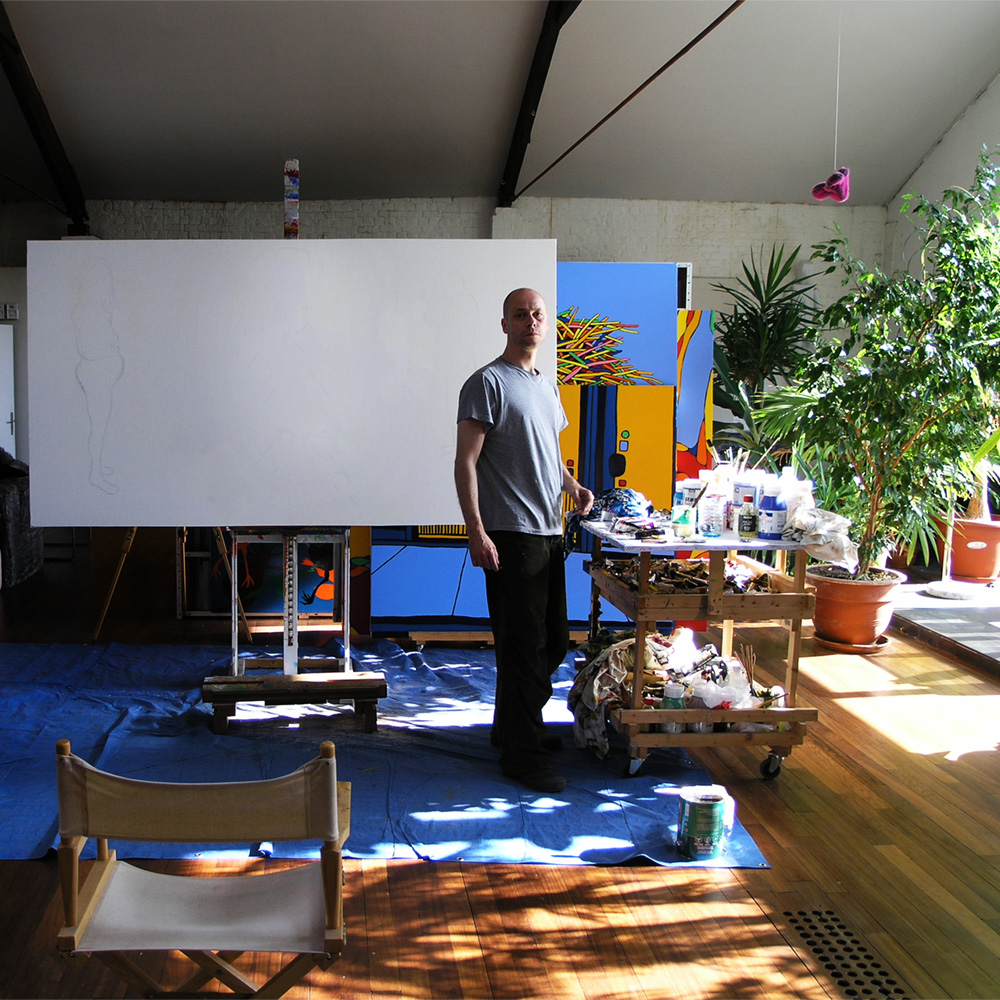
My landlord, who lived in the loft next to my studio, left, so I moved in and my studio doubled in size.
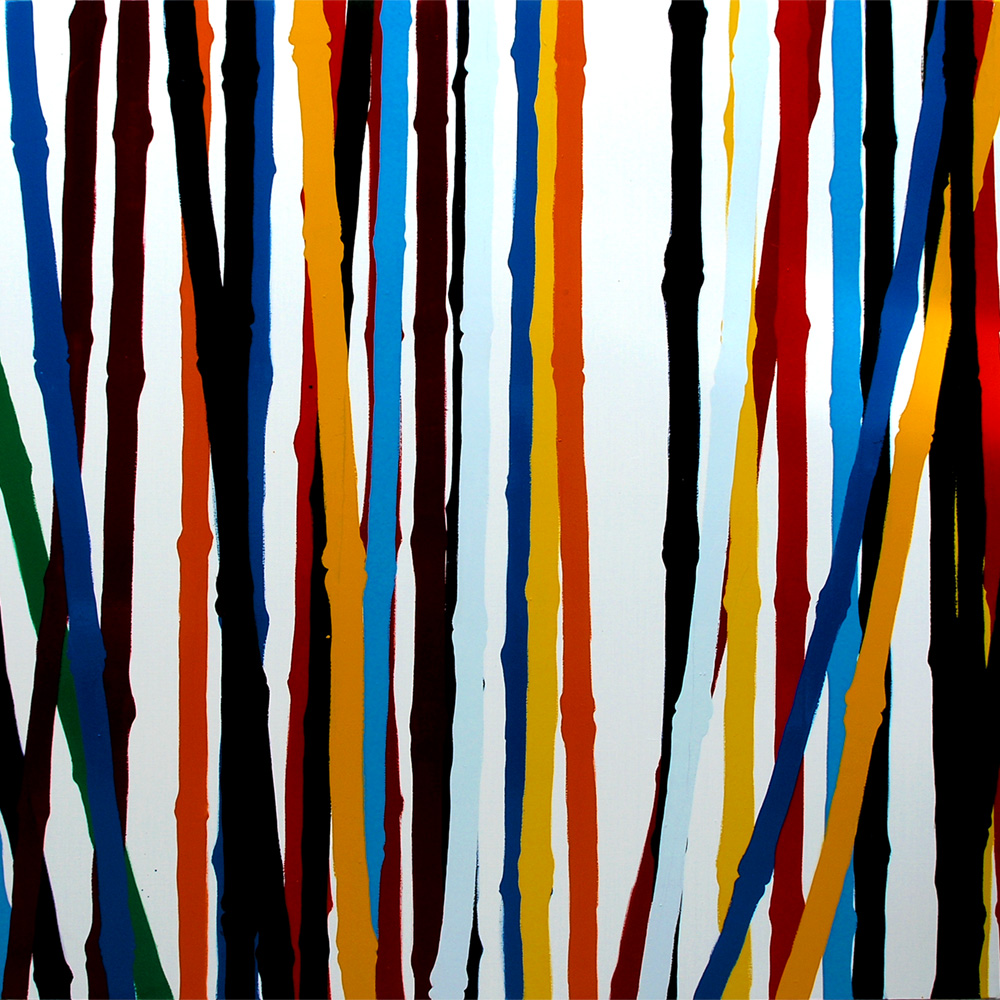
"Bamboo" (enamel on canvas, 200 x 200 cm).
Despite working on numerous projects and installations, I also painted constantly, alternating between oil and enamel paints depending on my desired effect. In this case, a bamboo forest, I painted one tree each day (to allow the enamel to dry).
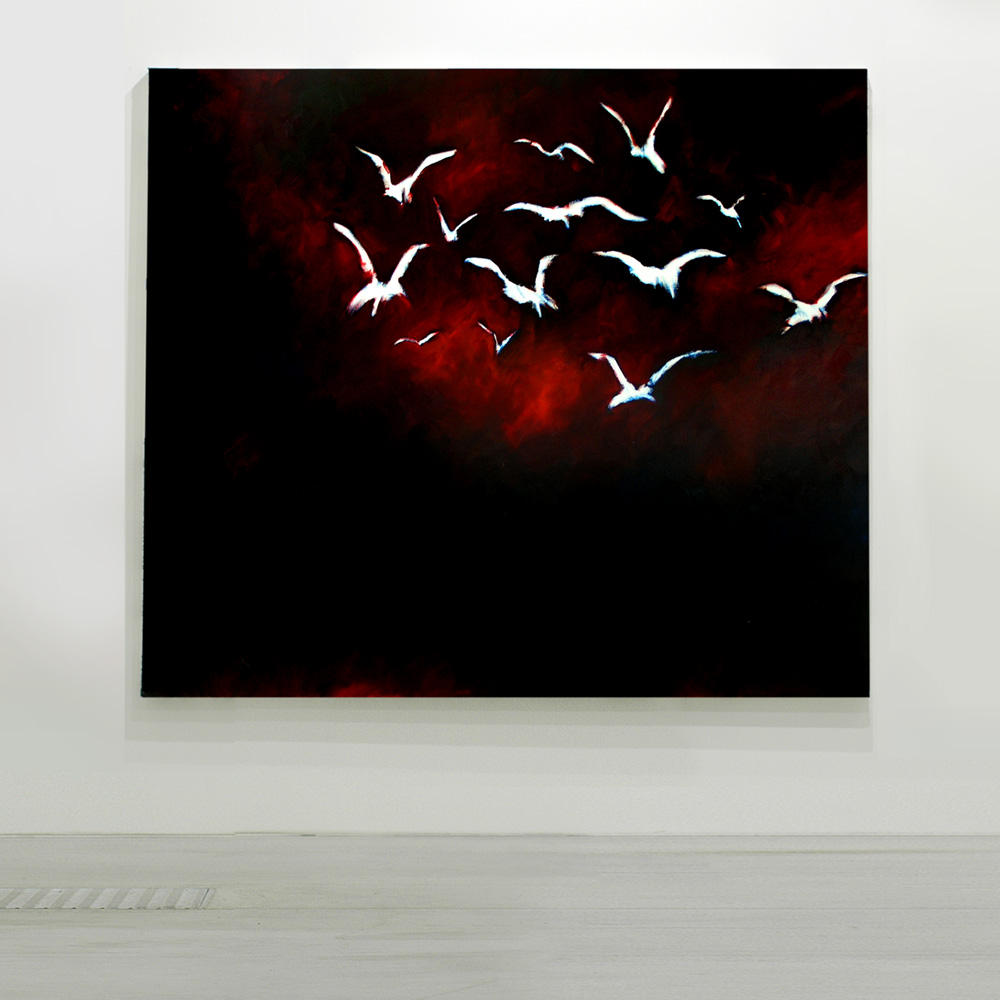
"The Furies" (oil on canvas, 175 x 200 cm).
There are many ways to paint a silhouette. In The Furies, the birds weren't painted at all, only the background. I loved backgrounds. In many (perhaps all) of my paintings, the background was the most important element.
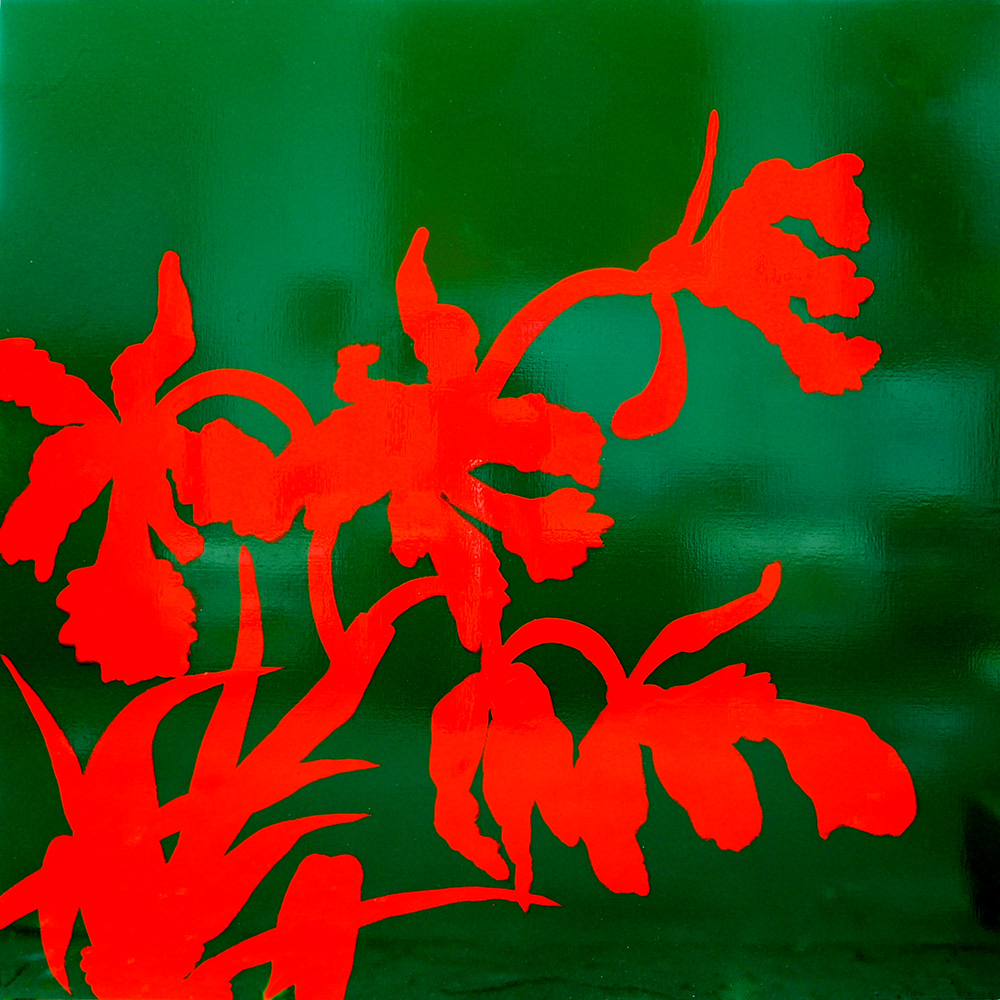
"Orchids in Red & Green" (enamel on canvas, 200 x 200cm).
I ended 2006 by creating two paintings that contrast with each other. Or should I say, with the same differences?
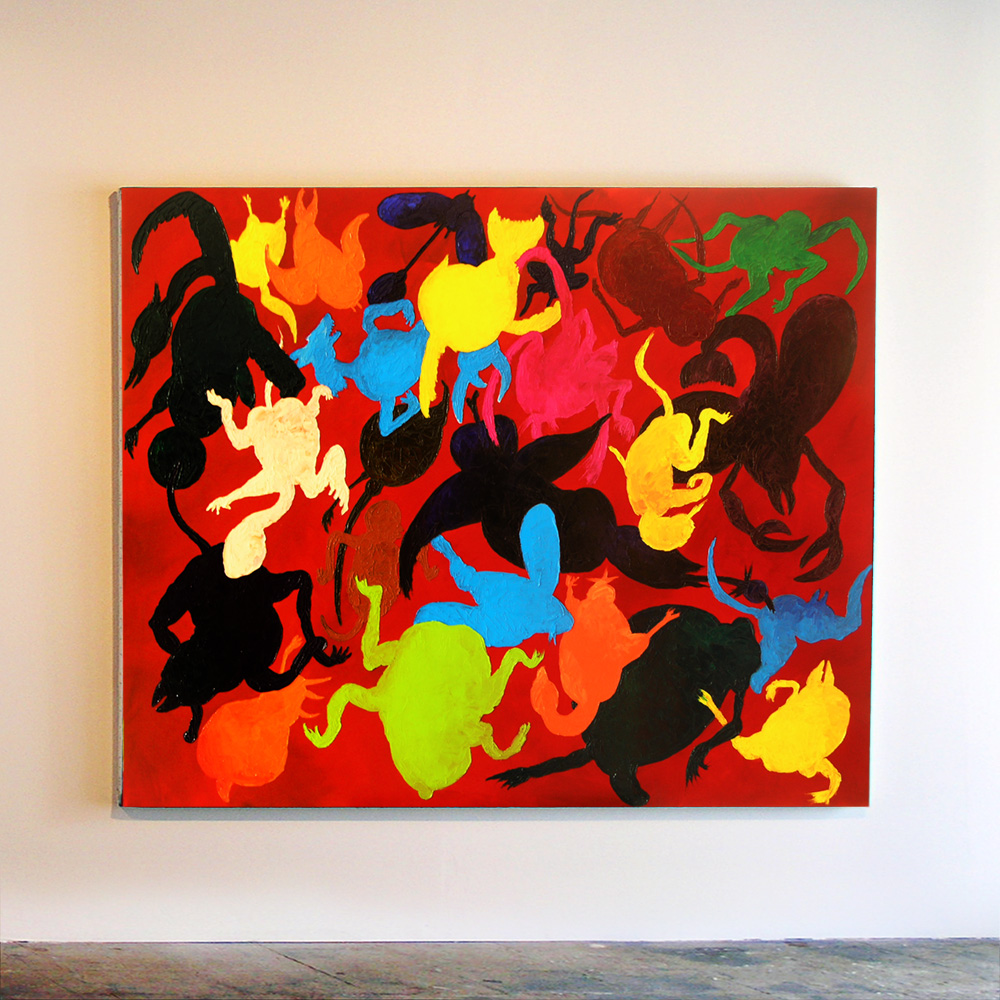
"The Falling" (enamel on canvas, 200 x 240 cm).
The last painting of 2006, after my favorite painting by Bruegel the Elder: The Fall of the Rebel Angels.
SET DESIGNS
ORIGAMI PUPPETS
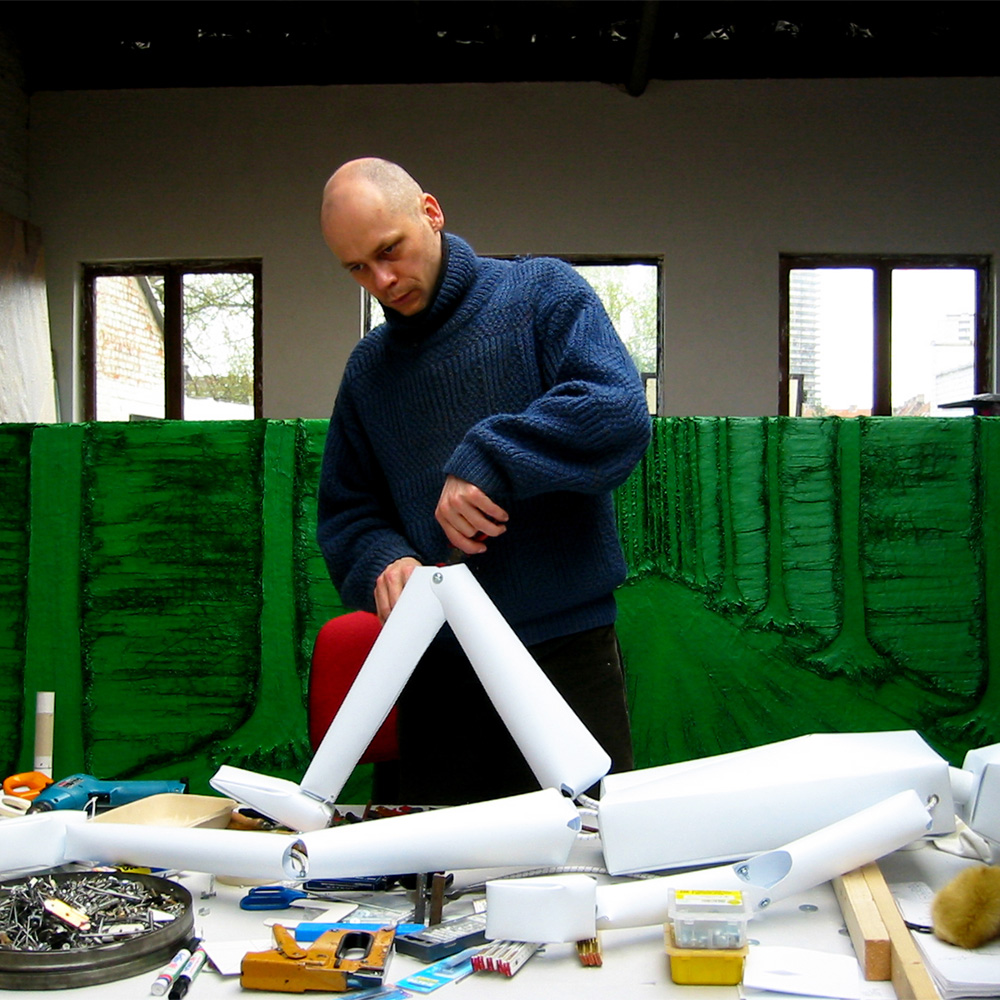
Playwright Arne Sierens asked me to create a series of puppets to perform with some of his actors, as in Japanese Bunraku theatre. Each puppet was operated by two or three performers.
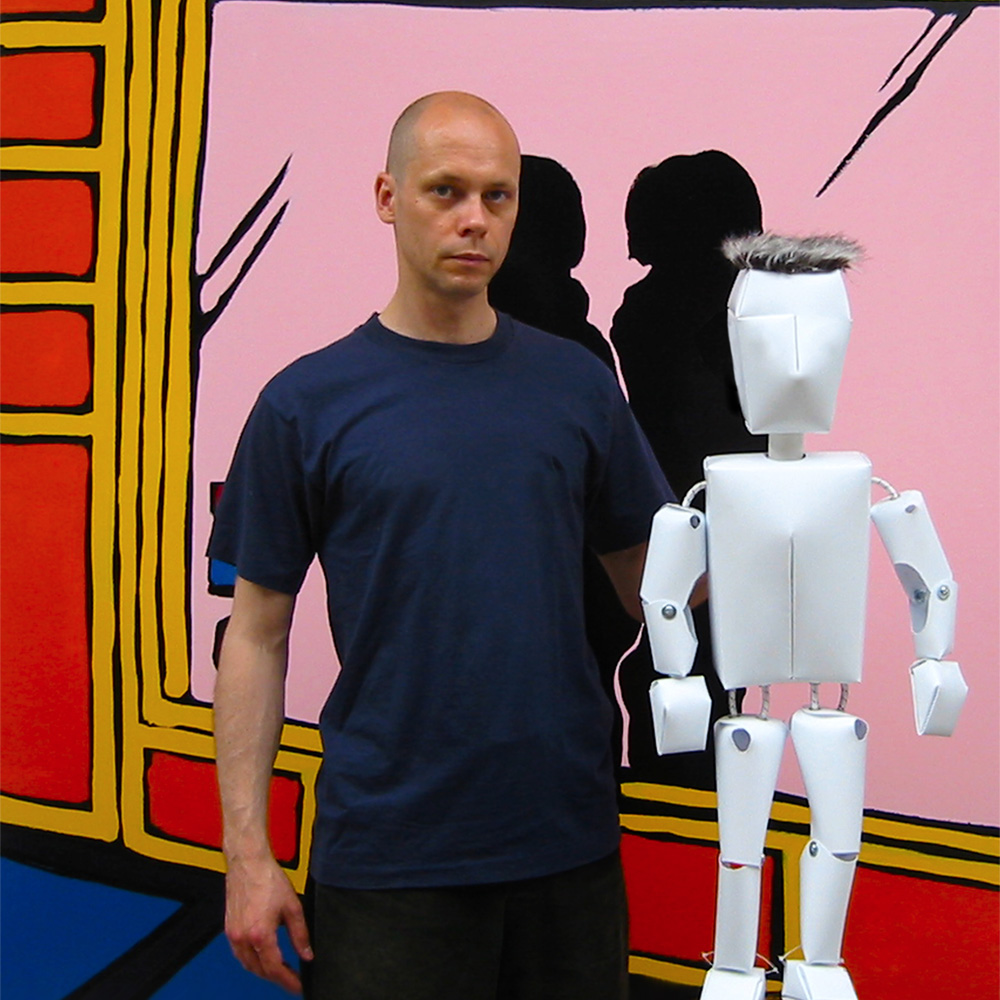
That gave me the idea to make the dolls according to the Origami principle.
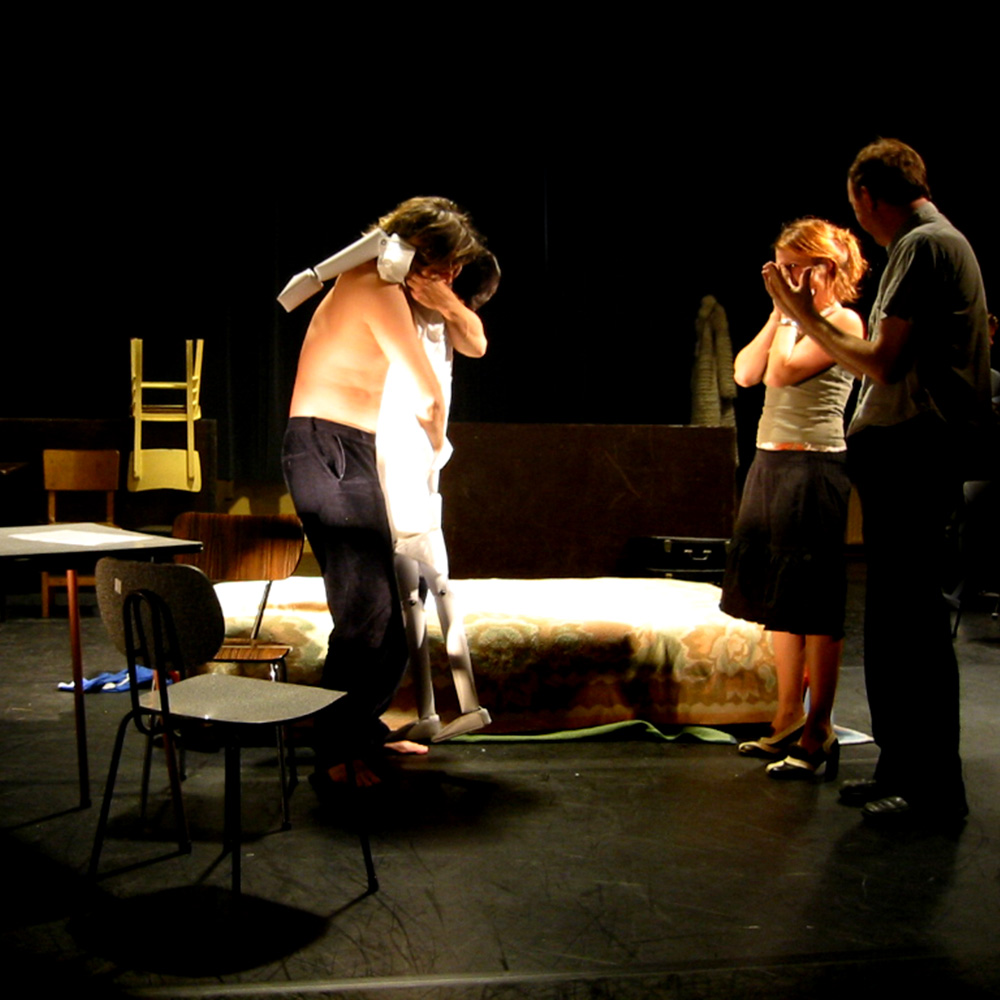
These puppets truly had the power to evoke emotions in the actors. And that was, of course, the intention.
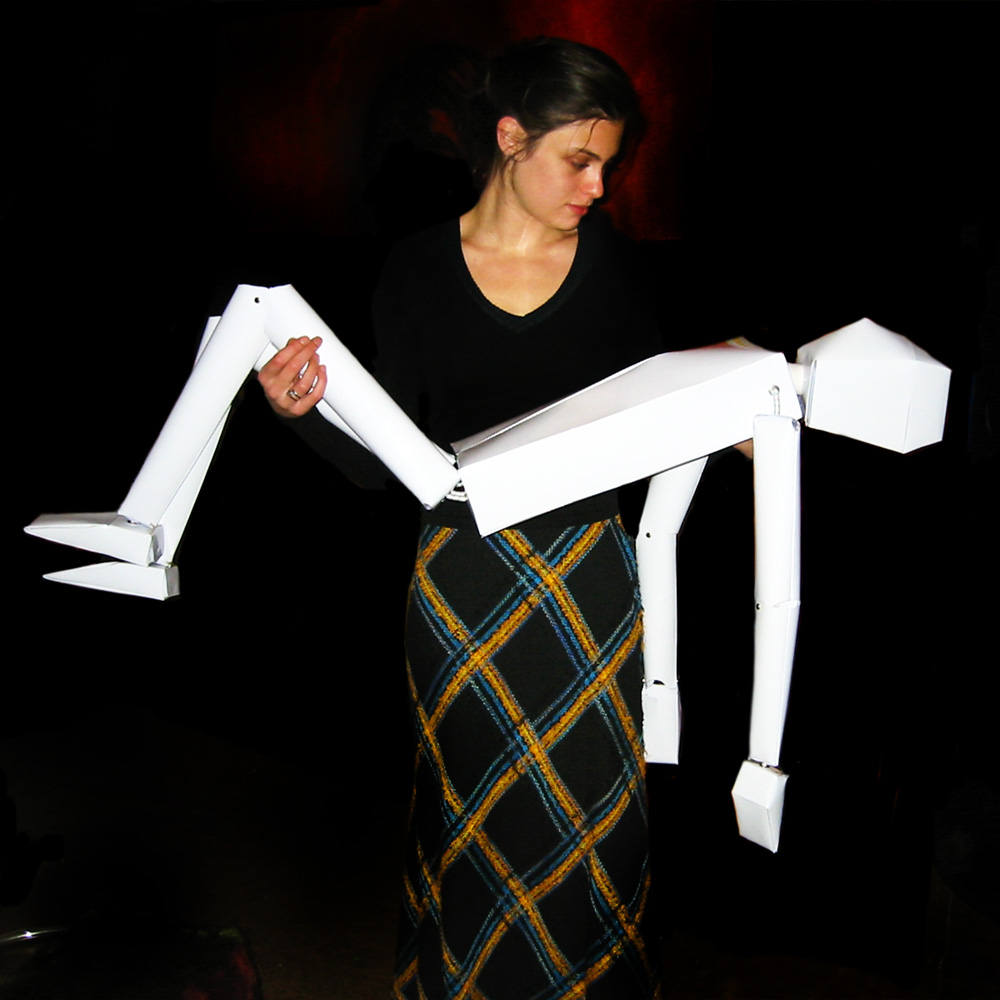
And man, these puppets could die!
TROUWFEESTEN EN PROCESSEN
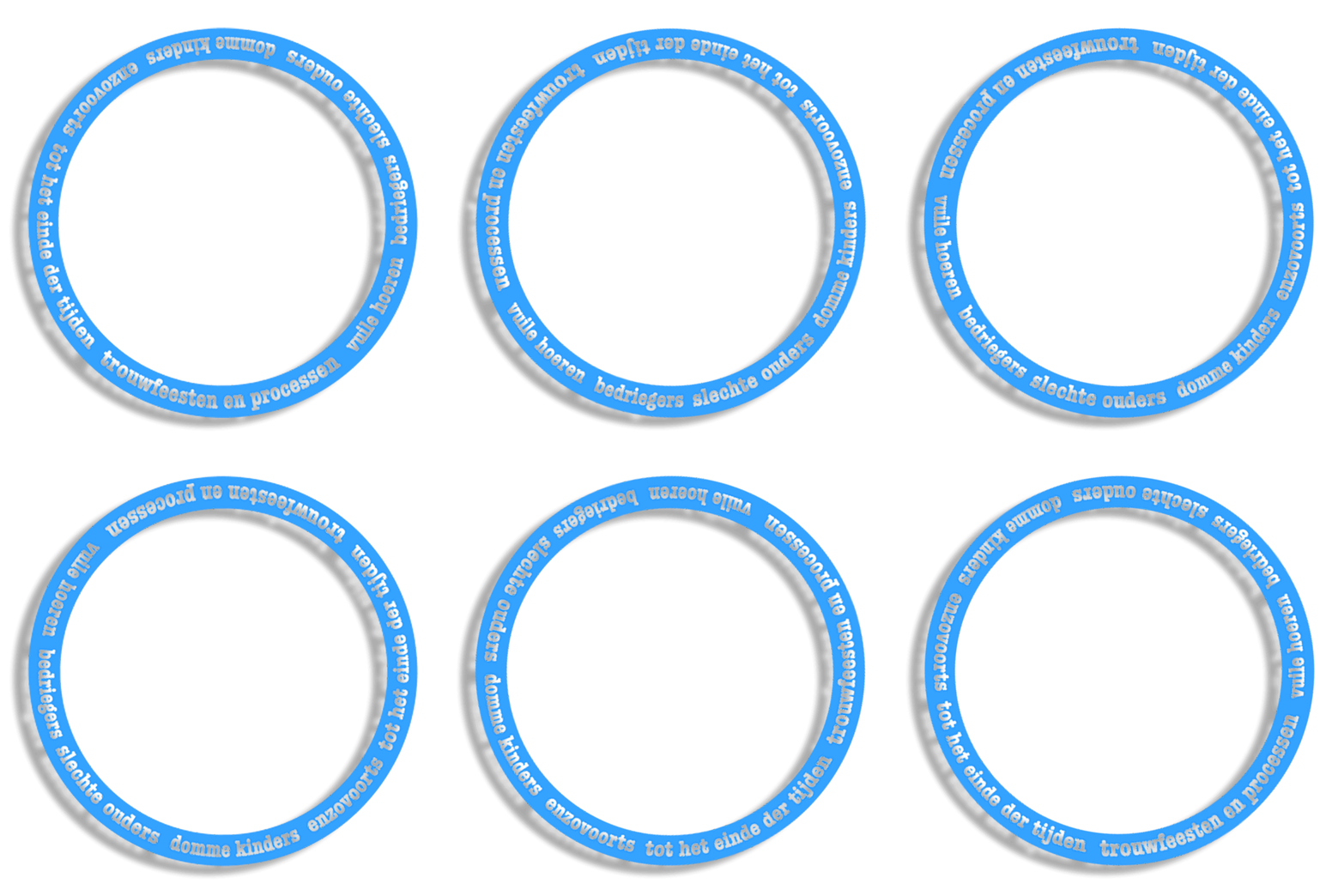
Trouwfeesten en processen, vuile hoeren, bedriegers, slechte ouders, domme kinders, tot het einde der tijden.
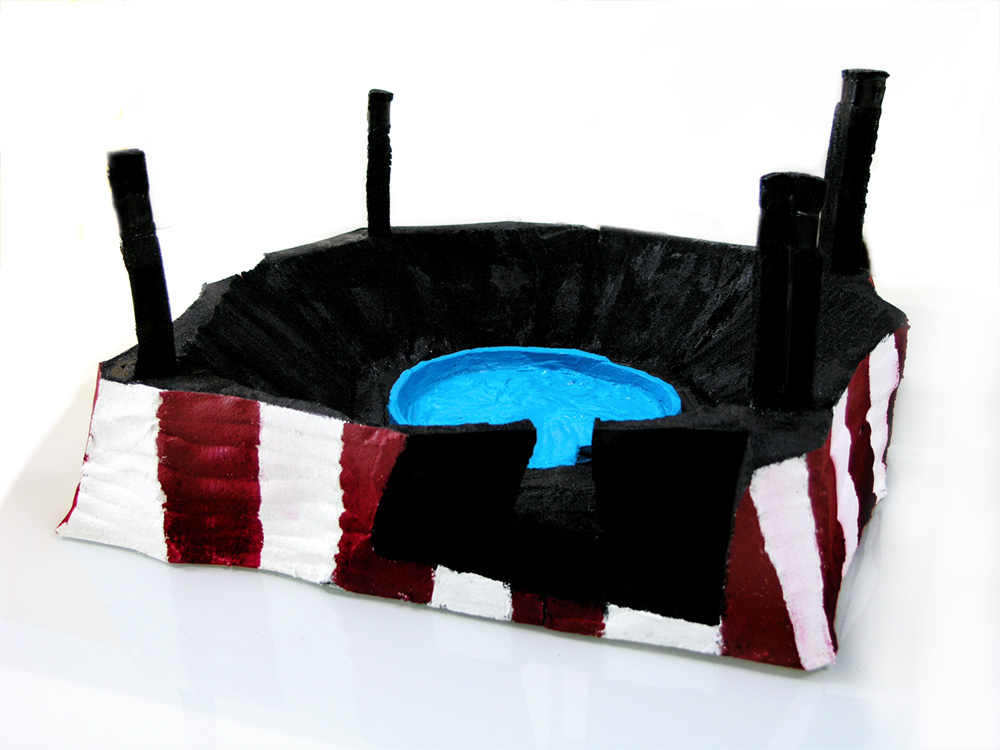
This play was about a family as a circus, so I designed a blue arena with a wooden floor.
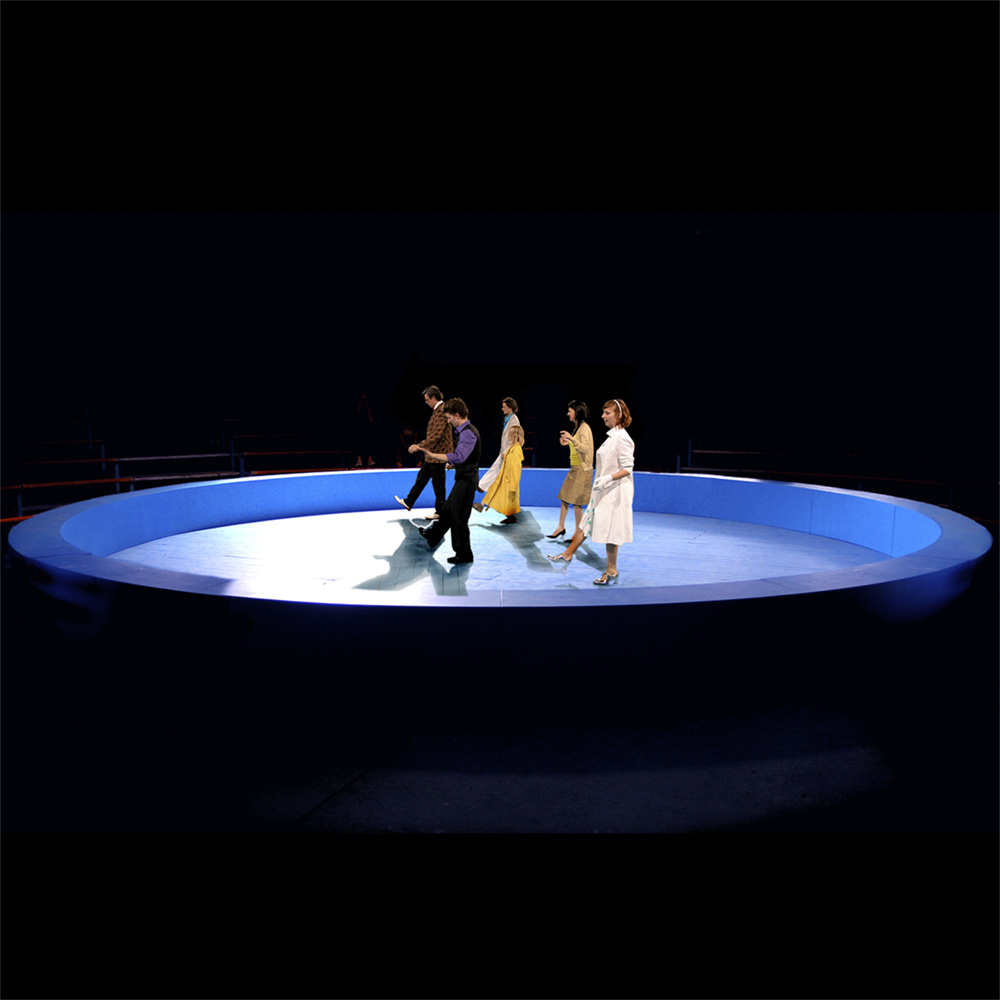
The wooden floor was necessary because the actors tap danced.