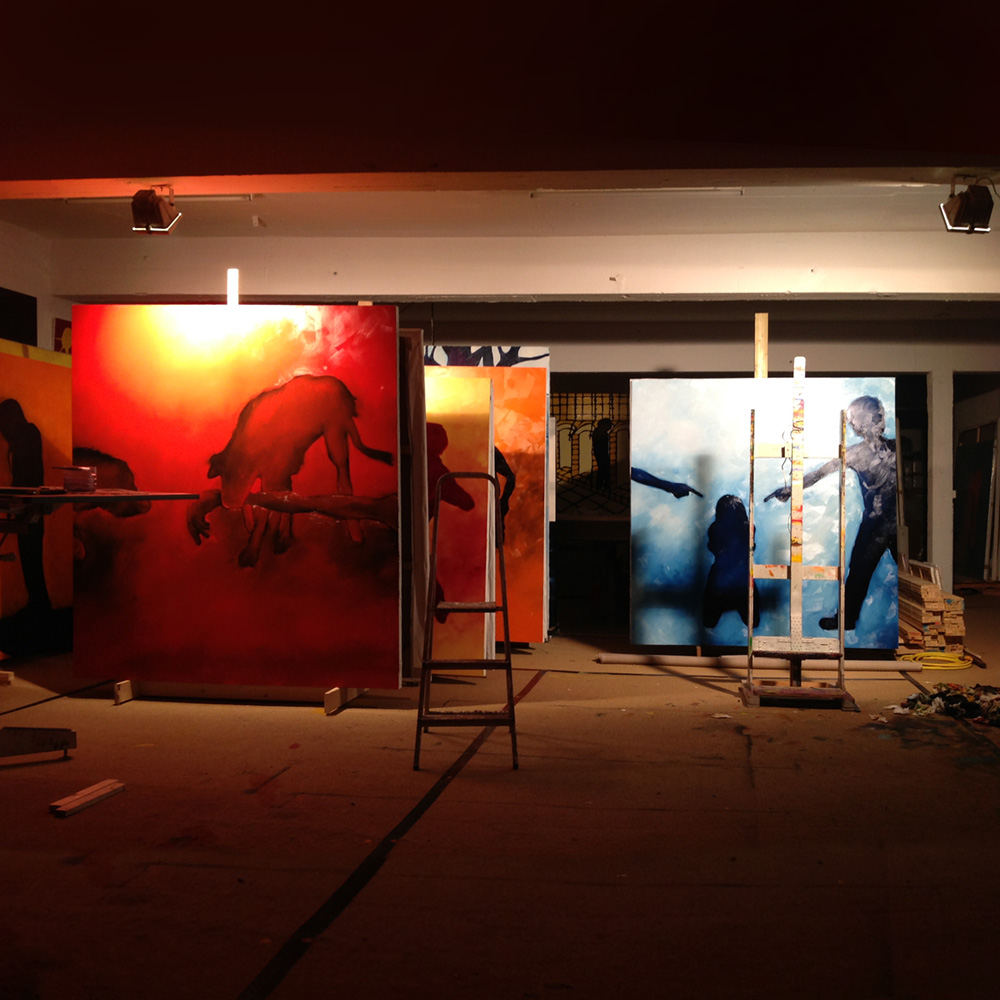
Meanwhile, the new studio was slowly starting to fill up. I think that could be a good thing or a bad thing, depending on how you look at it.
GETTING DRESSED
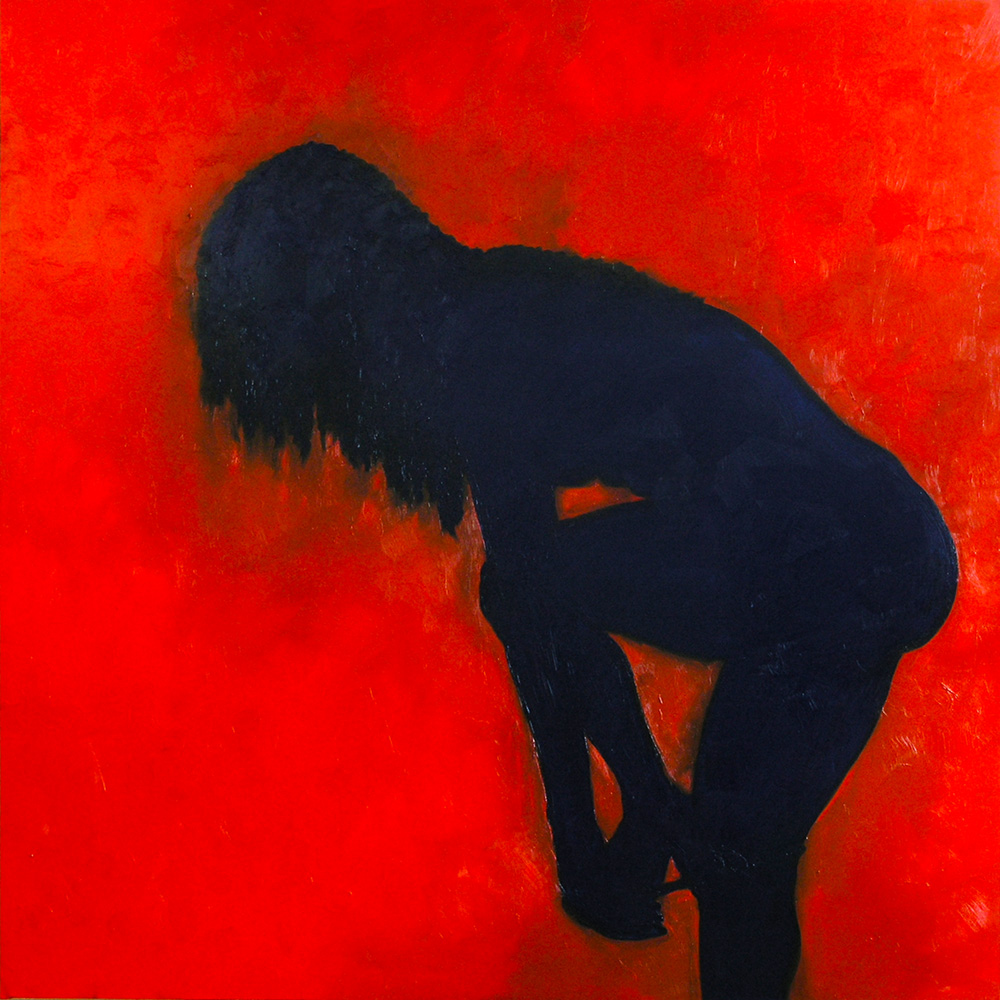
"Getting Dressed I" (oil on canvas, 190 x 190 cm).
Painting the Getting Dressed series took me a long time, even though they looked simple. Nevertheless, they started out very complex, with lots of colors, lines, and so on. Then I gradually shifted to process. The paintings in this series weren't worked on one by one, but all at once, as a single painting, or as a triptych, as it ultimately became.
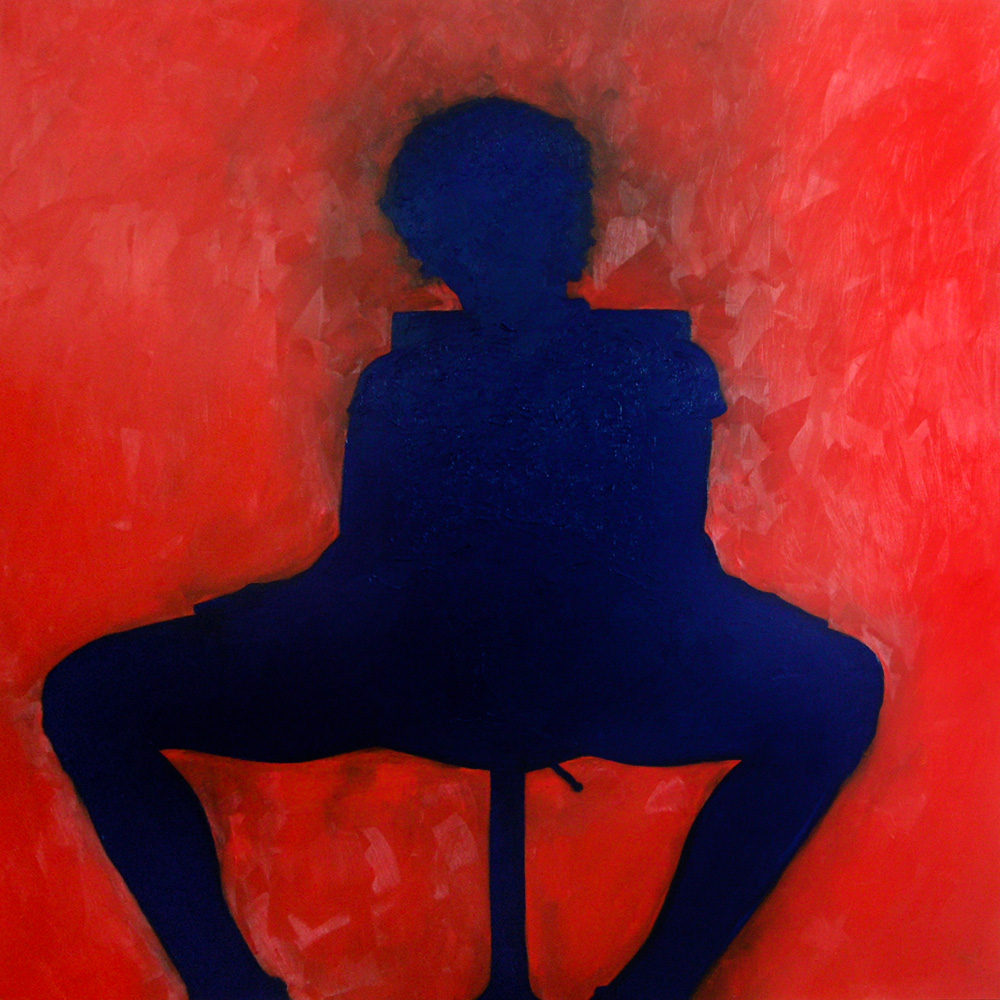
"Getting Dressed II" (oil on canvas, 190 x 190 cm).
One thing I've been doing over the past few years is painting over things. What I sometimes call second painting. First, I'd paint the subject in detail, or at least as meticulously as I wanted, and then, once the canvas was dry, I'd paint over it completely. Back to the silhouette, in a sense. And although all the previous details are no longer visible, they're still there.
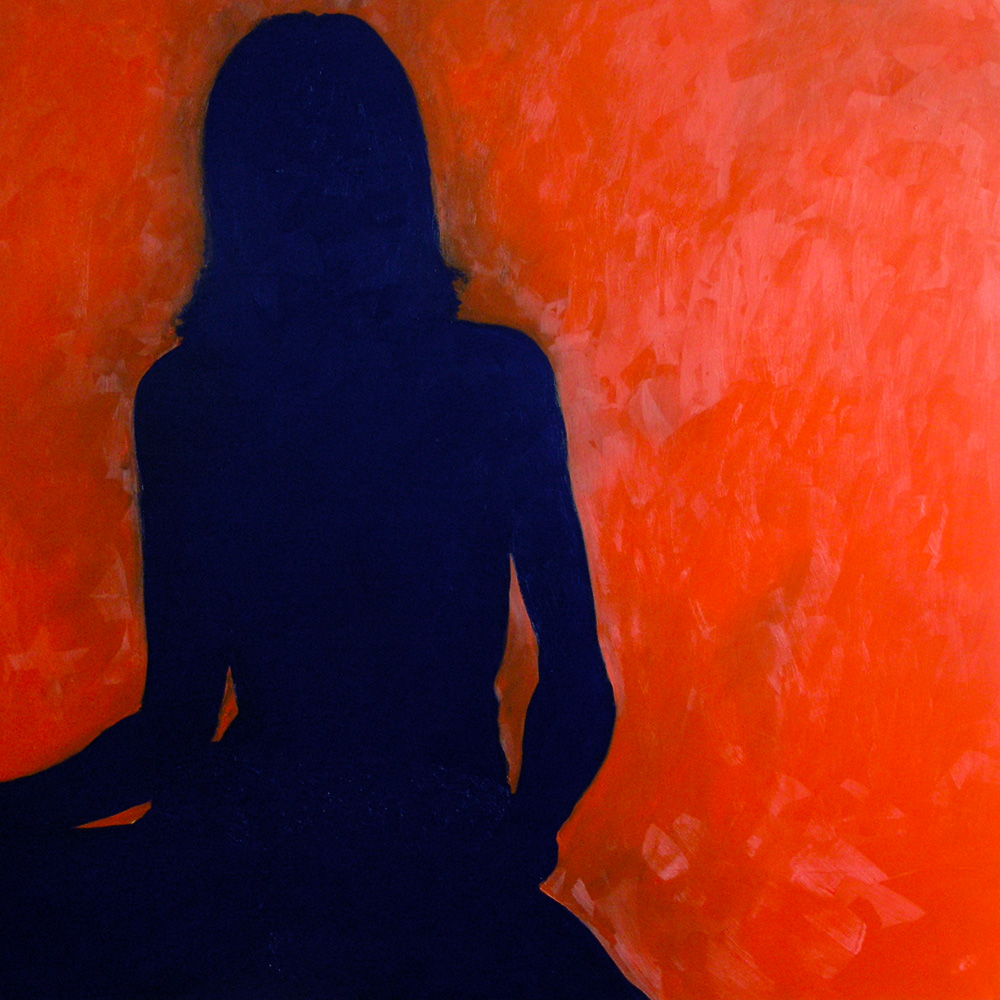
"Getting Dressed III" (oil on canvas, 190 x 190 cm).
GORDIAN KNOT
The Gordian Knot: It is a metaphor for an intractable problem solved easily by finding an approach to the problem that renders the perceived constraints of the problem moot.
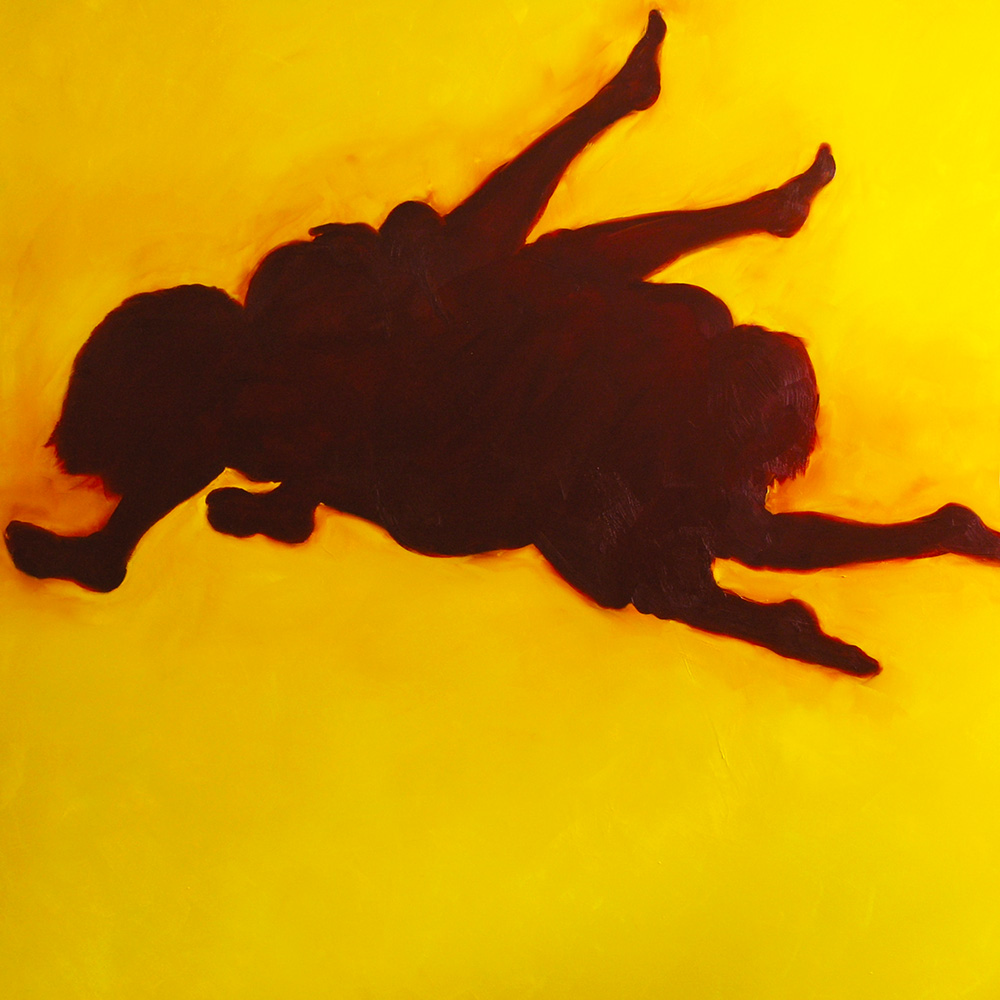
"Gordian Knot" (oil on canvas, 190 x 190 cm).
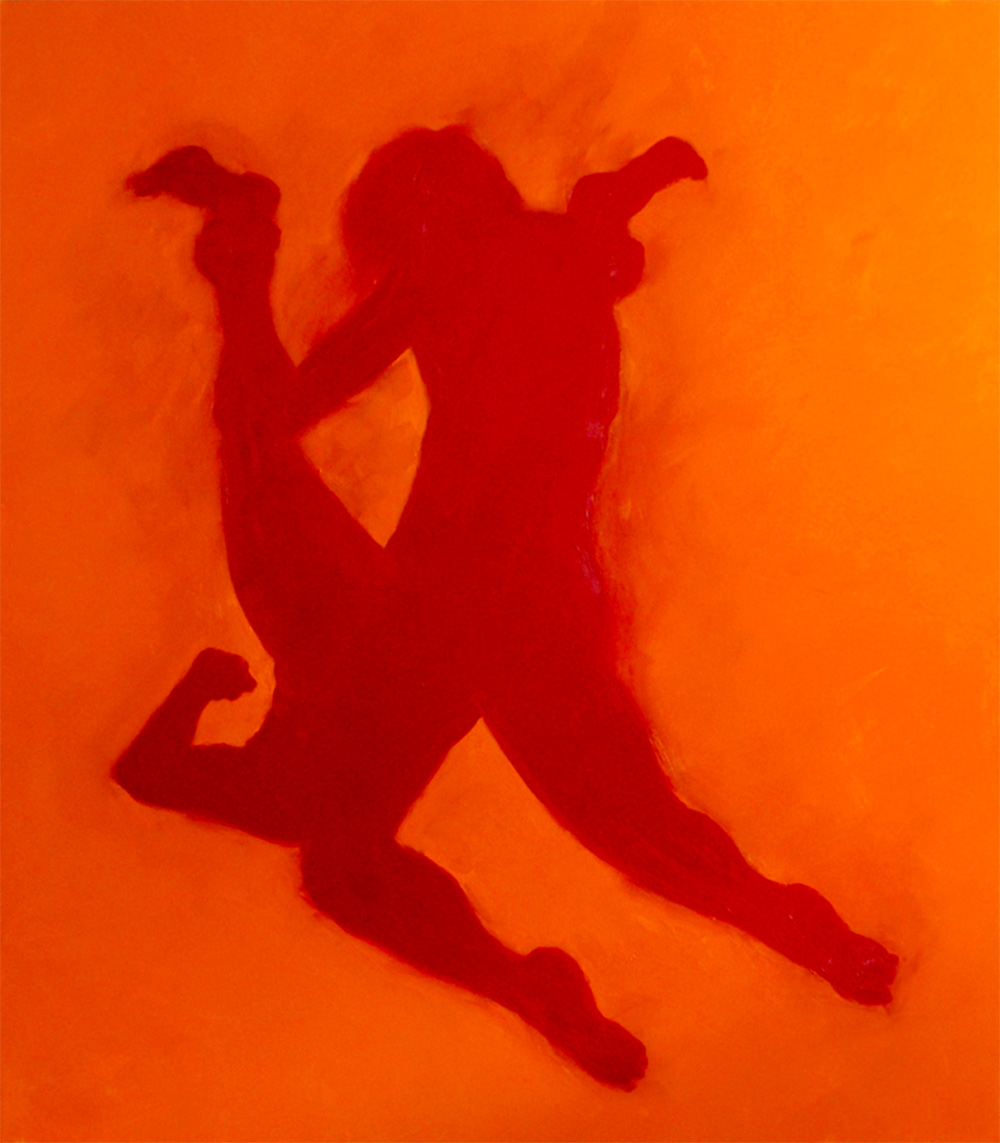
"Flying Around!" (oil on canvas, 175 x 200 cm).
This painting is called Foursome because I painted a plant as an extra participant.
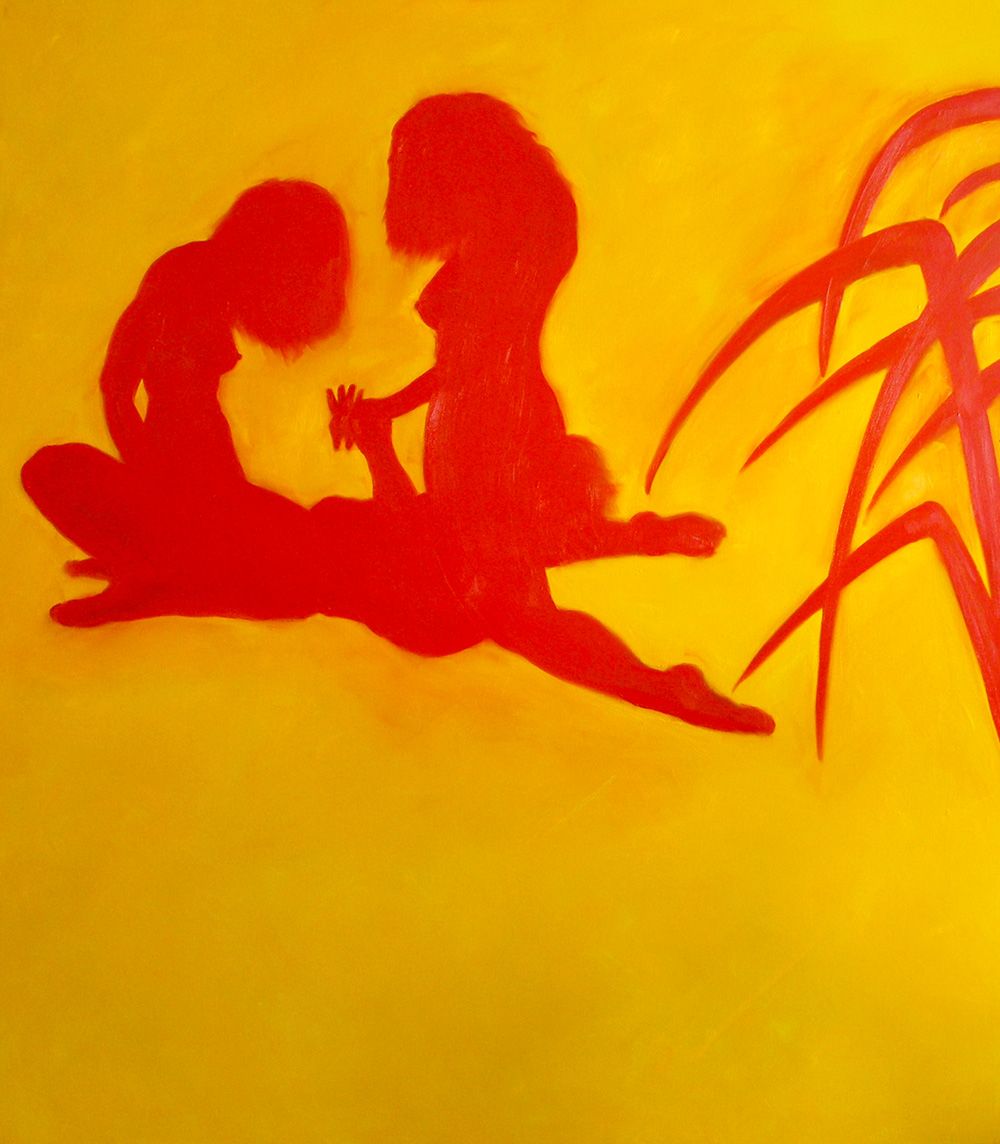
"Foursome" (oil on canvas, 175 x 200 cm).
MIDNIGHT SEA
Although I've poured all my energy into oil paintings, I still managed to create the occasional fur painting.
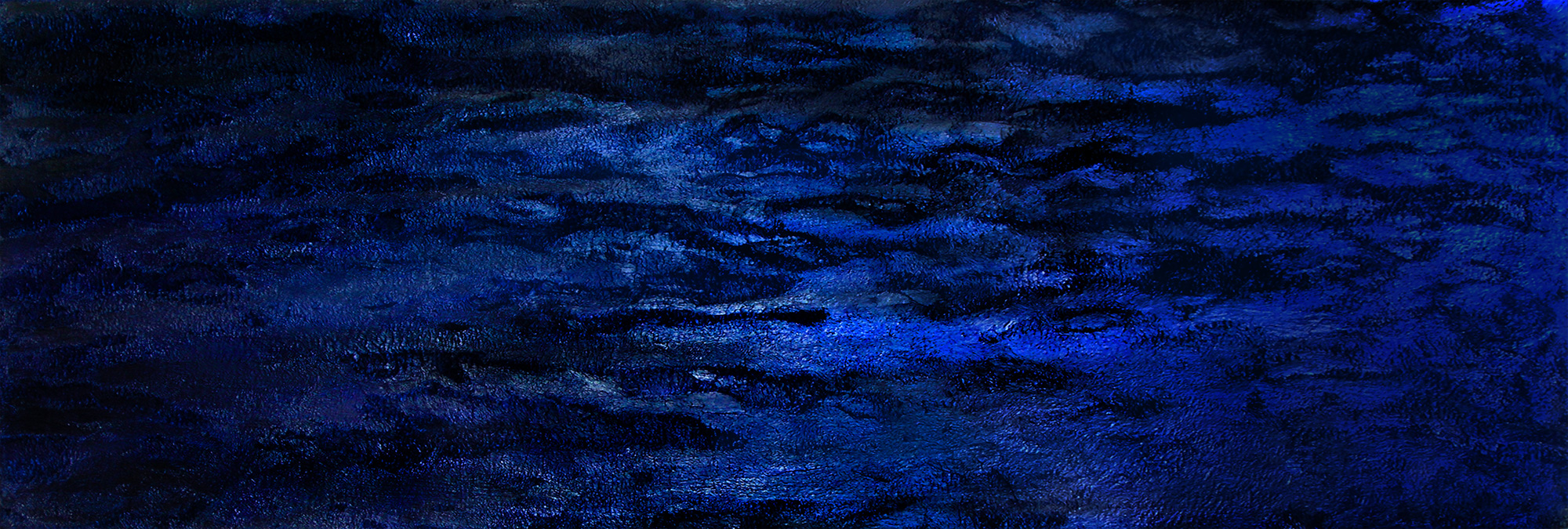
"Midnight Sea" (acrylic, oil on artificial fur, 136 x 400 cm).
Like this seascape. It is 1.40 m high and no less than 4 m wide, because a seascape is in fact a horizon. I don't like small horizons, I think. And besides, it's a seascape with a full moon, hence the title Midnight Sea.
POETRY ON PLASTIC
Every now and then I made a series of Sumi. Sumi (enamel on pvc, 100 x 140 cm) is based on traditional Japanese ink drawings called sumi-é, a derivative of calligraphy, and inspired by haiku. You could say that Sumi was a painted haiku, like Poetry on Plastic.
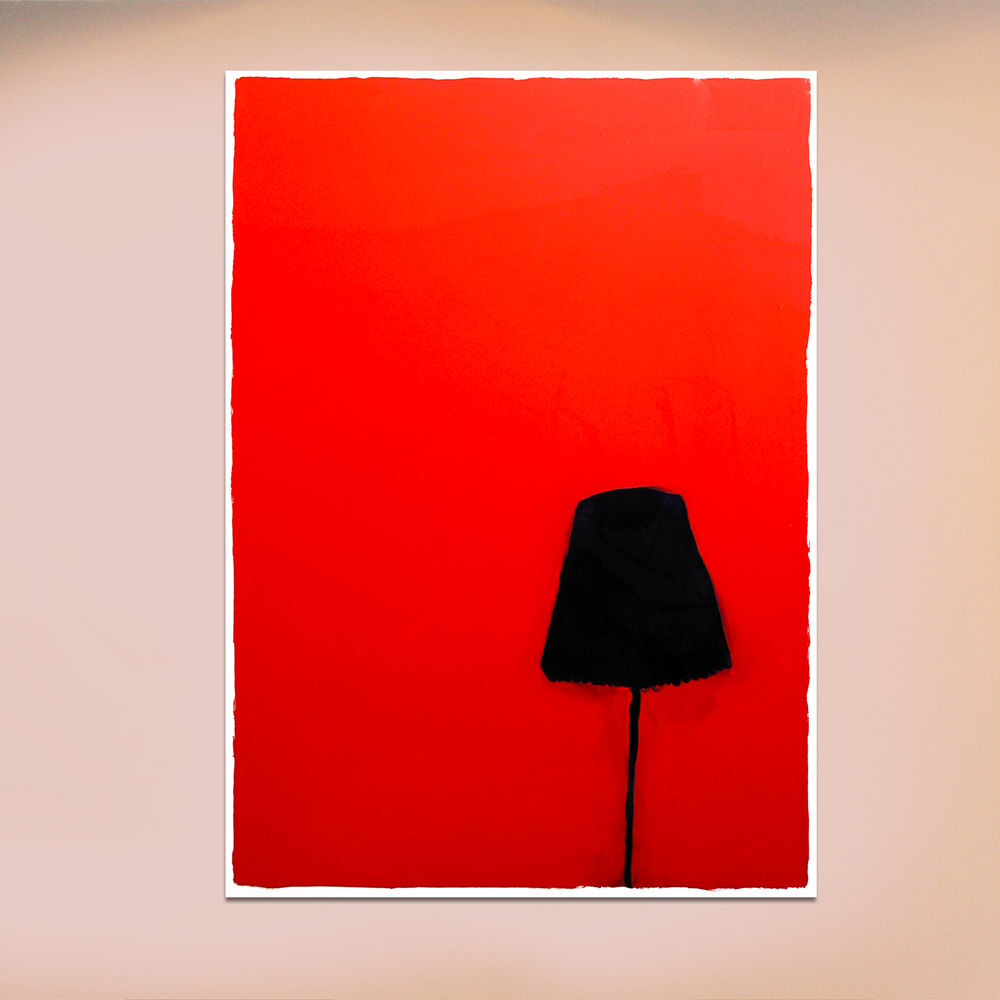
The lamp once out
Dreams will enter
The window frame.
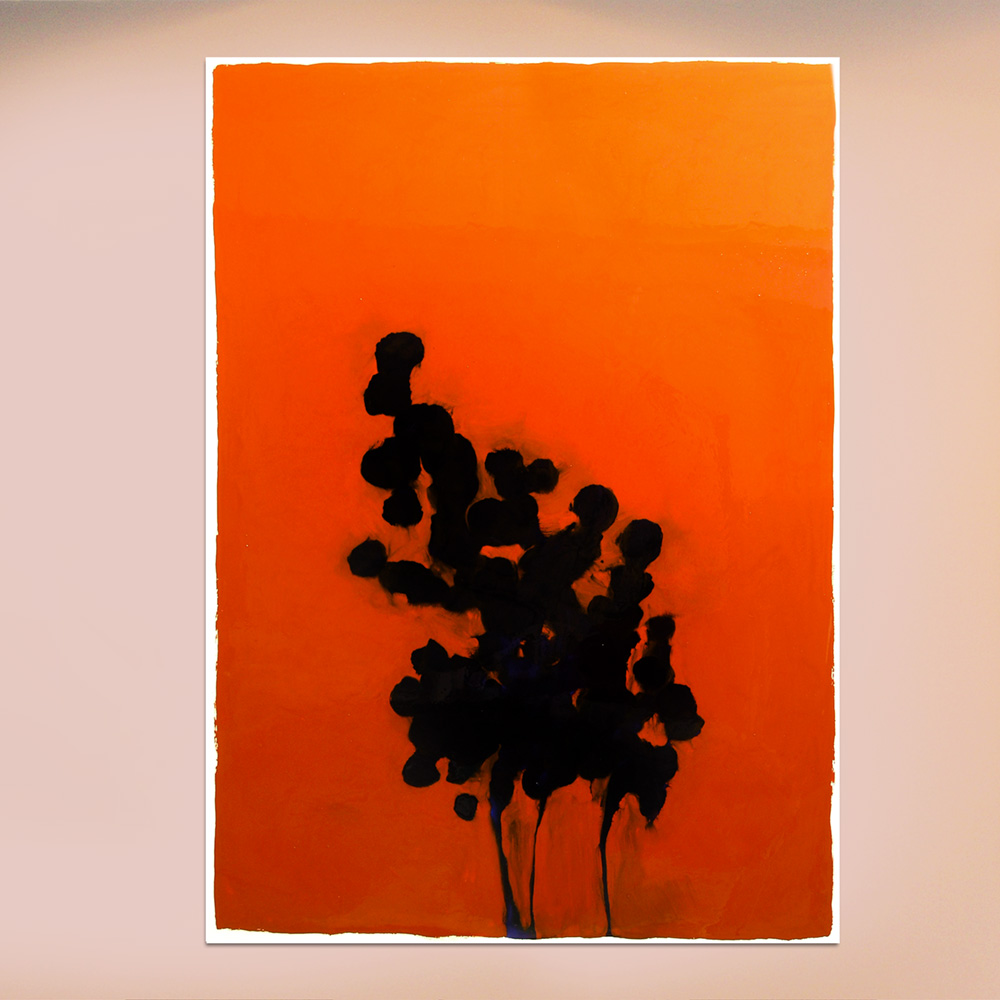
After the twilight rain
The brilliant-hued sky -
A lovely sunset.
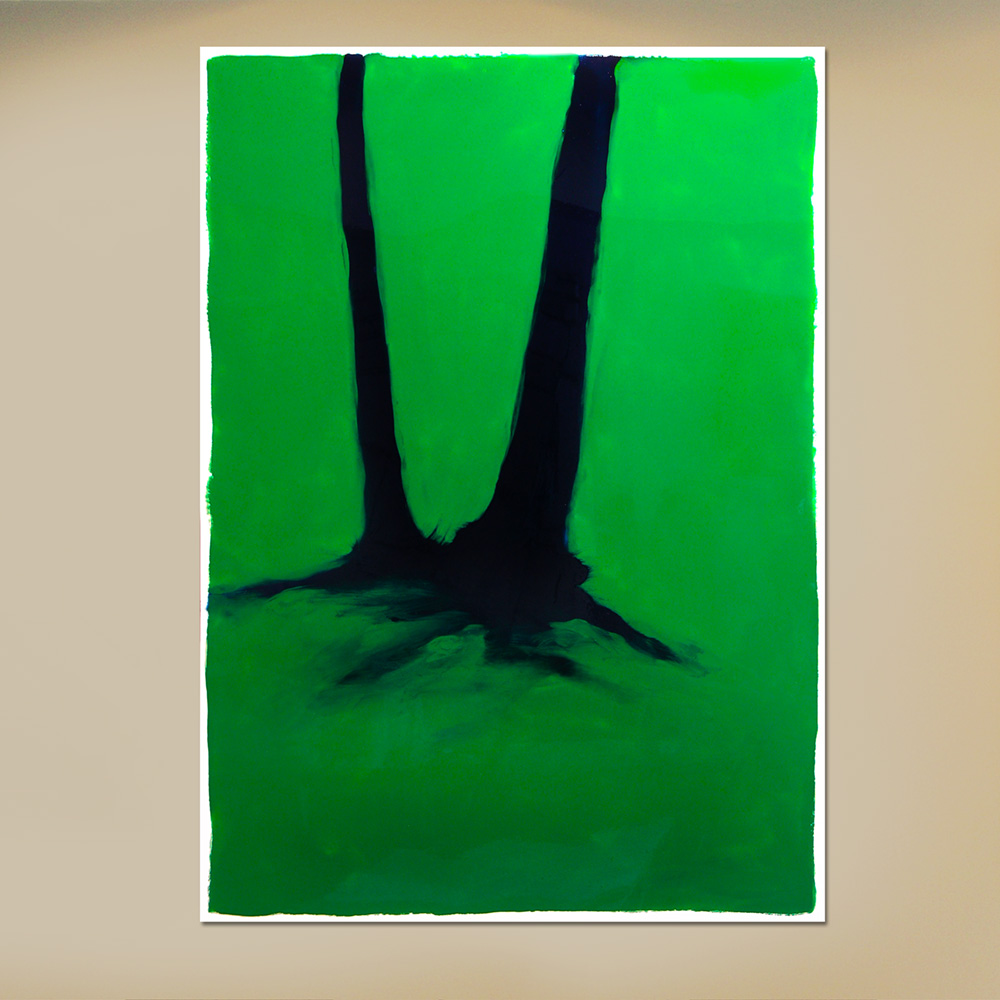
At a silent pond
A frog jumps into the water,
Splash! Silence again.
SET DESIGN
GLORIA IN DEN HOGE
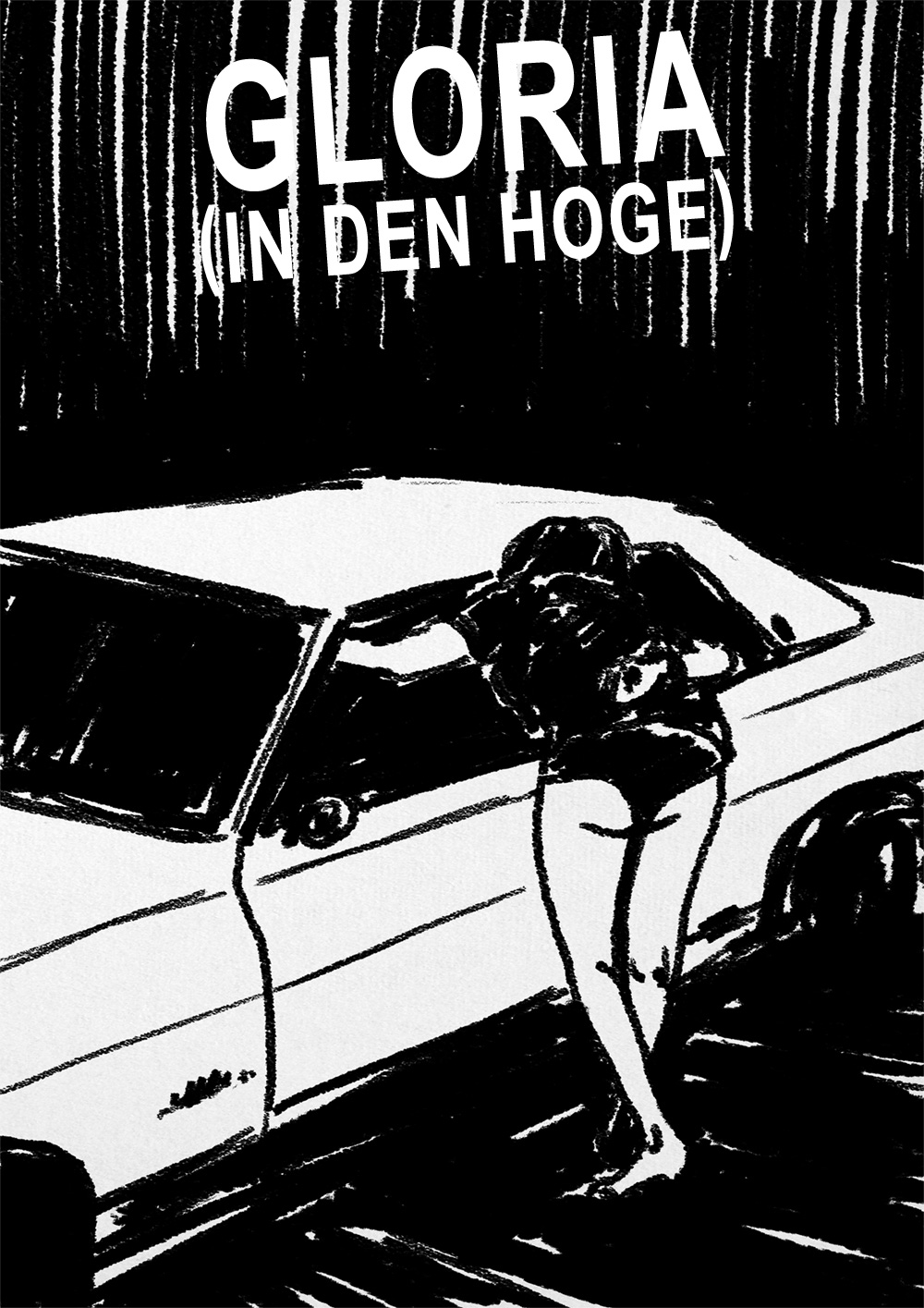
The setting for the play Gloria was actually a landscape. A cornfield, to be precise. The abandoned vintage car represented a house, or a kind of home, if you will.
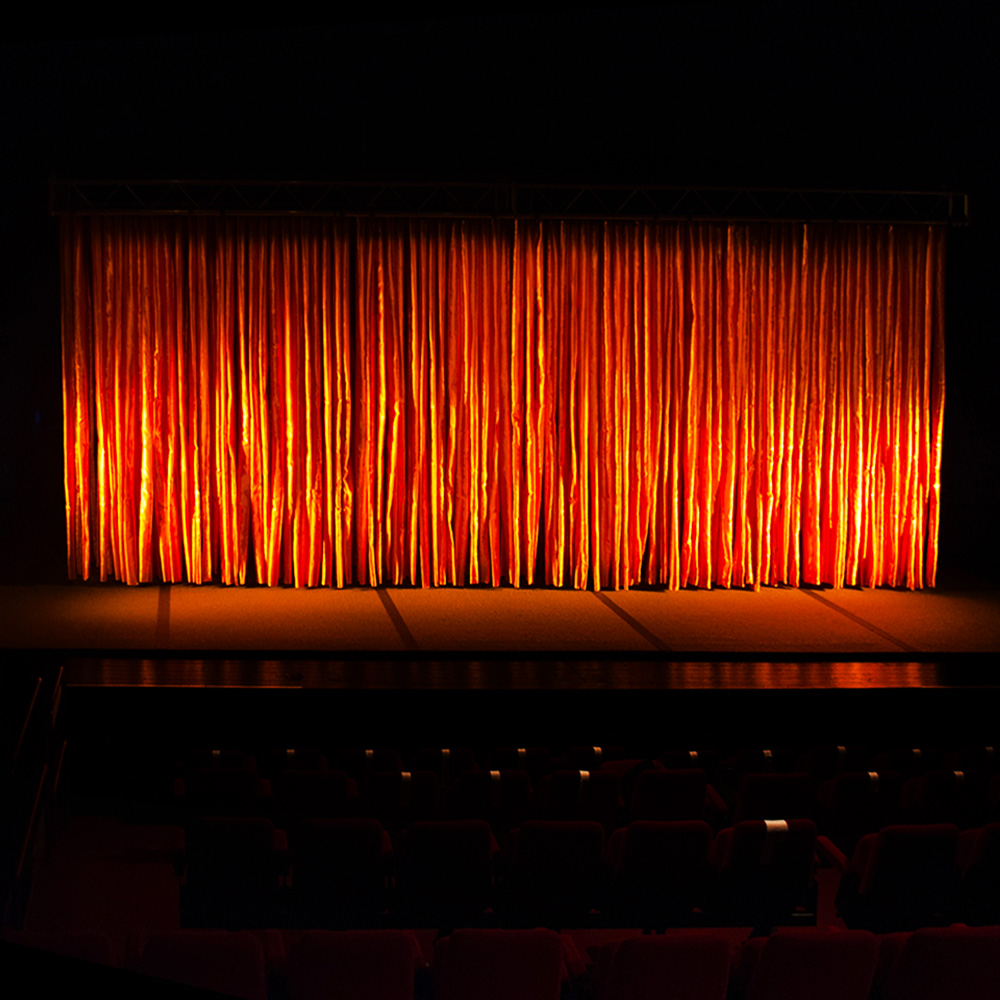
Instead of the classic curtain that rises at the beginning of the play, I used the set itself: a huge curtain of orange silk tubes, as wide as the stage and over 3 meters deep. This was the cornfield.
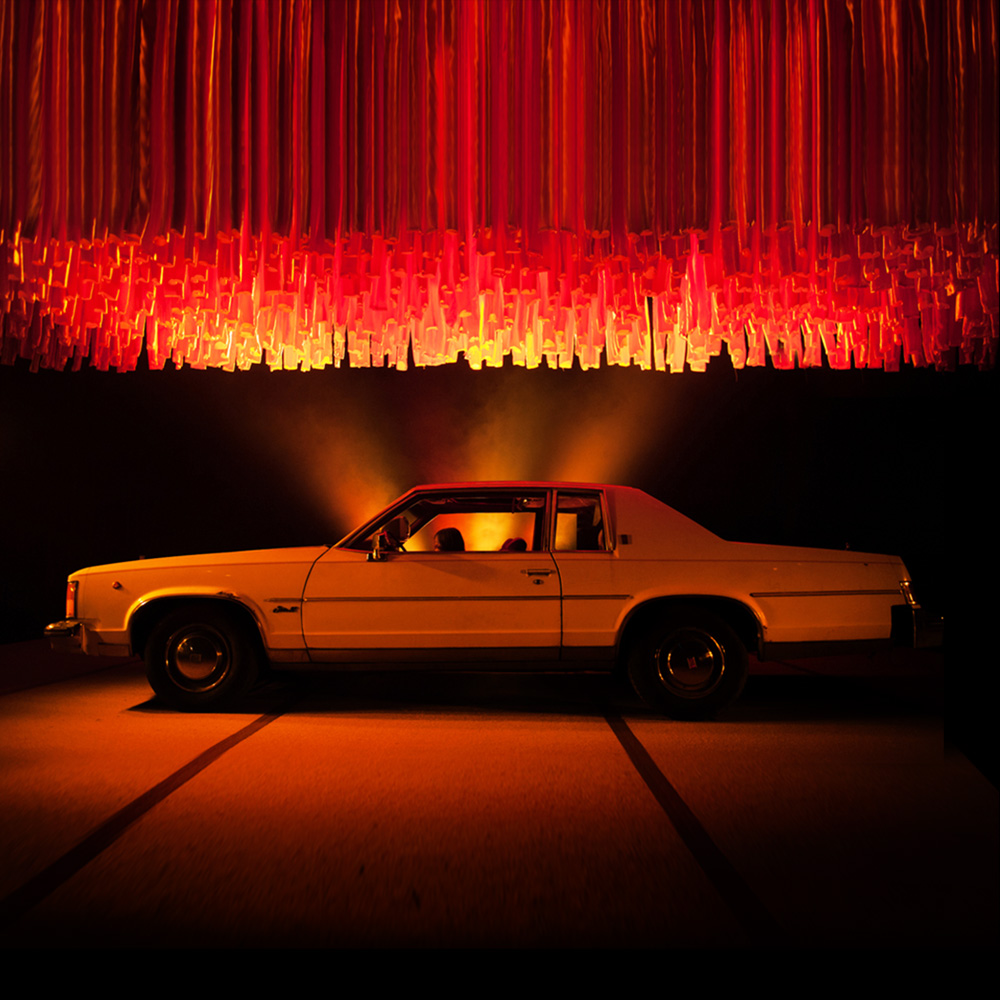
When the cornfield was lifted at the beginning of the play, a vintage car appeared. Creating a cornfield onstage wasn't practical, so I decided to hang it upside down to achieve the desired effect. After all, a landscape wasn't about the location of things, but about the depth created.
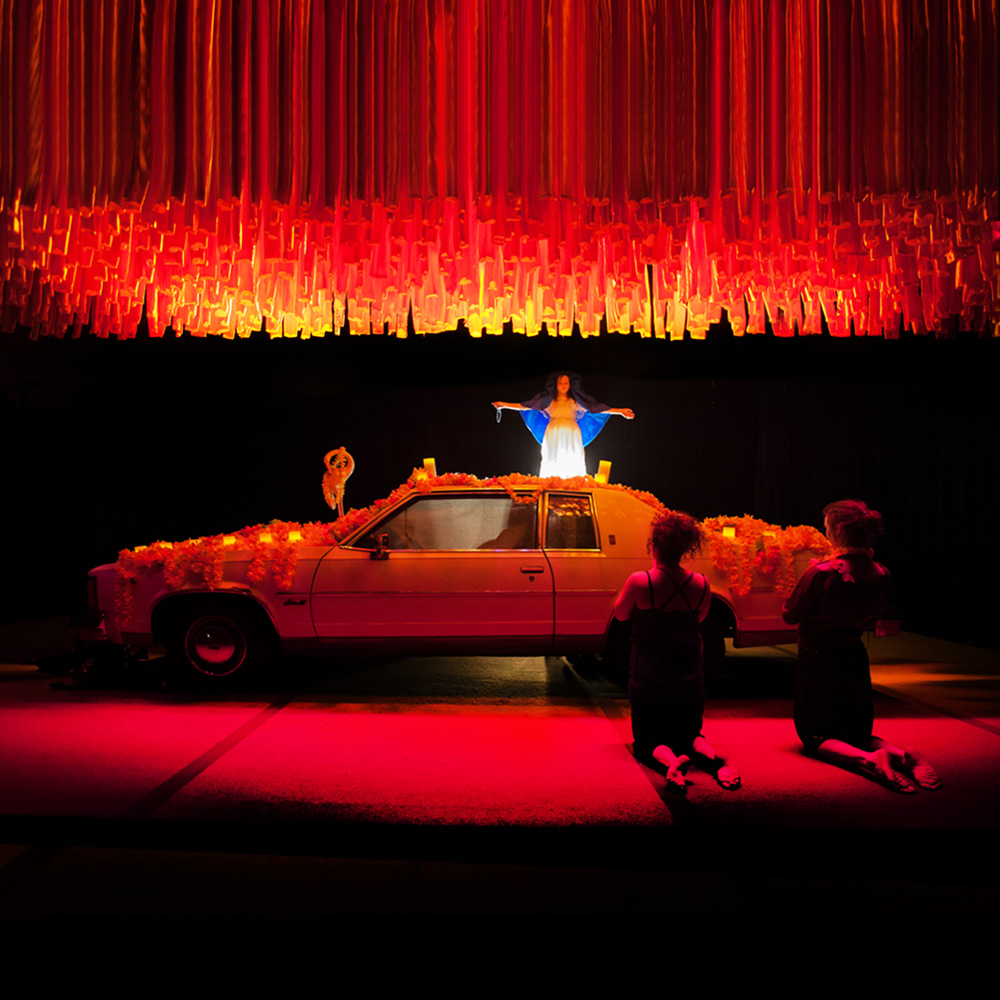
Final scene of the play.