CUTTINGS
I started working on a series of diptychs.
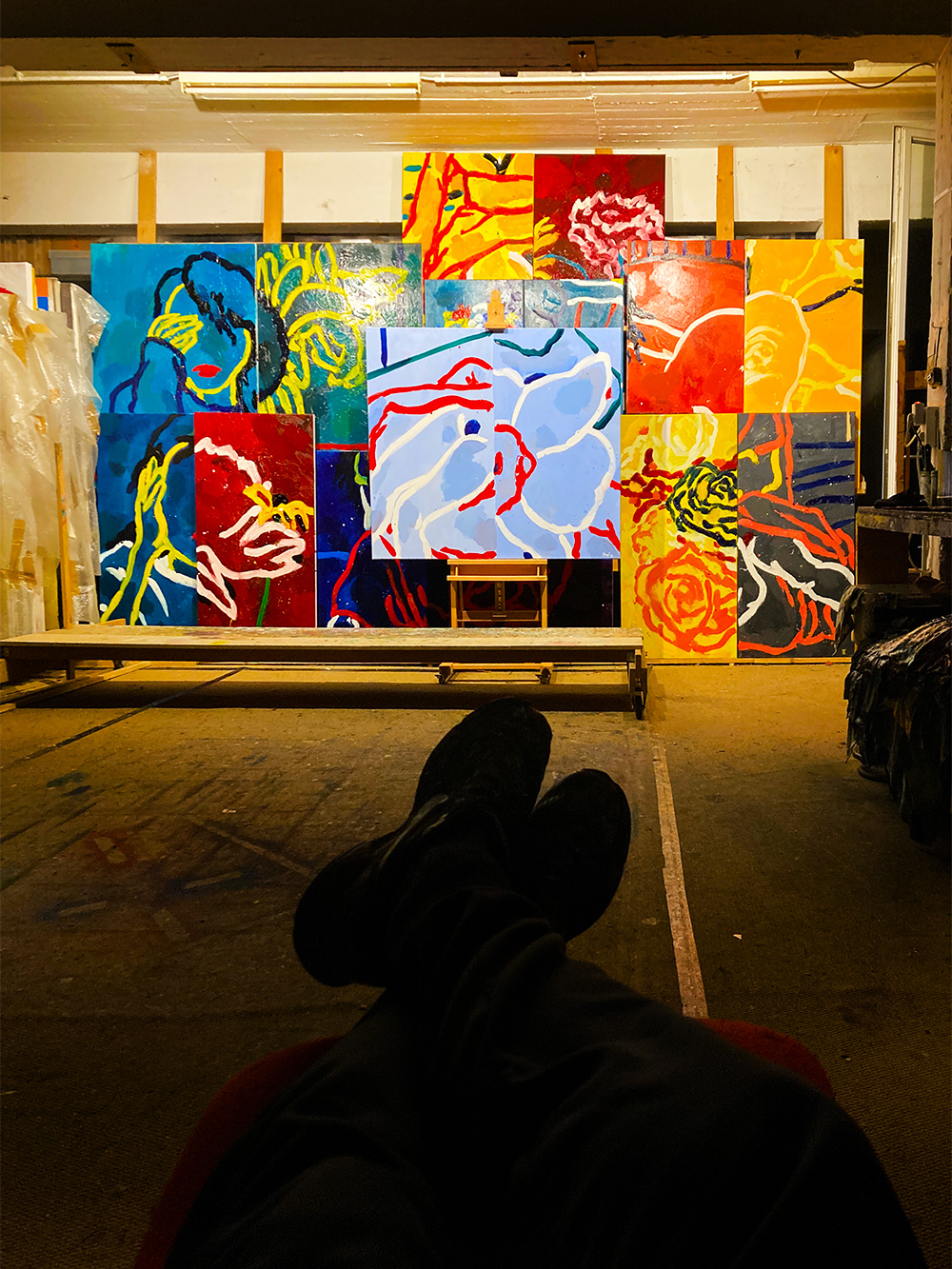
My approach to a diptych is quite simple: a diptych is a painting consisting of one or two canvases and, in a sense, two spaces. Although they formed a single work, there was always an uneasy relationship between the two surfaces. If you think about it, a diptych never had a center, or rather, two.
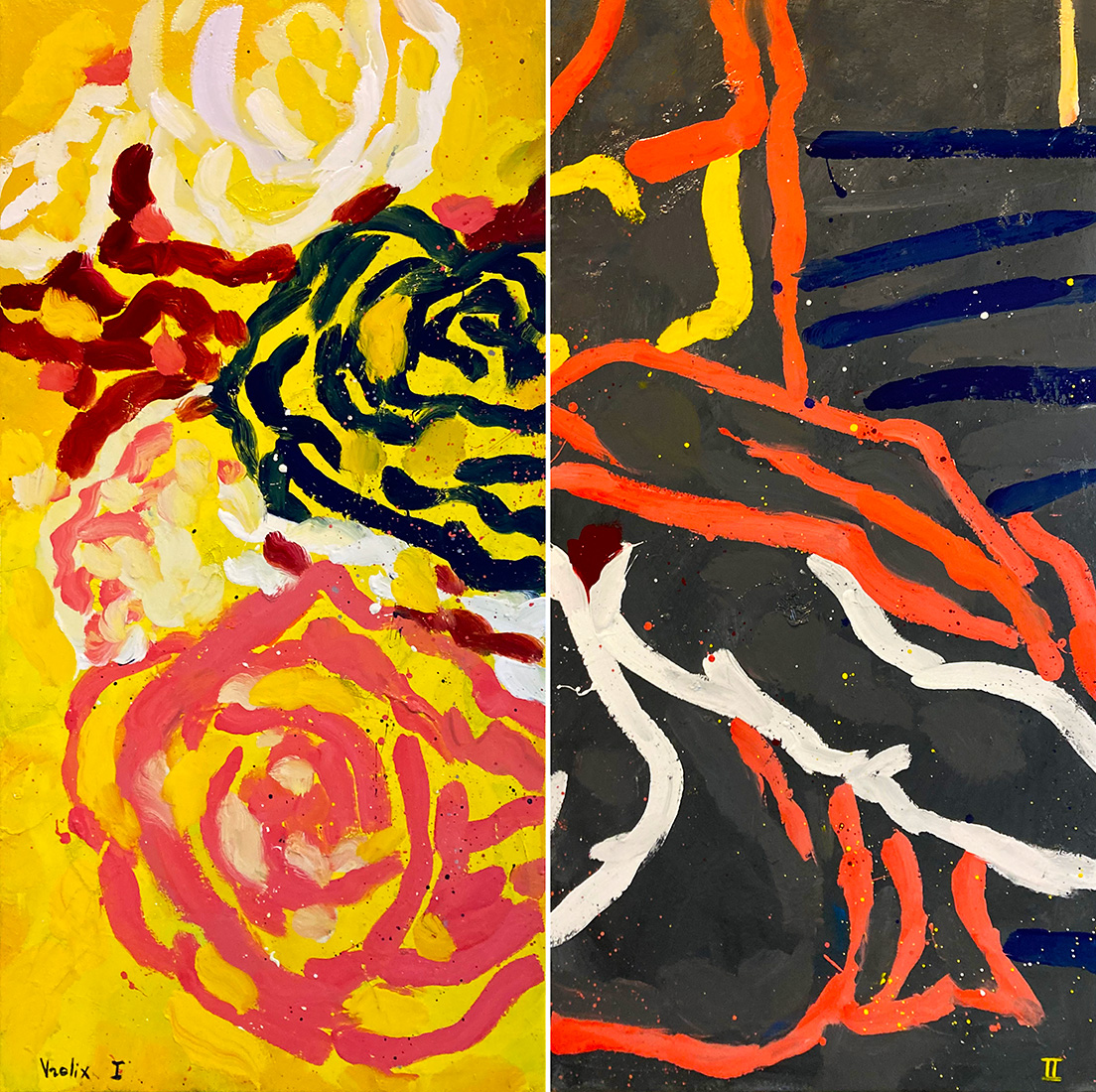
"Flowering" (oil & glaze medium on canvas, 2x 70 x 140 cm).
Each of the two canvases spanned the entire width of the diptych, meaning I painted only half of each piece. The relationship between the two parts continued through the subject matter, ultimately uniting the diptych as a single painting.
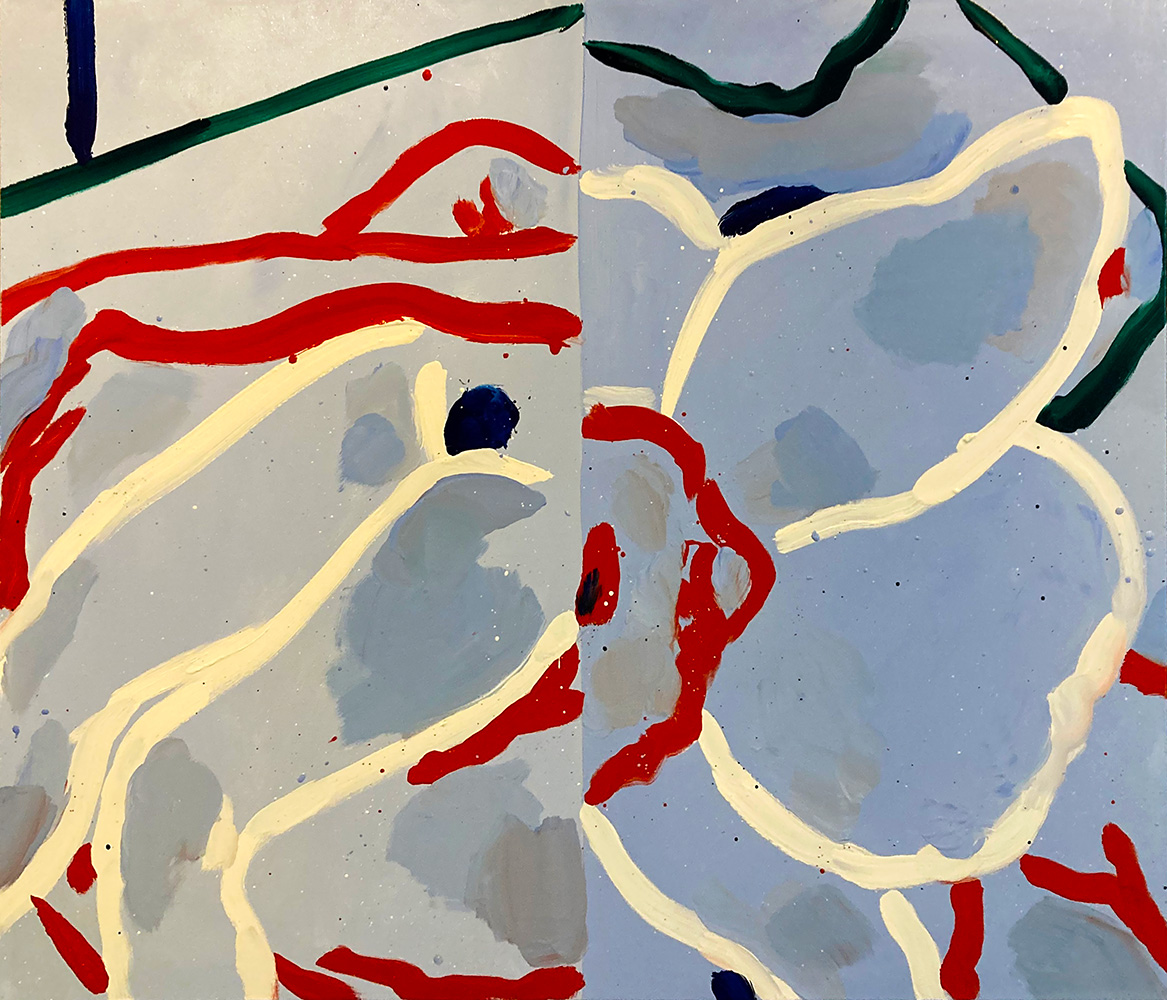
"The Dream" (oil & glaze medium on canvas, 120 x 140 cm).
This painting is a diptych on one canvas.
After painting with colored lines instead of planes, as I did this year and last year, I reached a point where I'd said everything I wanted to say. I returned to silhouette-based colorfield paintings, but stuck with the diptych concept. I wasn't finished with that idea yet.
SLICES OF LIFE
There's another way to work with a diptych: painting the same subject twice, one figurative and one abstract.
You could say that one is the pixelated version of the other.
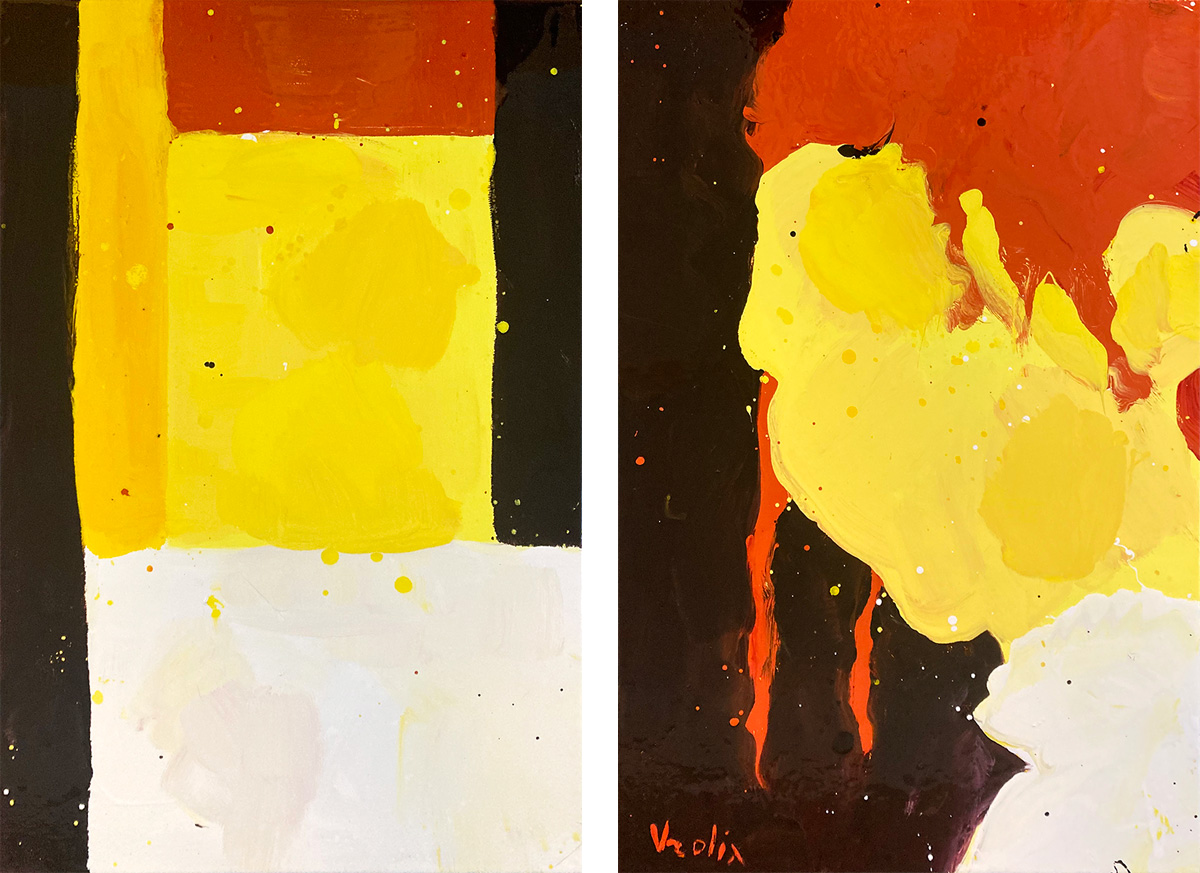
"Double Portrait of C." (oil & glaze medium on canvas, 2x 40 x 60 cm).
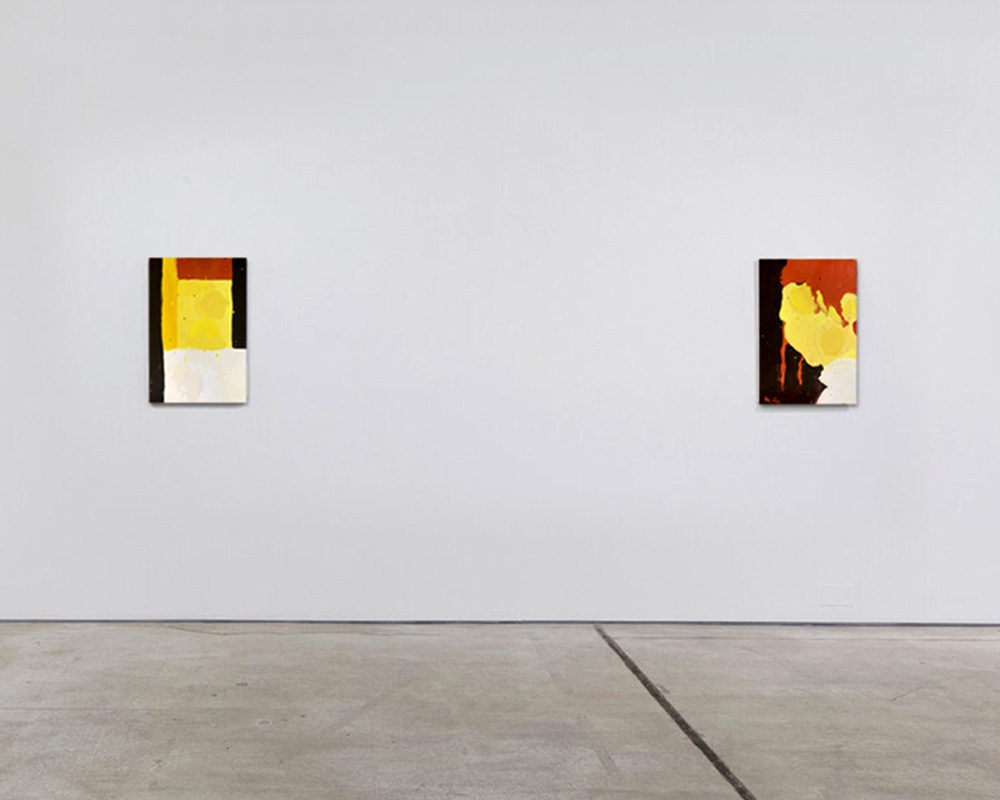
They even work well when there is some distance between them.
By working on two panels simultaneously, the same reality could be represented in two completely different ways. The question, then, was not so much what abstraction was, but what it was not.
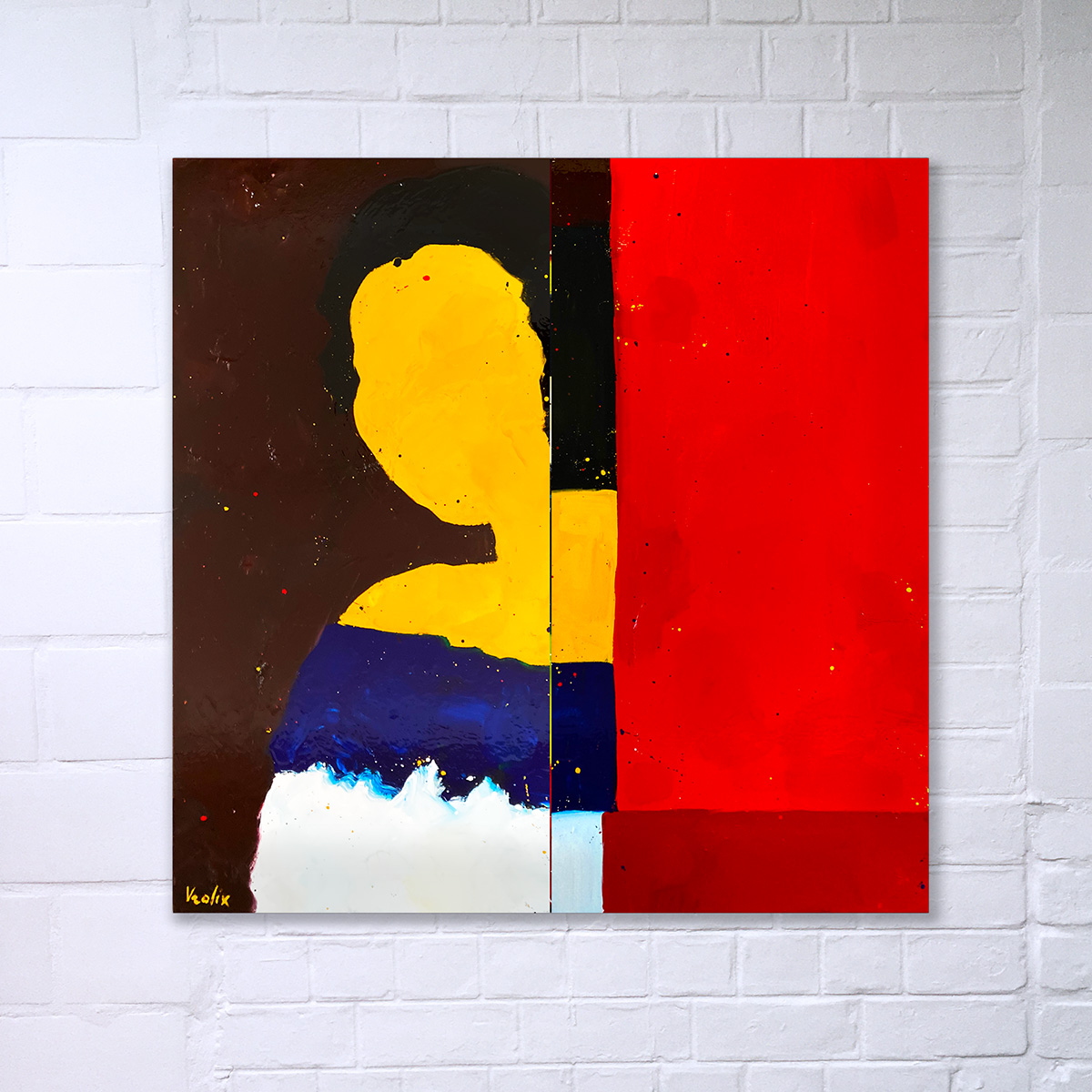
"Next To The Red Pillar" (oil & glaze medium on canvas, 2x 60 x 120 cm).
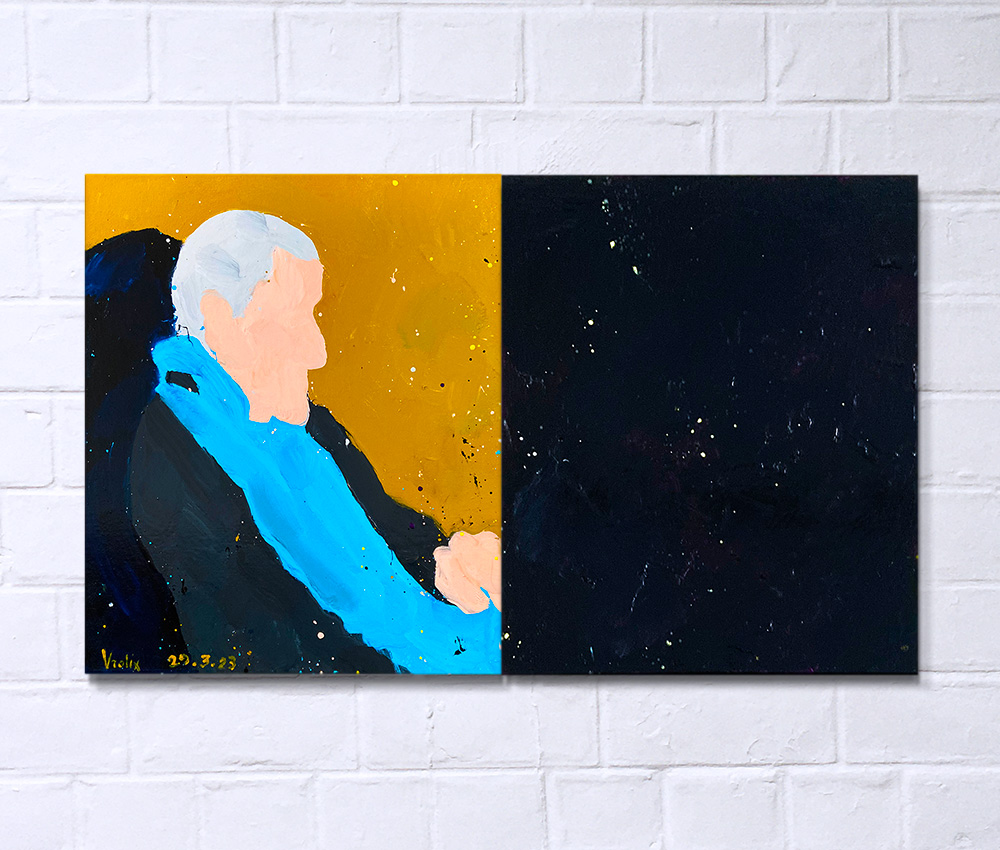
"R.I.P. Mama" (oil & glaze medium on canvas, 2x 40 x 60 cm).
My mother passed away on March 29, 2023. She was 92 years old.
THE FINAL CUT
In this diptych series, I crop the subject, leaving only half visible. The other half is a blank canvas.
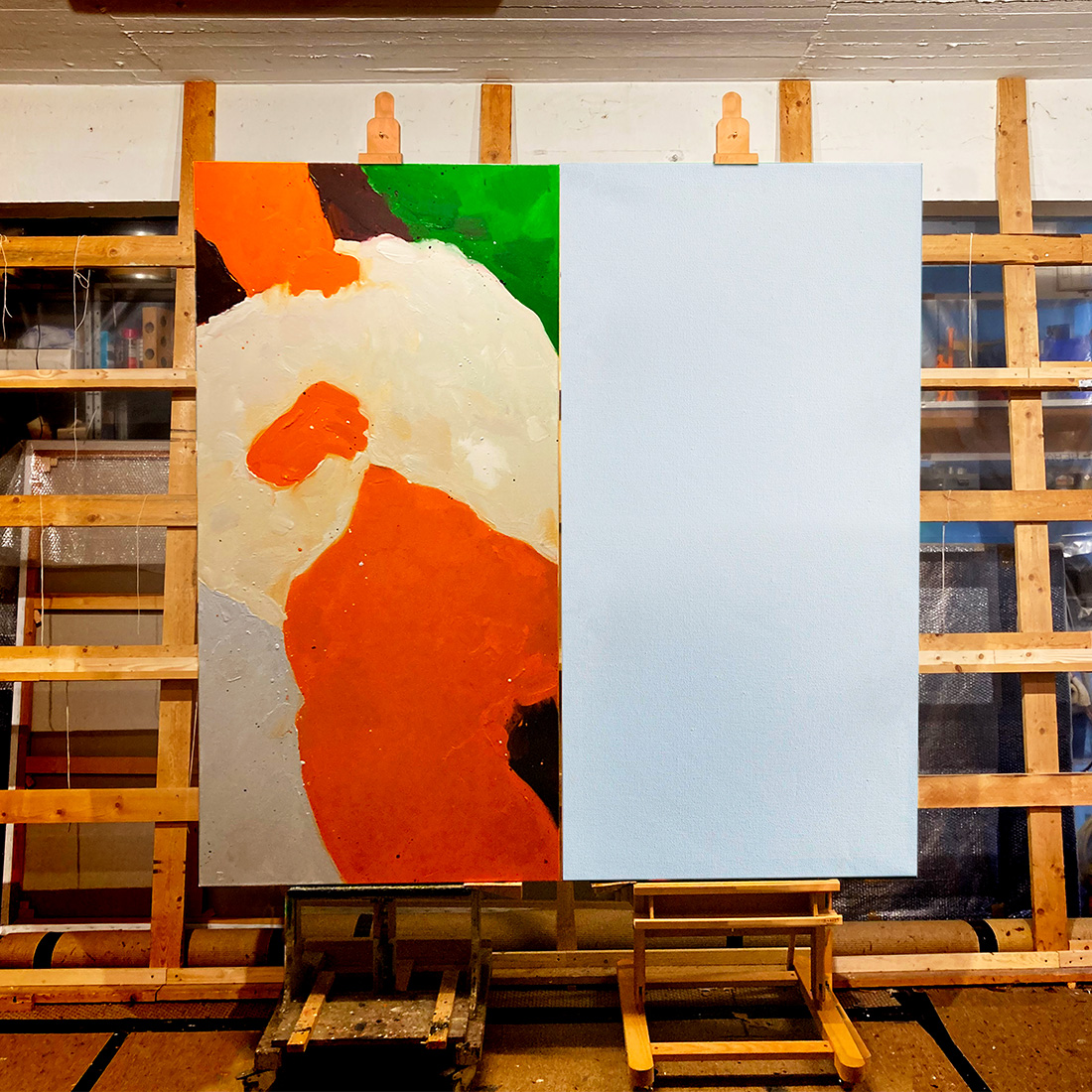
"The Pavillion" (oil & glaze medium on canvas, 2x 100 x 200 cm).
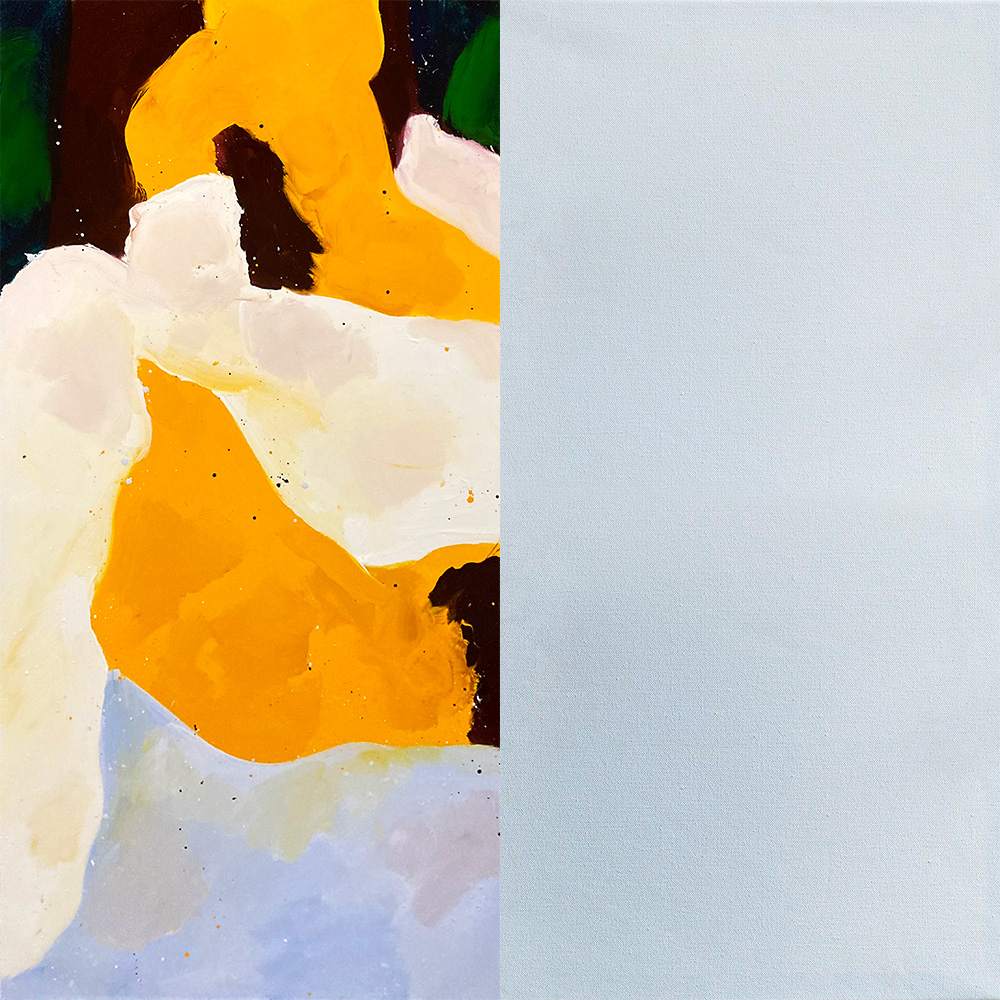
"The Warmest Season" (oil & glaze medium on canvas, 2x 80 x 160 cm).
SPLIT
Another way to make a diptych was to divide one canvas into two halves: one side representative and the other abstract.
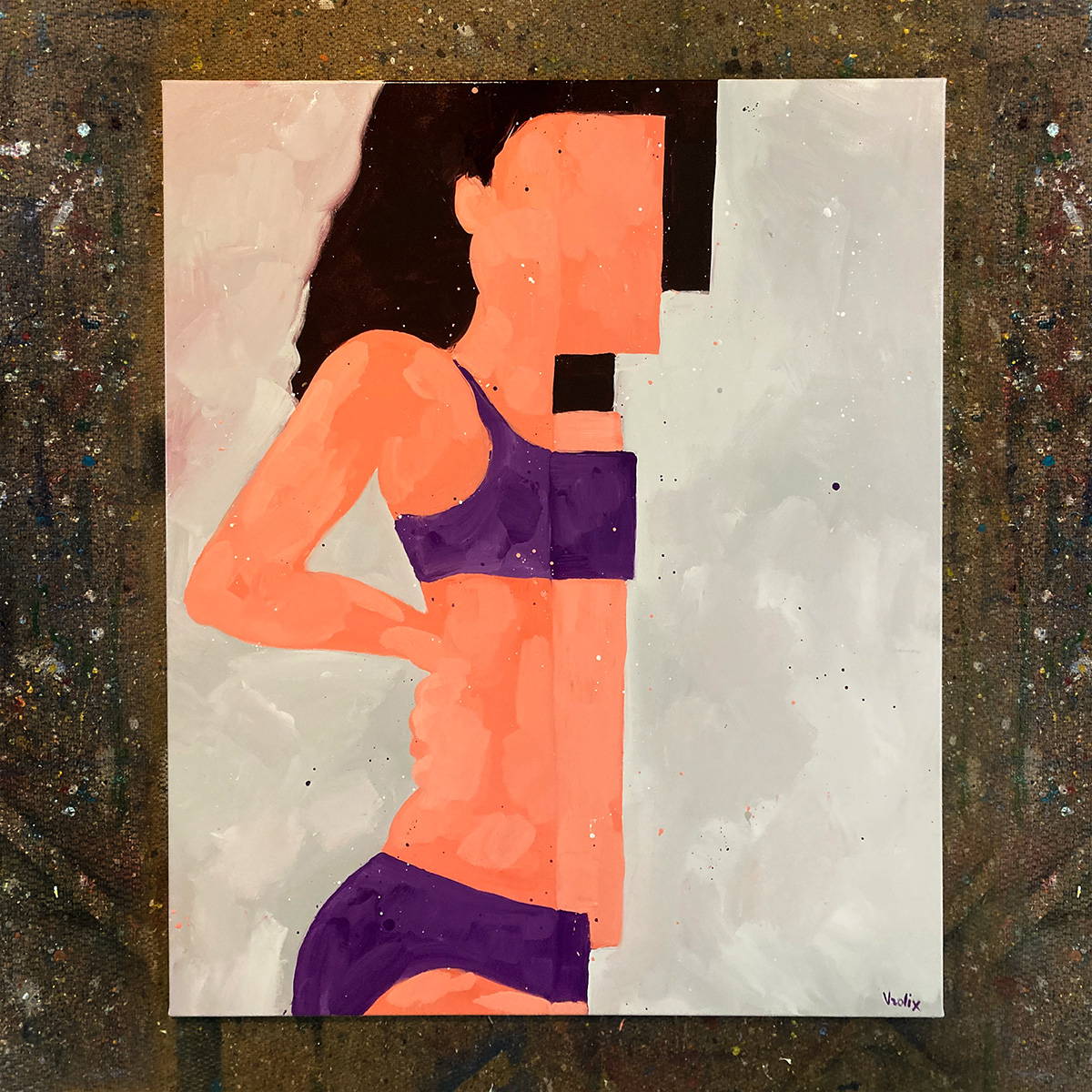
"The Swimming Lesson" (oil & glaze medium on canvas, 120 x 140 cm).
The layout does not necessarily have to be vertical, it can also be horizontal.
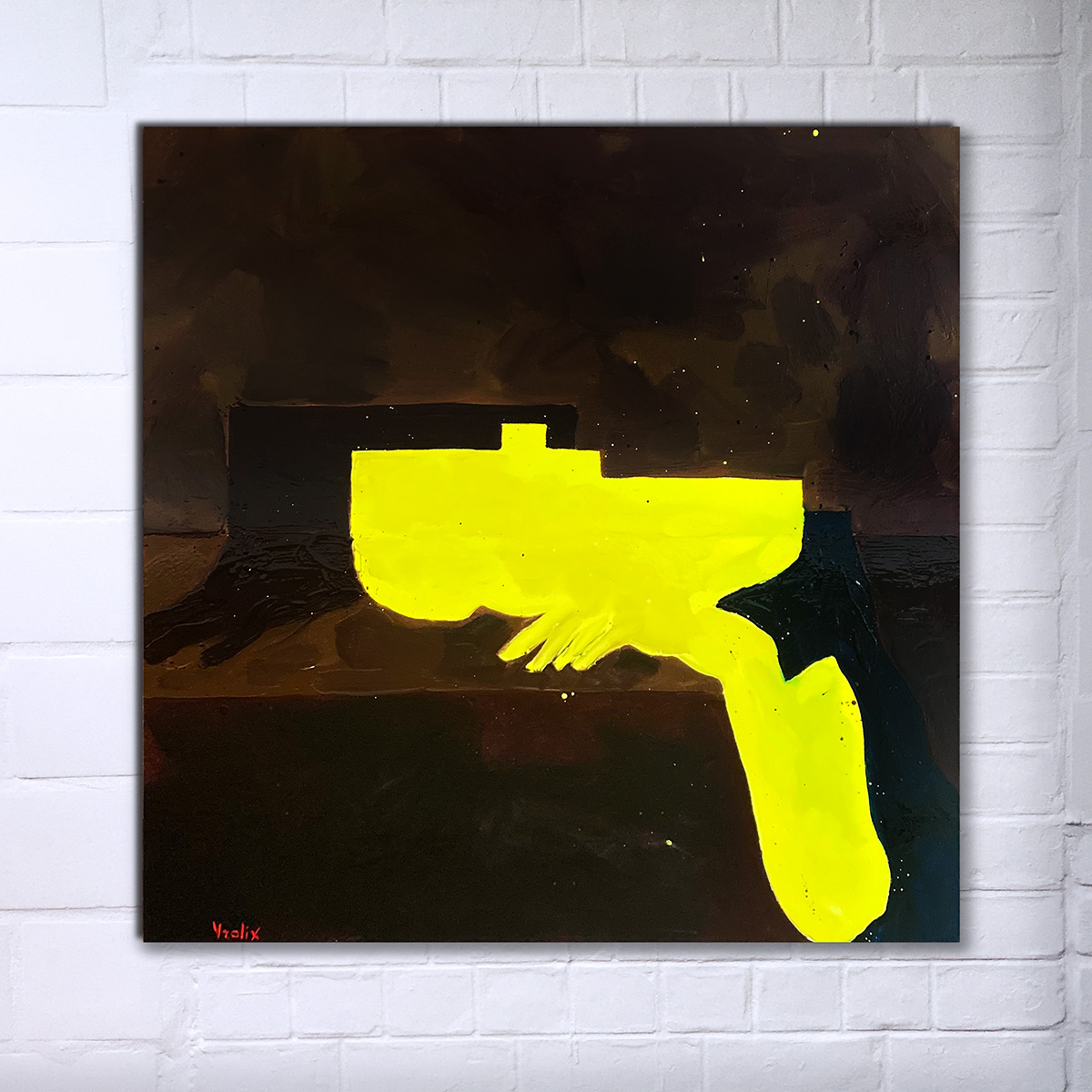
"The Silence" (oil & glaze medium on canvas, 120 x 120 cm).
TIMELINE
Timeline is a series of twelve paintings in which one leads to the next, as if traveling through time. It begins with a queen and ends with a mummy.
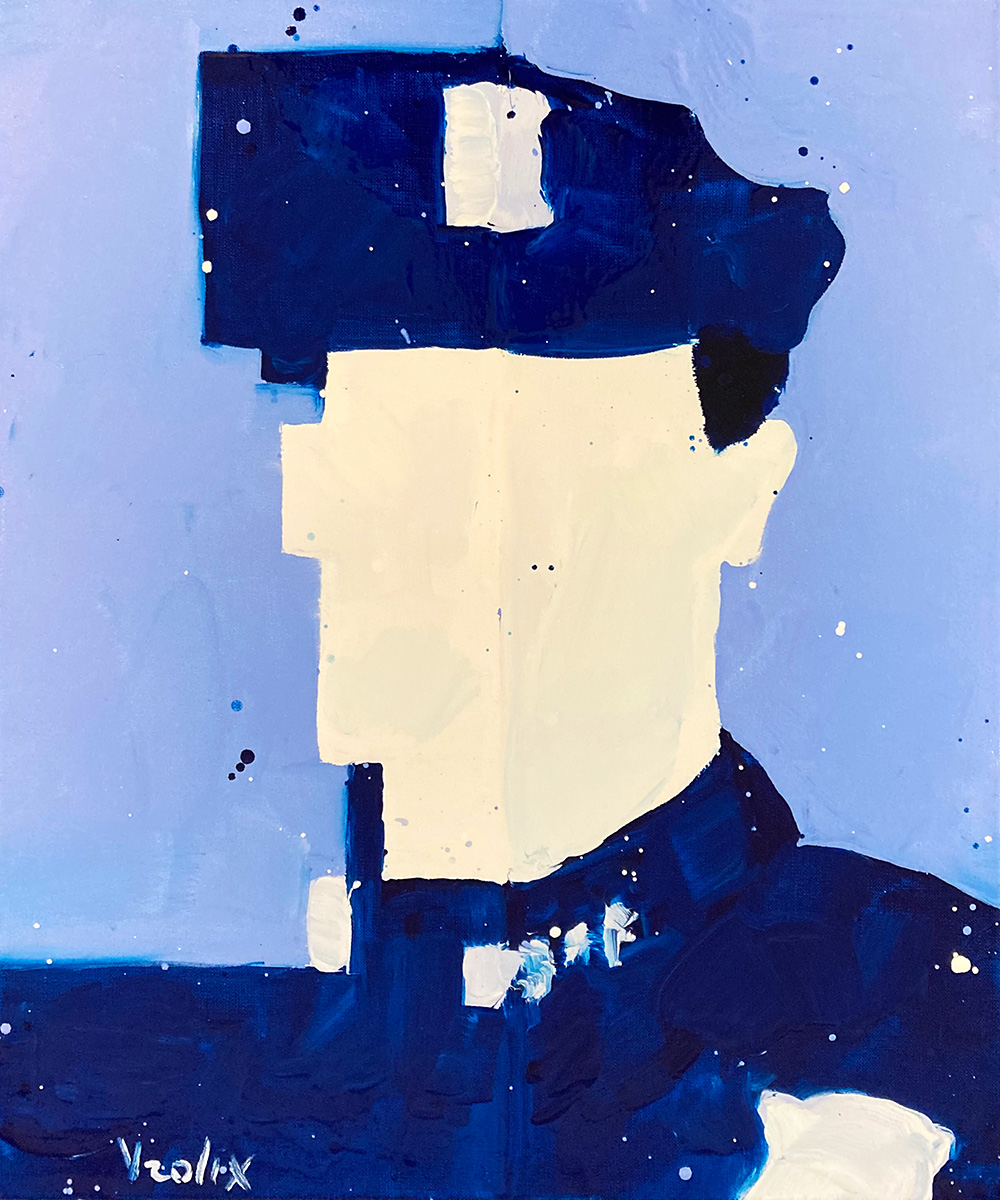
"B.L.M. Cop" (oil & glaze medium on canvas, 50 x 60 cm).
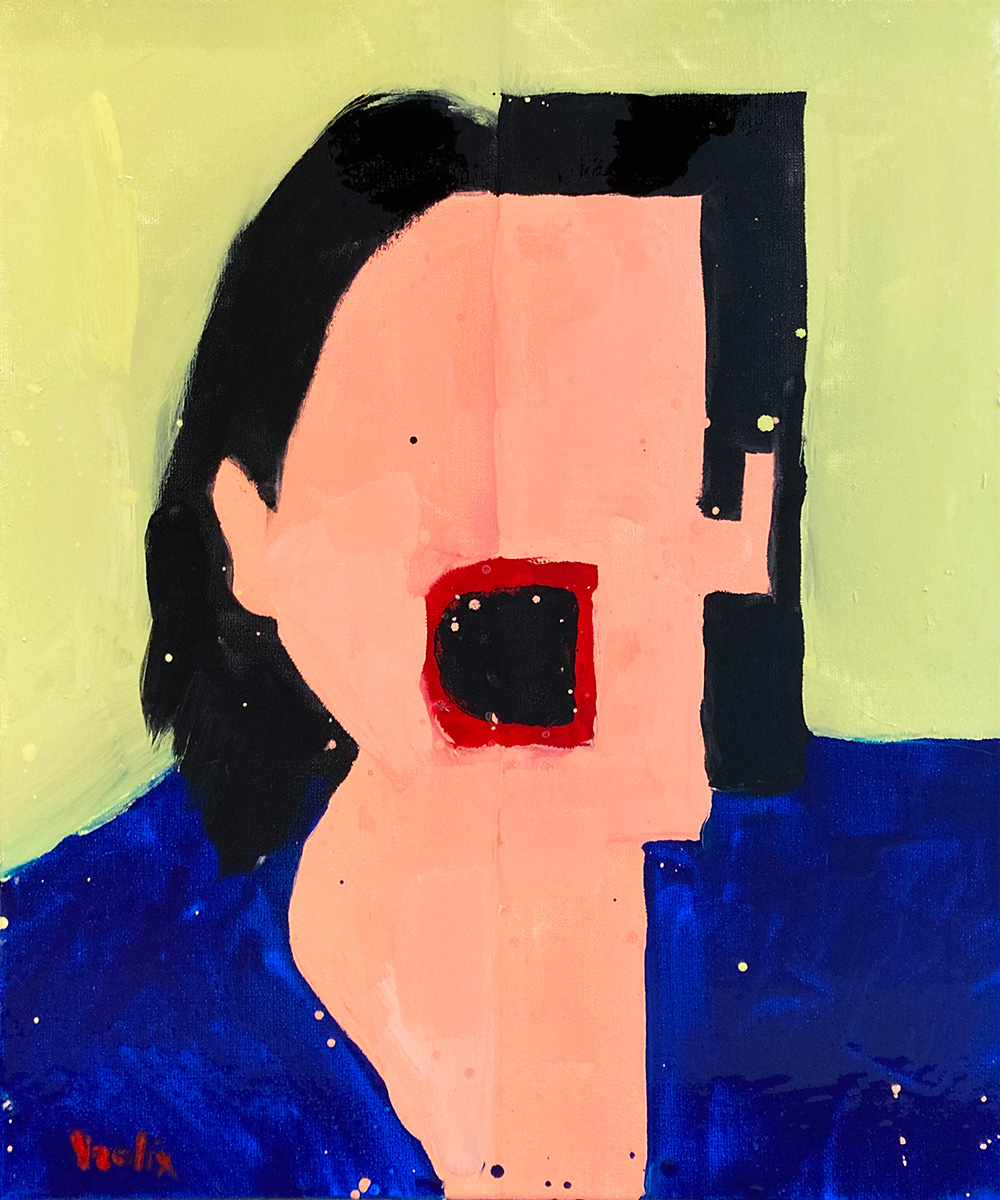
"The Scream" (oil & glaze medium on canvas, 50 x 60 cm).
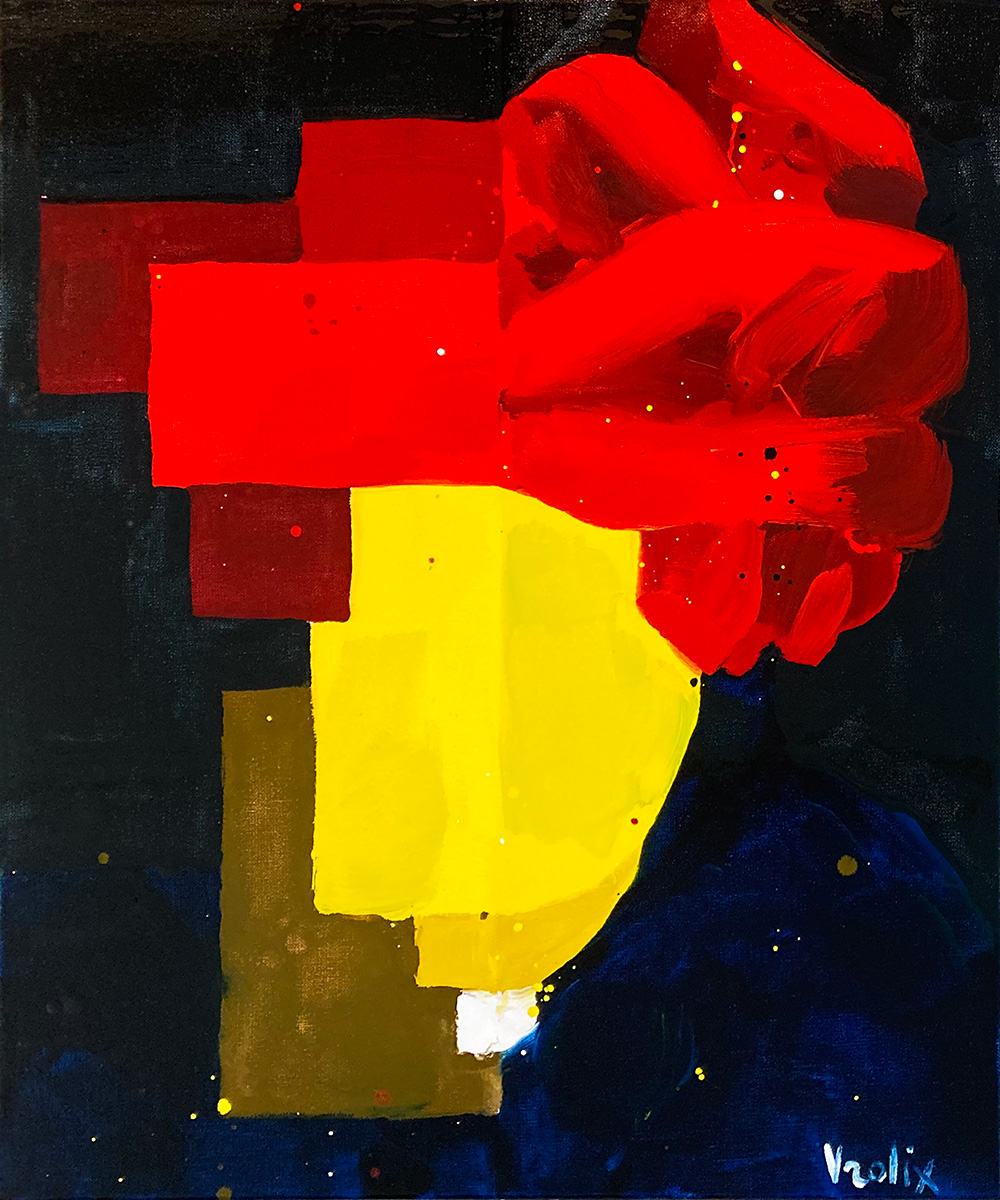
"Van Eyck" (oil & glaze medium on canvas, 50 x 60 cm).
THE INTERIOR MIND
Series have an end point. It's unpredictable, something you realize the moment it happens; you feel it while painting, or see it when the painting is finished. A certain routine develops, a sense of repetition, which makes it all feel a little too easy. It also feels like work, and that's never pleasant.
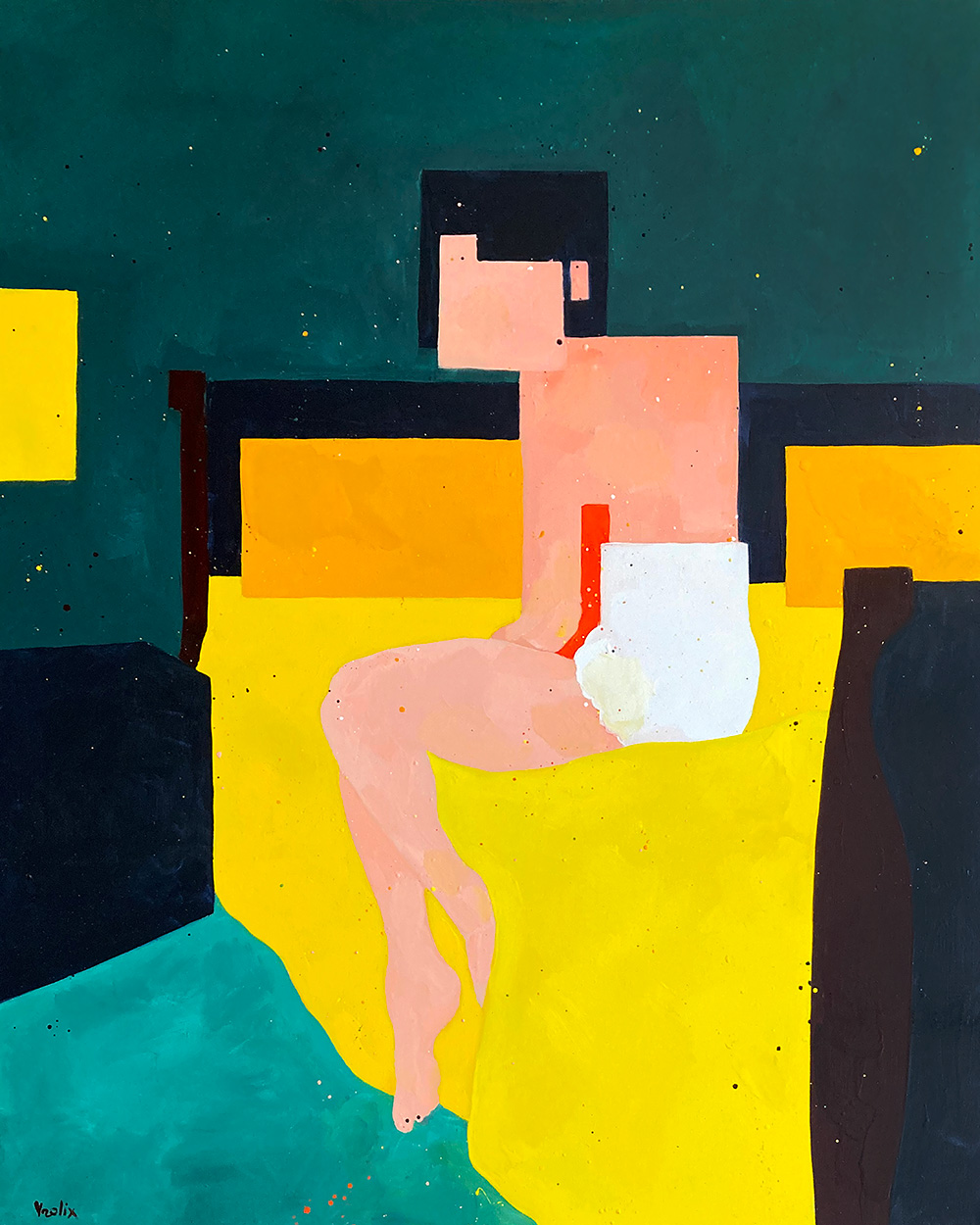
"The Interior Mind" (oil & glaze medium on canvas, 160 x 200 cm).
The painting The Interior Mind was intended as the beginning of a new chapter in the double series. Now it seems to be the end point.
THESE STREETS
The series These Streets are all paintings based on fragments from newspaper clippings, chosen at random. Just things that caught my eye for one reason or another.
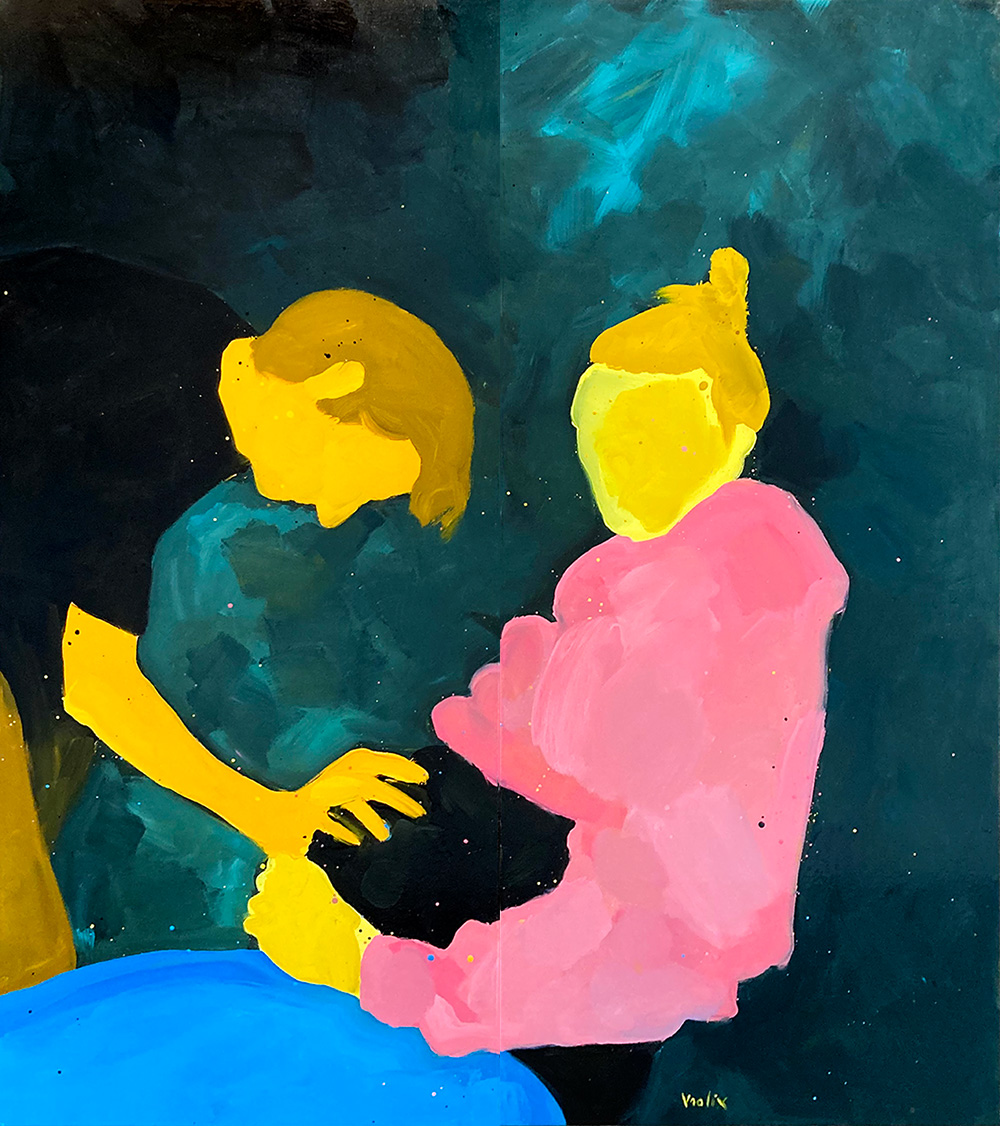
"The Nativity" (oil & glaze medium on canvas, 2x 80 x 180 cm).
A pregnant couple lives rough on the streets, near Hollywood Avenue. No home, no future.
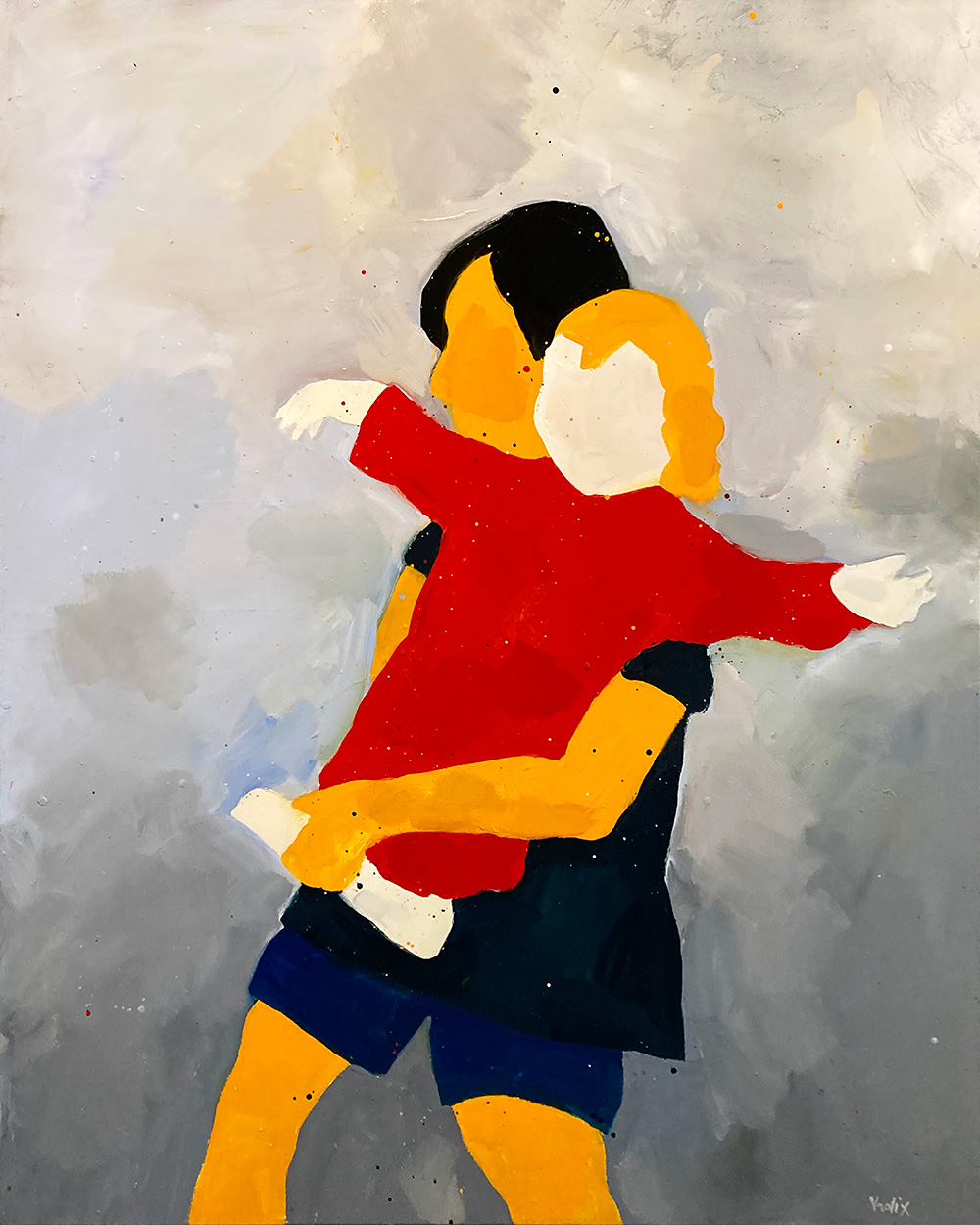
"Holy Shit!" (oil & glaze medium on canvas, 160 x 200 cm).
Carrying around statues of saints is a passion chaired by many people. God knows why!
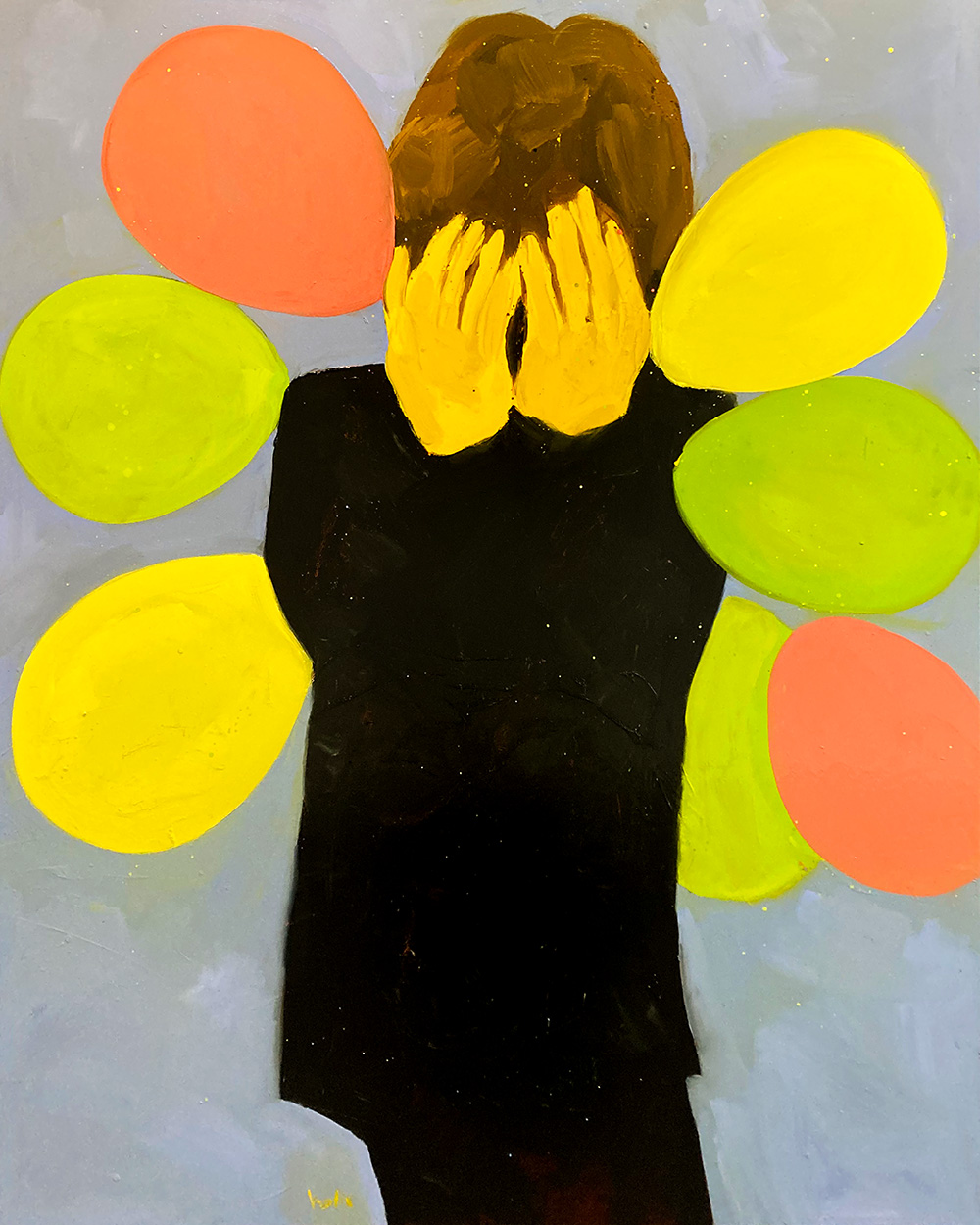
"Spoils Of War" (oil & glaze medium on canvas, 160 x 200 cm).
Even in wartime, balloons must be sold.
TRANSPARENCY
This is the first step in a new approach, but now I'm looking more at how layers and their transparency work together.
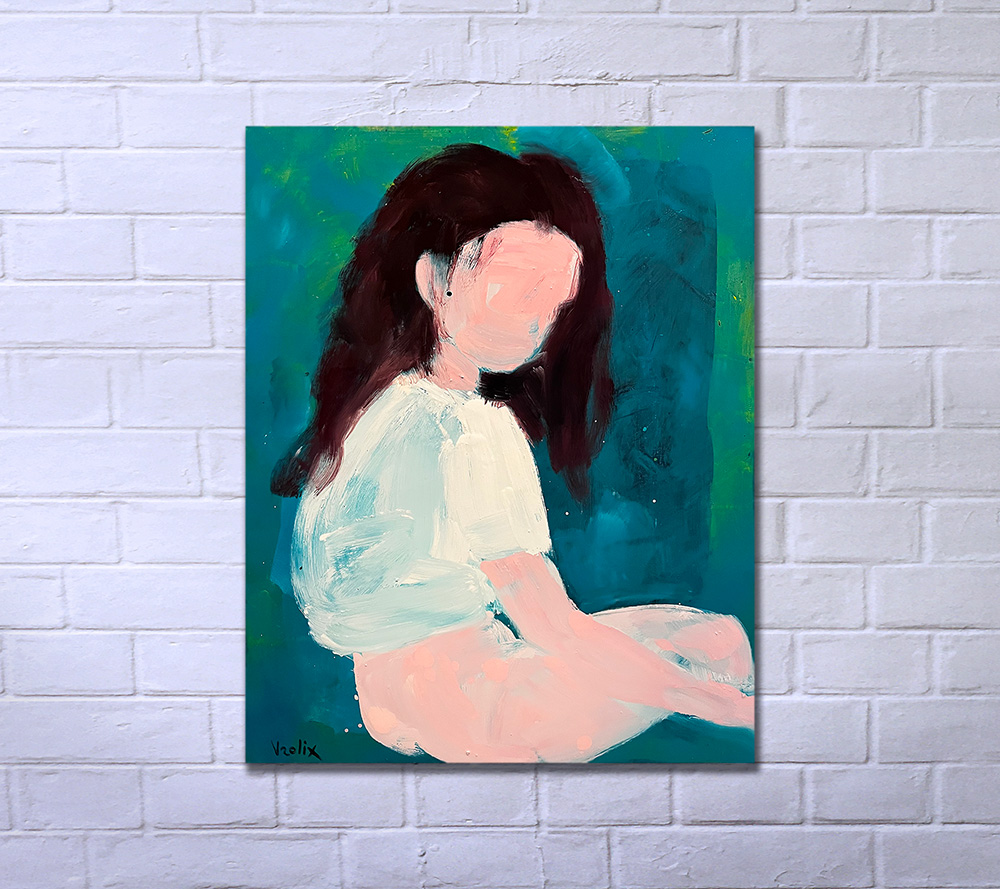
"Wildflower" (oil & glaze medium on canvas, 80 x 100 cm).
There's something else that makes transparent paint layers interesting. You can first create a completely different underlayer. The new layer above can then change or expand that story, making it more expansive and exciting, and adding depth to the narrative.
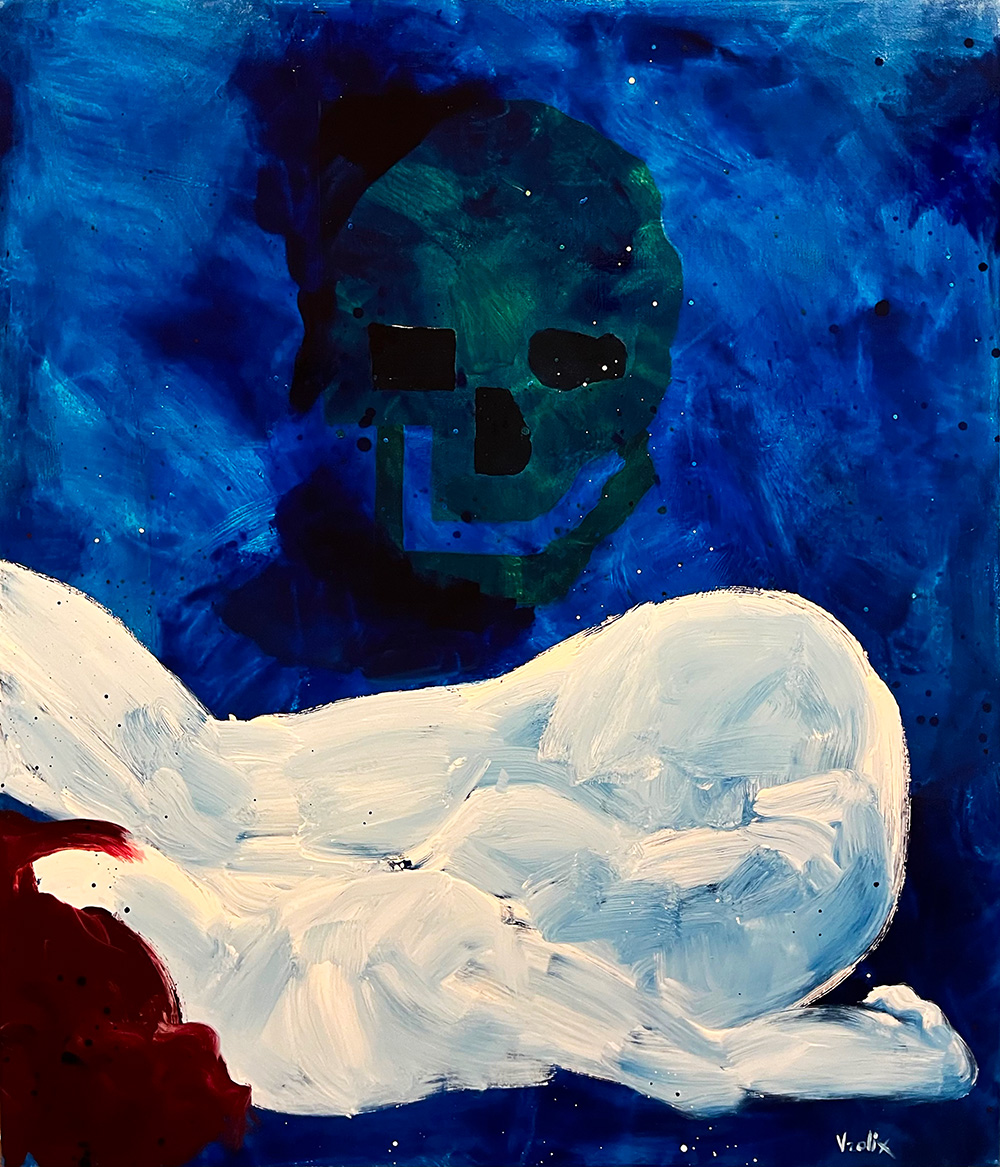
"The Smile" (oil & glaze medium on canvas, 120 x 140 cm).
THE BLACK PAINTINGS
I love Goya's Black Paintings (1819-1823). It's no wonder they inspired me sooner or later.
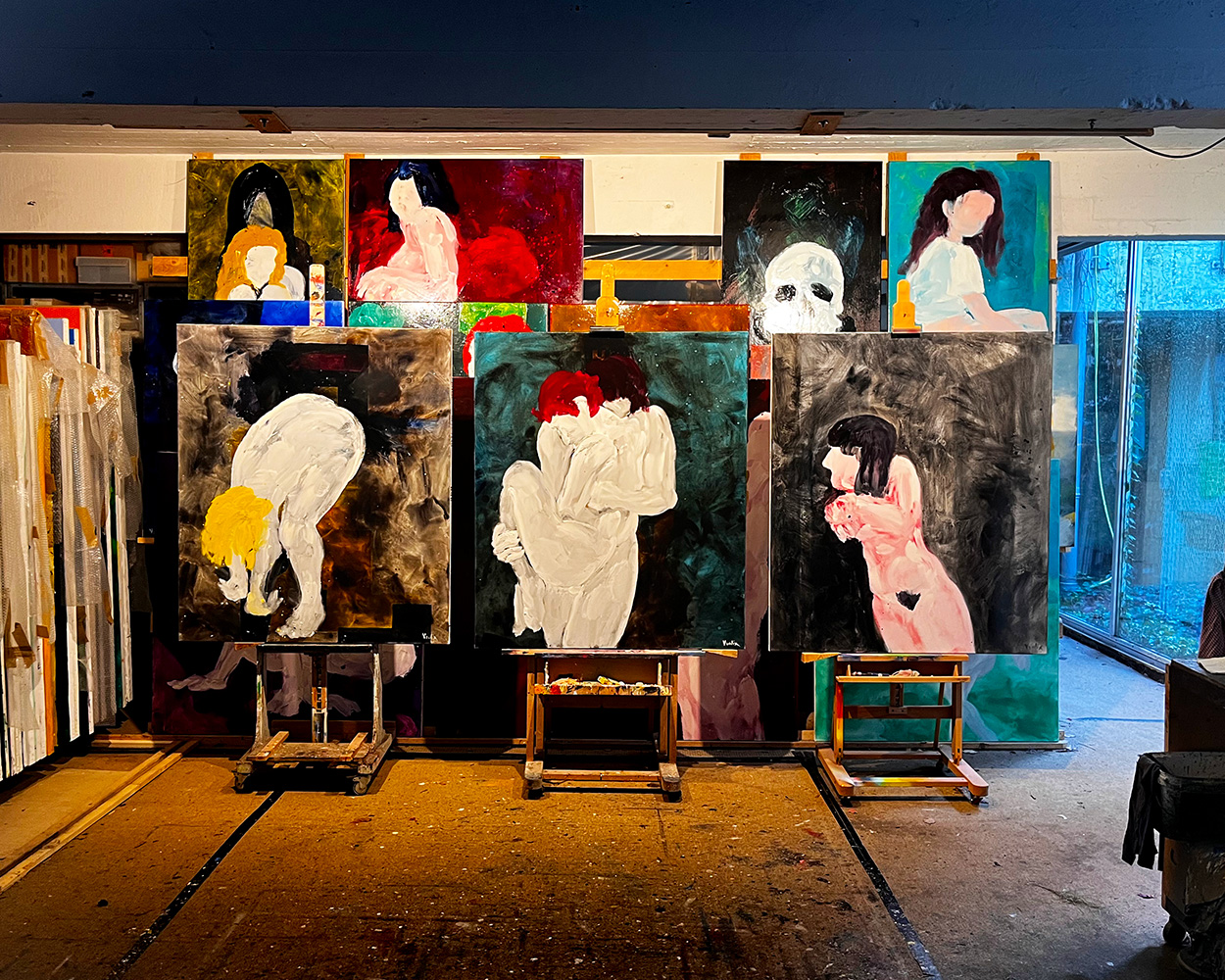
"Family Portrait" (oil & glaze medium on canvas, 120 x 140 cm).
THE WHITE PAINTINGS
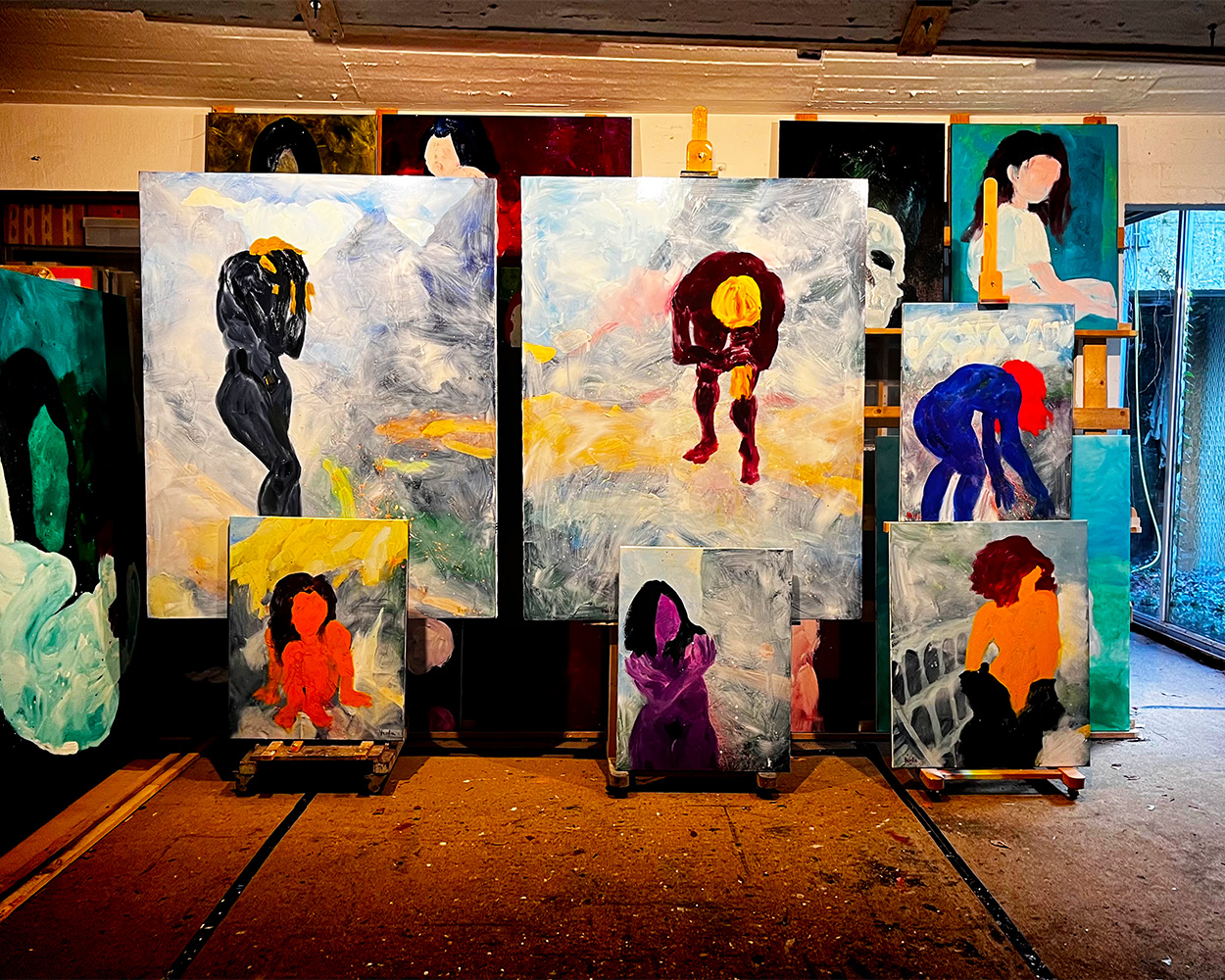
In these series, figures are painted in landscapes that are painted underneath.
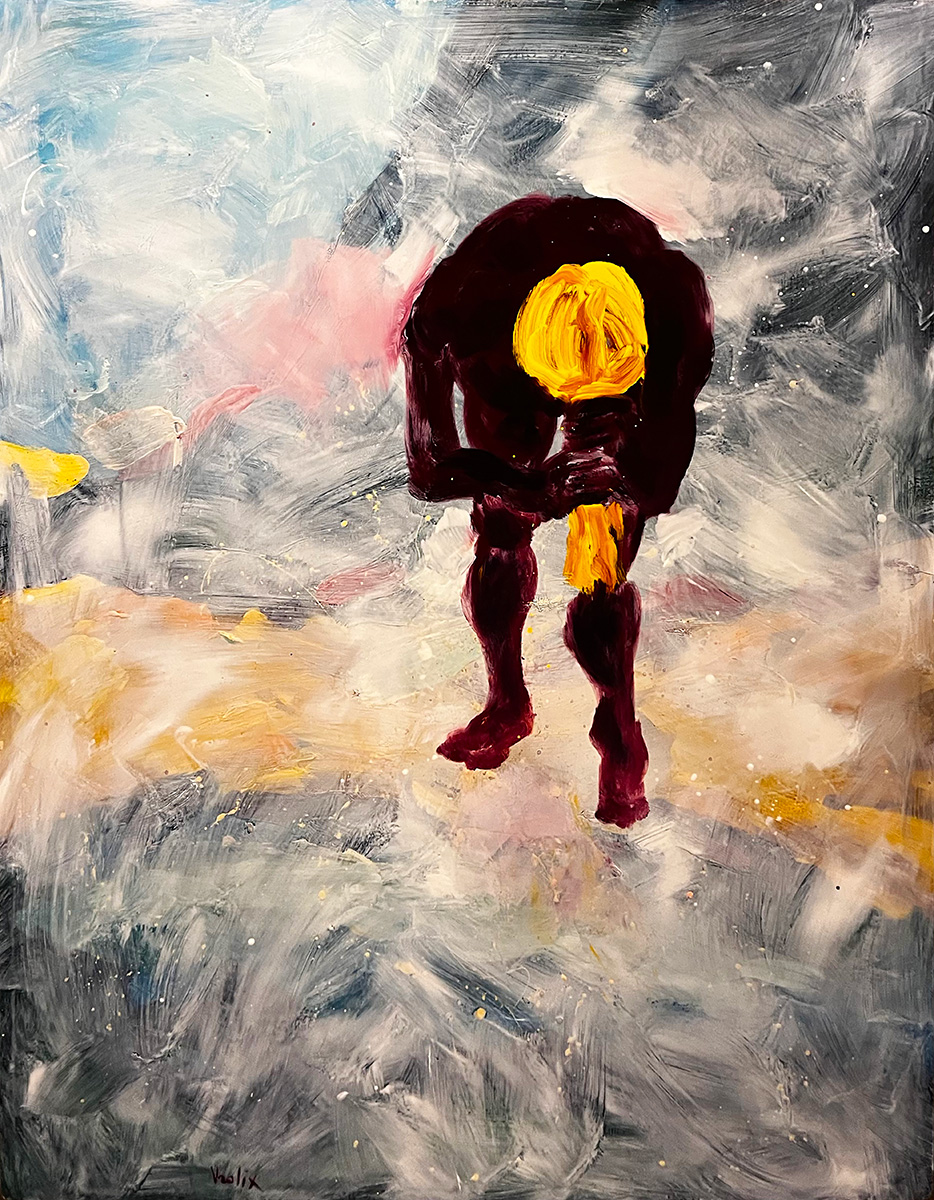
"Lily Of The Valley" (oil & glaze medium on canvas, 140 x 180 cm, 2023).
Inevitably, the White and Black Paintings series (as both opposites and the two sides of the spectrum) leaves a vast field in the middle that can be filled with color. I could call them the Color Paintings, but that would be stating the obvious.
INNER WORLDS
Initially, I wanted to call this painting The Fall of Babylon because of the Tower of Babel in the background, but I thought that was too obvious. Hence the title: The Downfall.
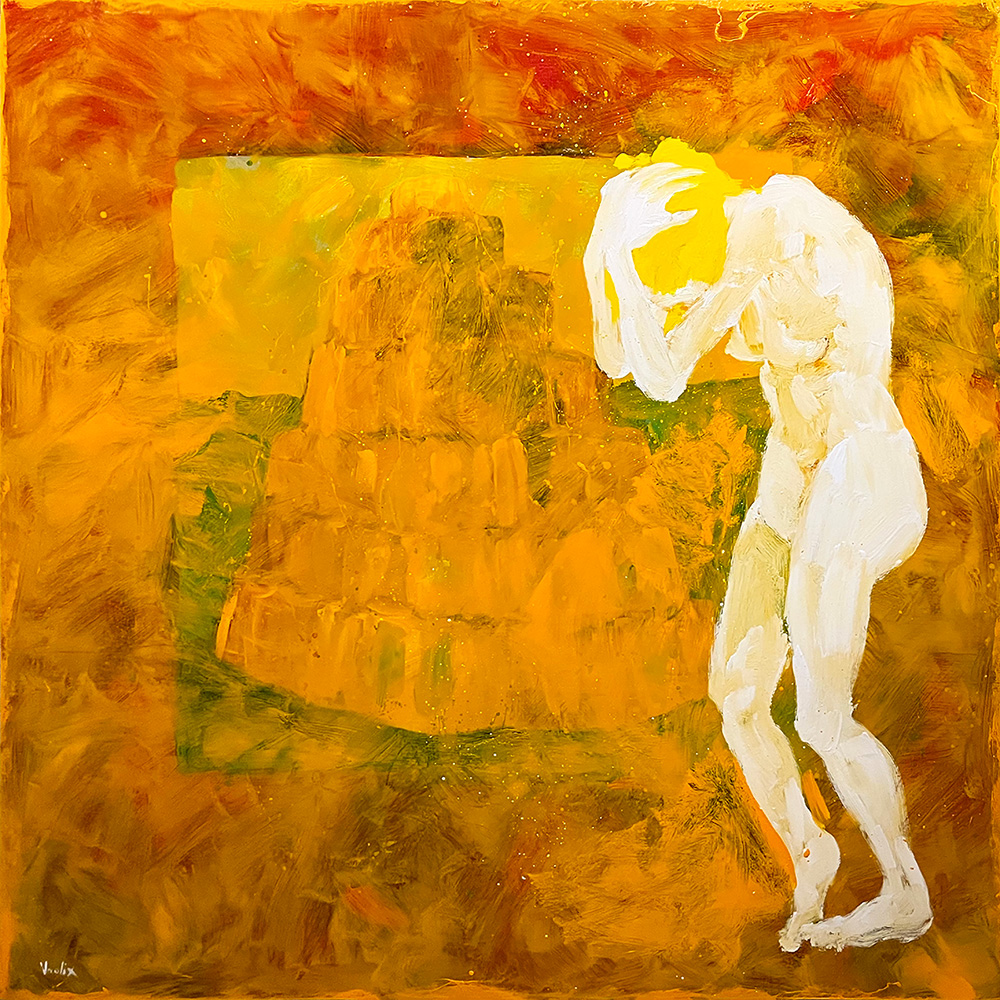
"The Downfall" (oil & glaze medium on canvas, 195 x 195 cm, 2023).
SET DESIGNS
ZAPPA
The story: A former photographer now has the time and opportunity to talk from his new home in a psychiatric institution about his encounters with Frank Zappa, Jimmy Carter, Gloria Estefan, and a few other greats, about the expiration date of friendship, and the torment that naturally arises from even the best memories. The mental illness sometimes called life.
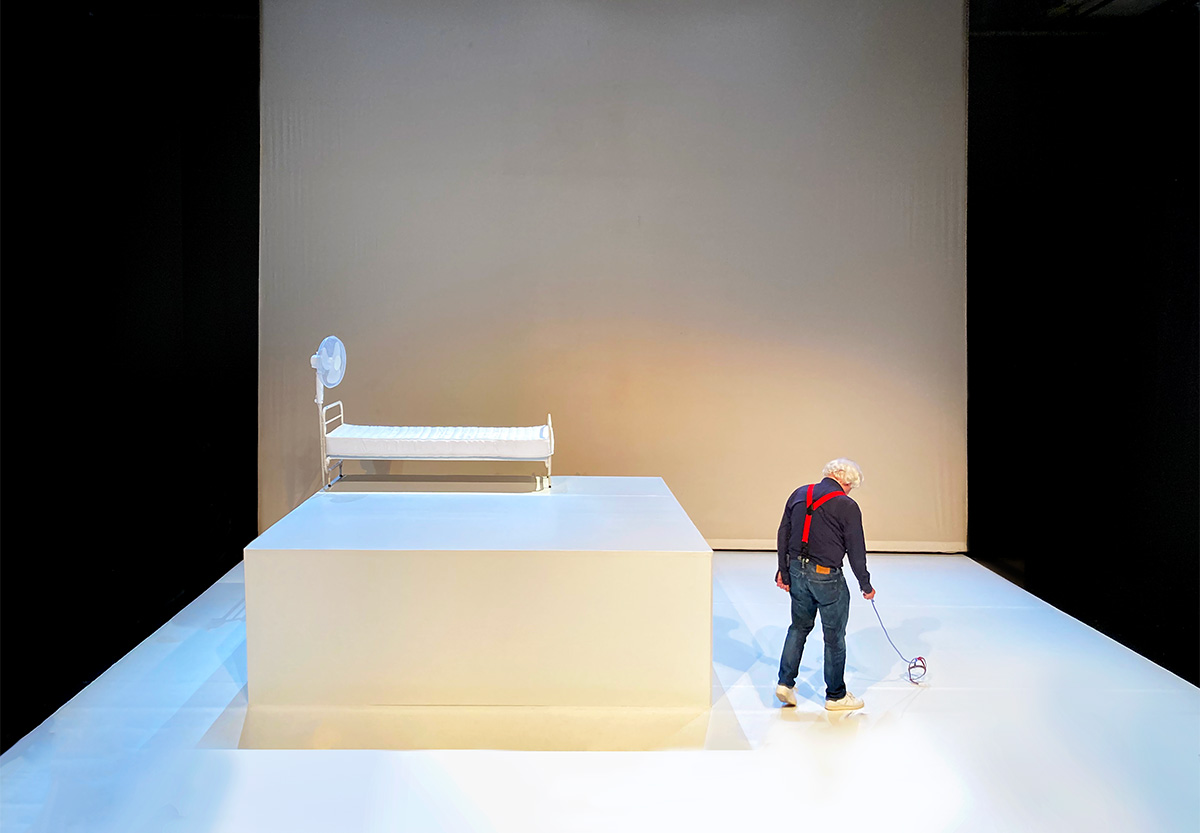
This immediately reminded me of Simeon*, a painting I made in 2020, in the midst of the pandemic. This set is a modern interpretation of that.
*Simeon Stylites (c. 390-459) was a man (saint?) known for his seclusion on a stone pillar.
POLITIE + DIEVEN
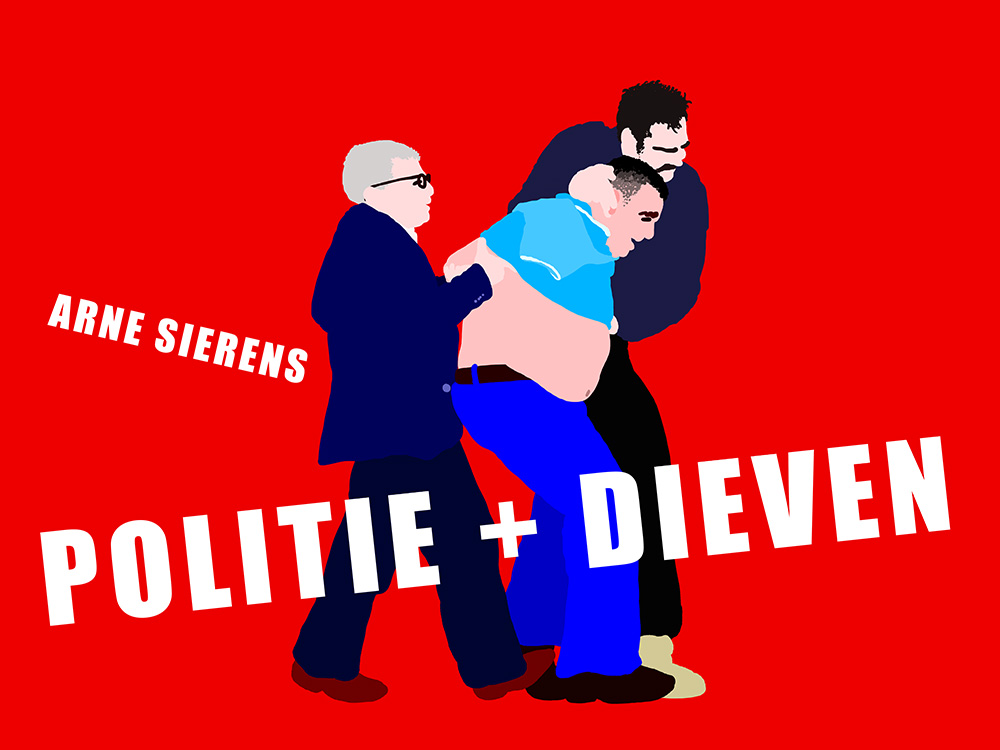
This time the set actually consisted of a gigantic camouflage net that divided the entire scene down the middle from left to right. The actors played both in front of and behind the net, resulting in strange and funny kind of dialogues.
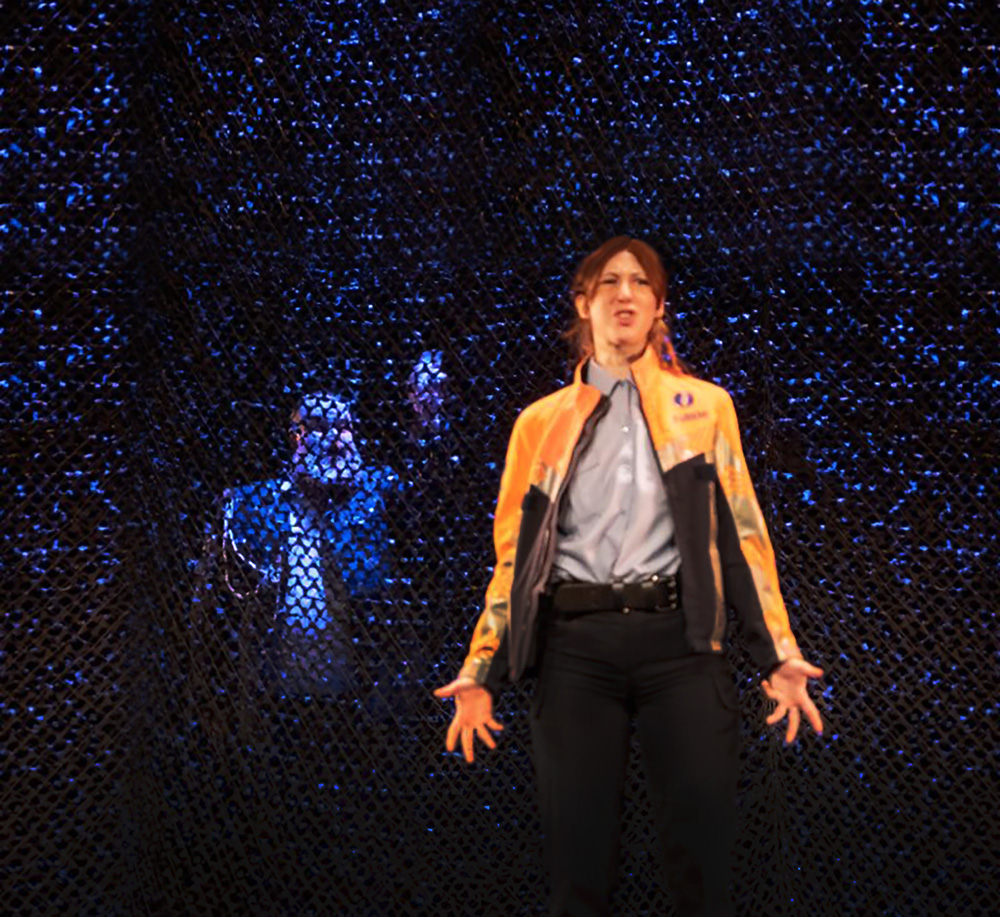
After 25 years and as many set designs, this was the last play by playwright Arne Sierens that I worked on.