WHY DO I PAINT?
The only way to answer that question is to see what happens when I don't.
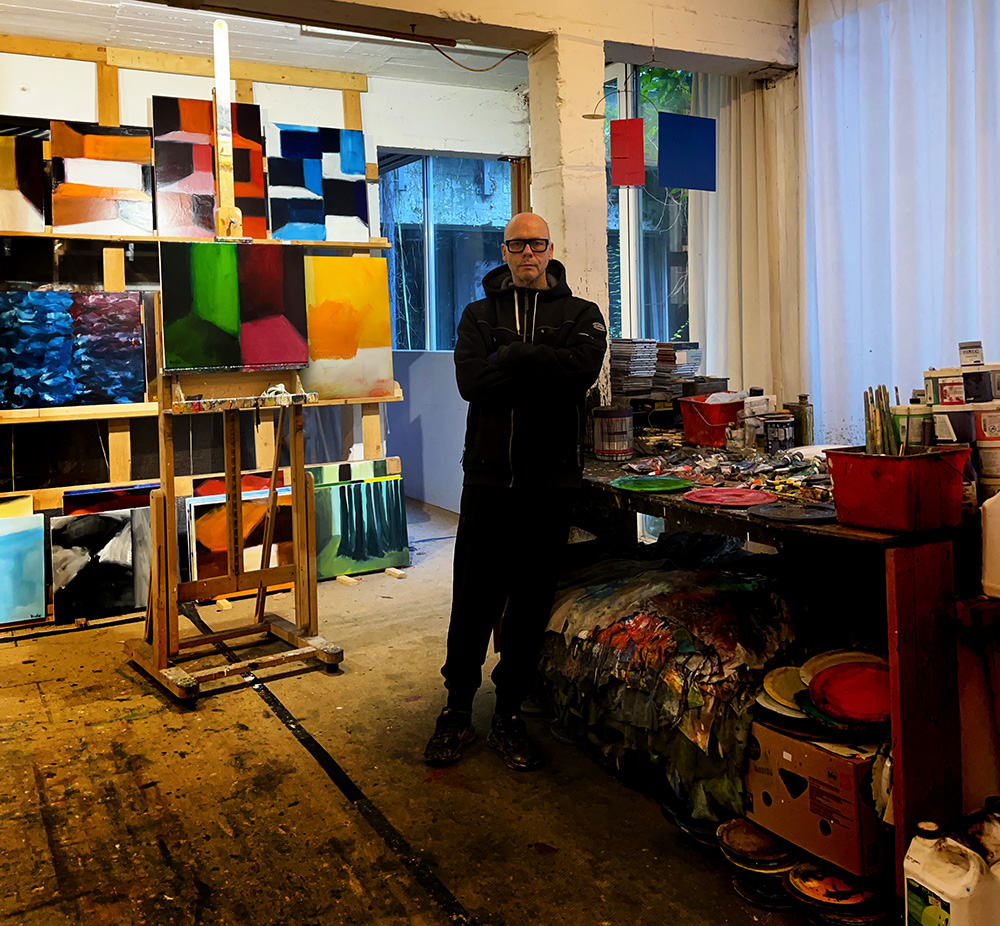
*Leaning against my 'palette', a multi-layered construction, without which I cannot paint.
A depressing feeling comes over me that grows stronger by the day, until it begins to tear my life apart as an individual.
When I create a painting, and especially when it's finished, I experience a kind of euphoria, like the endorphins released after a tough workout. That will be a good day.
It takes me to the next morning, where the process starts all over again. You could say that painting is about painting energy.
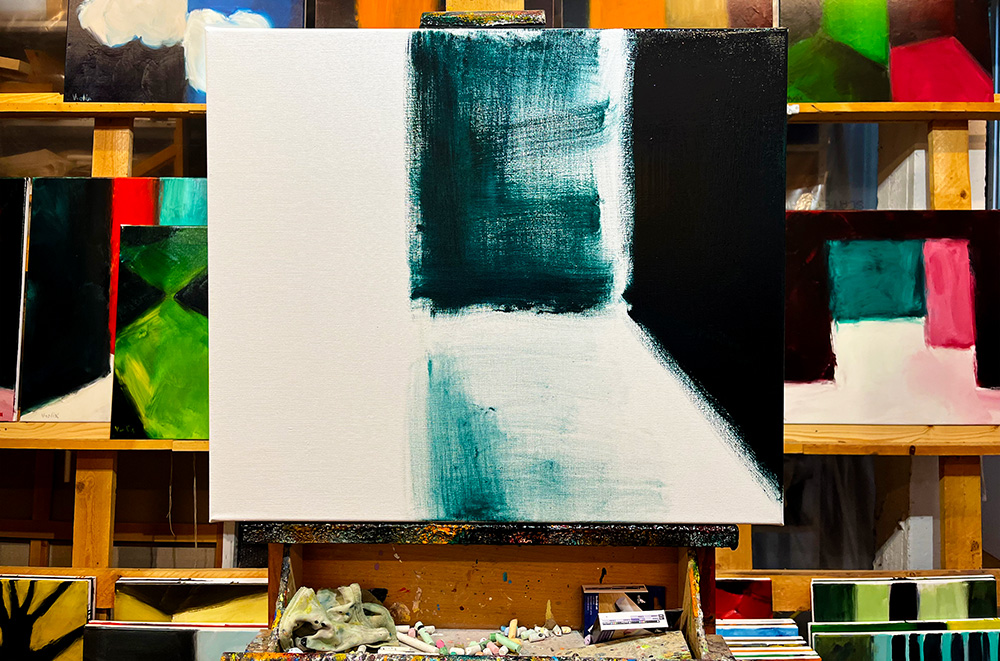
I do not try to unravel the mysteries that seem to lie hidden in nature and life, but I try to discover their wonders, not through a specific subject, but through the painting process itself.
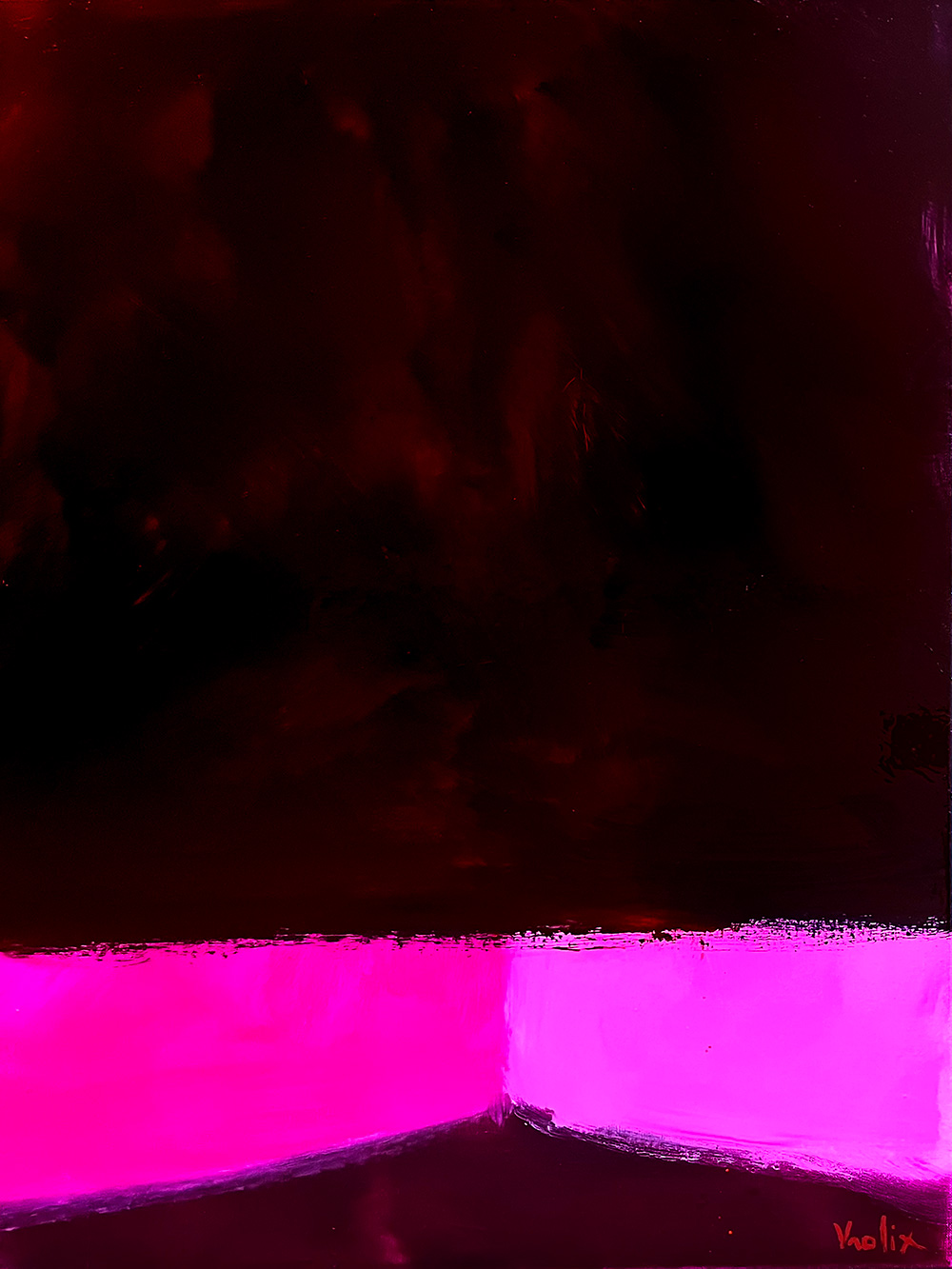
"At the End" (oil & glaze medium on canvas, 60 x 80 cm).
What you should know about my work(s) is that the subject always takes shape through the way I create a painting. I choose my subjects not because they are personal (they are not), but for art historical reasons, leaving out most of the details. Then I fill them in by applying the paint in a specific way. Or, put another way: technique is the connection between the subject and the story. So, if I talk a lot about the way I paint, it's because I want to explain what my work is about.
HIDE AND SEEK
Layer upon layer.
The layers in a painting are like a list of experiences. The way layers work, semi-transparent or opaque, the way they work with or against each other, how a particular layer can hide something or do the opposite and point to something specific. But above all, layers subordinate the subject to the making of the painting itself.
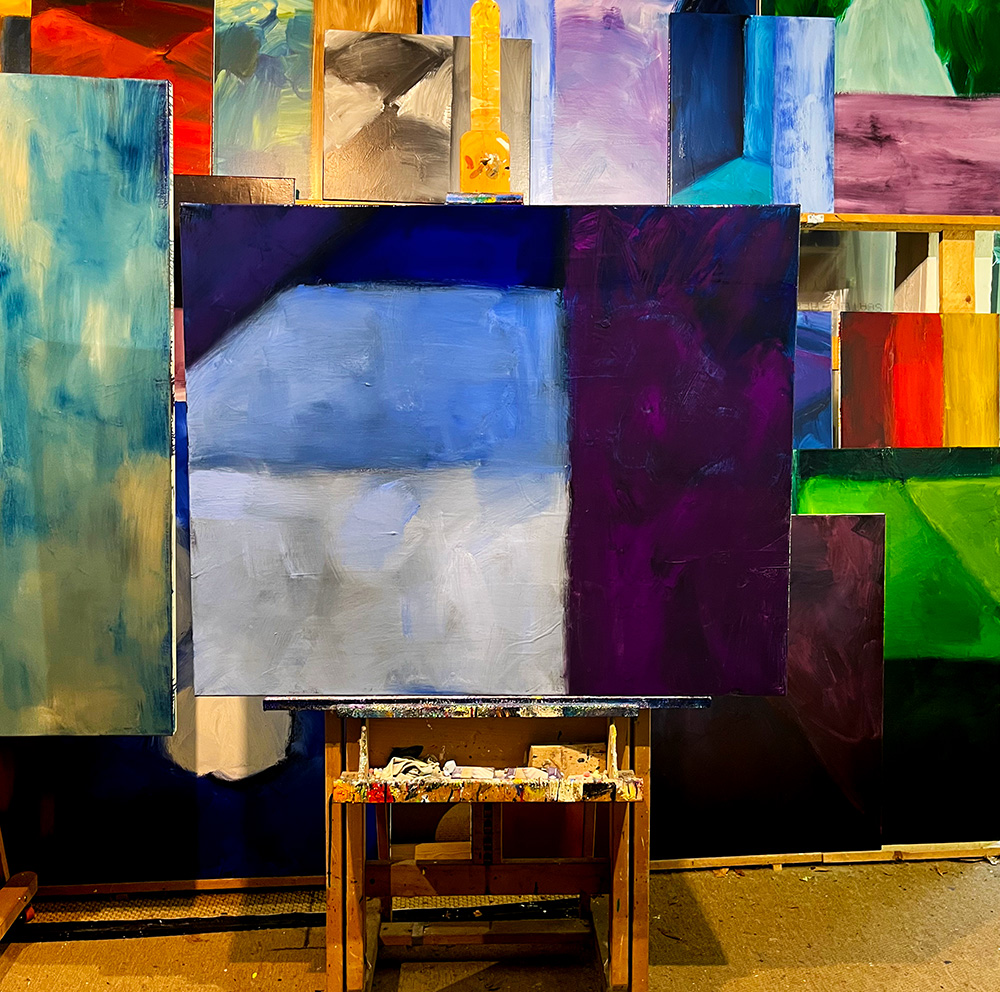
"After the Rains" (oil & glaze medium on canvas, 100 x 120 cm).
That's why I see painting as a number of layers that together form the whole story.
It's like playing hide-and-seek. And layers can do both. They conceal something, yet simultaneously point to it. It's like shoving a mystery in the viewer's face.
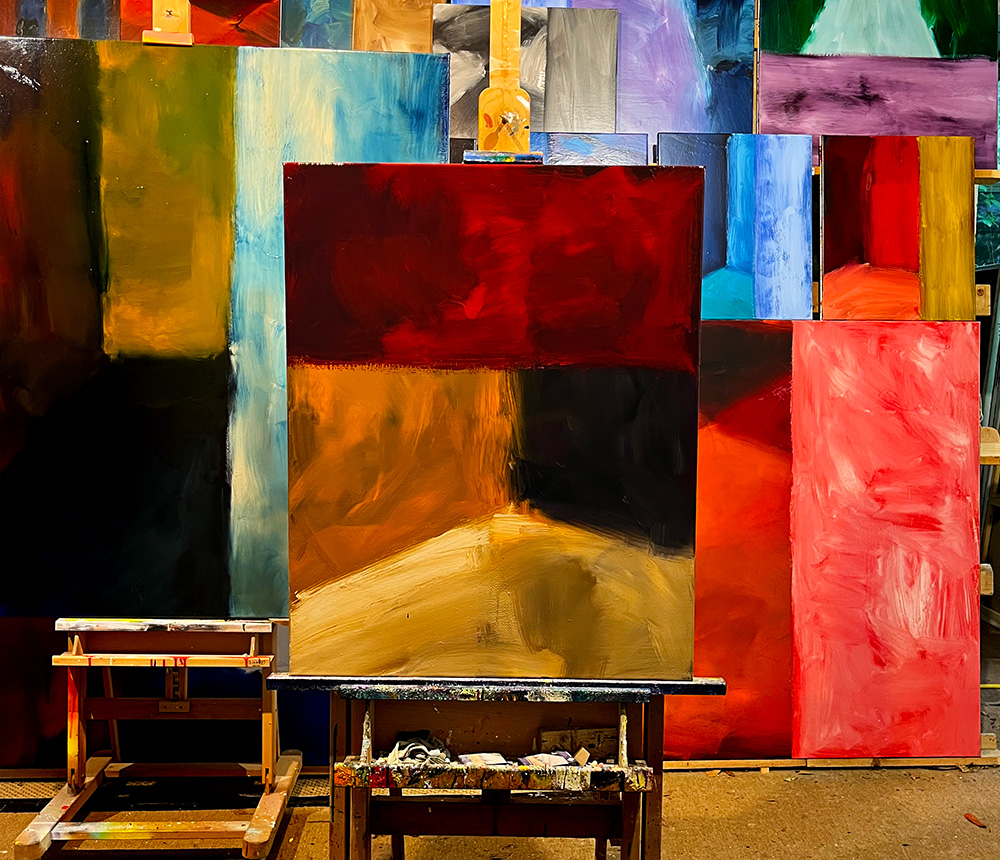
"Everything All At Once" (oil & glaze medium on canvas, 80 x 100 cm).
Layers can open up a whole world of emotions without any real story behind them. That's what makes them so powerful.
Or better yet, that's what painting is all about.
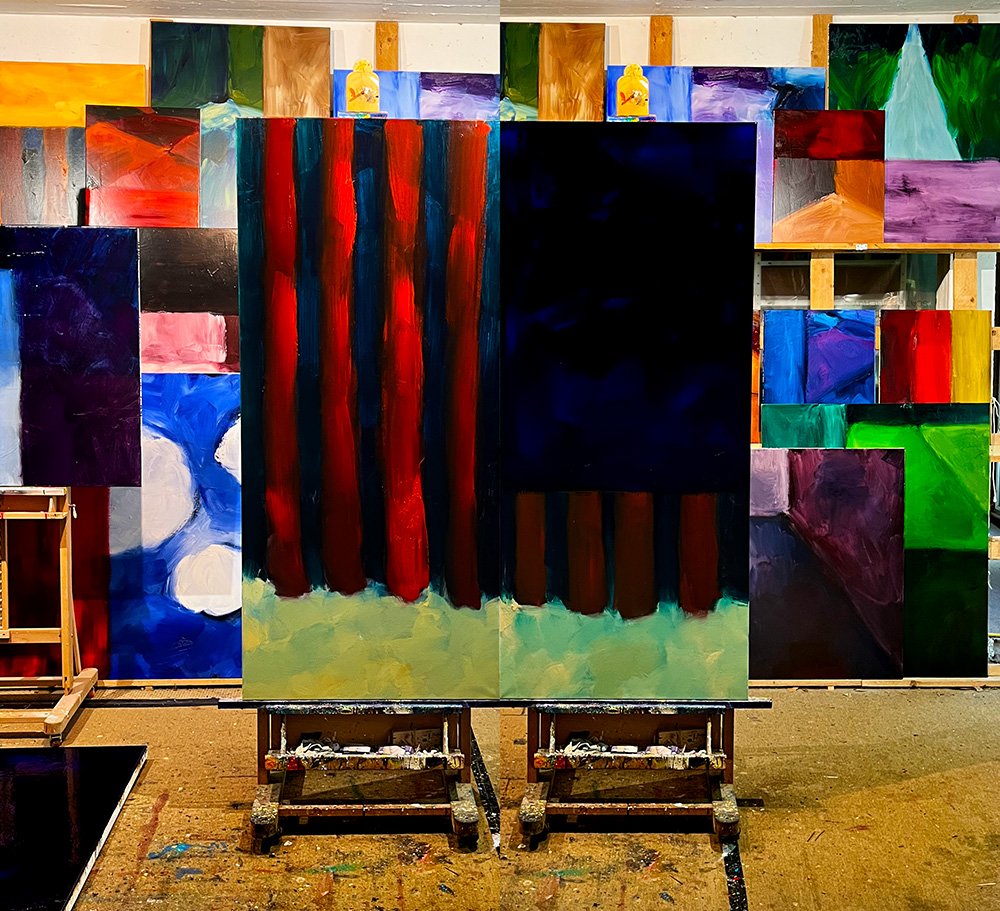
"The Secret Life of Trees" (diptych, oil & glaze medium on canvas, 2x 80 x 180 cm).
A layer can be a surface, a line, or a point. You could even call it an intervention. It has less to do with the story and everything to do with the painting process.
I want the viewer to experience the painting, not so much the story. The problem with art, and especially painting, is in a sense the subject matter. Although the story isn't unimportant; on the contrary: the story must be good enough not to get in the way of the painting. For me, making a painting is the story. Revealing by hiding, so to speak.
LIKE STORIES
Not Yet Told
I try to make each layer as individual as possible, or as in this series of paintings, a final, individual layer.
That layer becomes the story. It's an abstraction without becoming completely abstract.
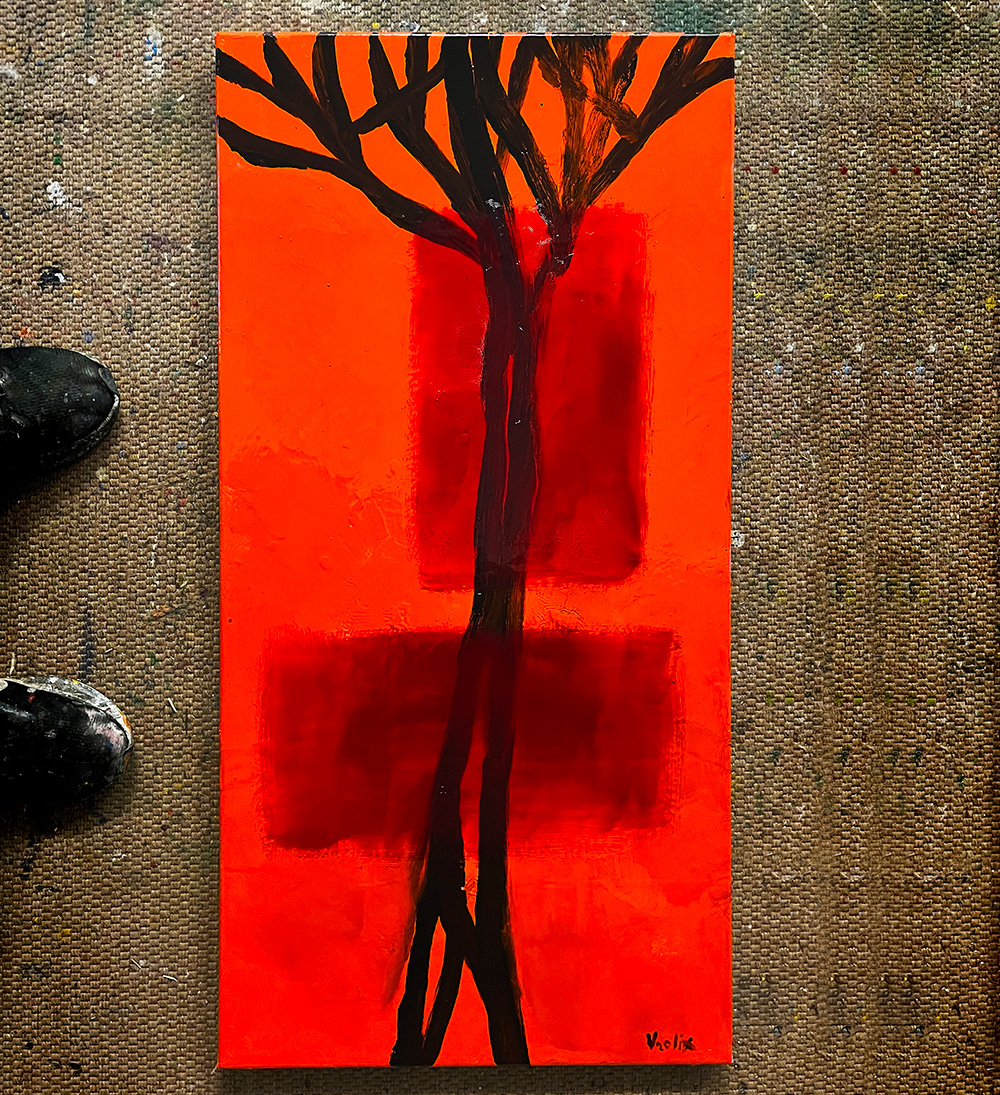
"Burning Tree" (oil & glaze medium on canvas, 50 x 100 cm).
Using layers is a way to approach the making of a painting. It's also a way to deal with the emotional content of the work.
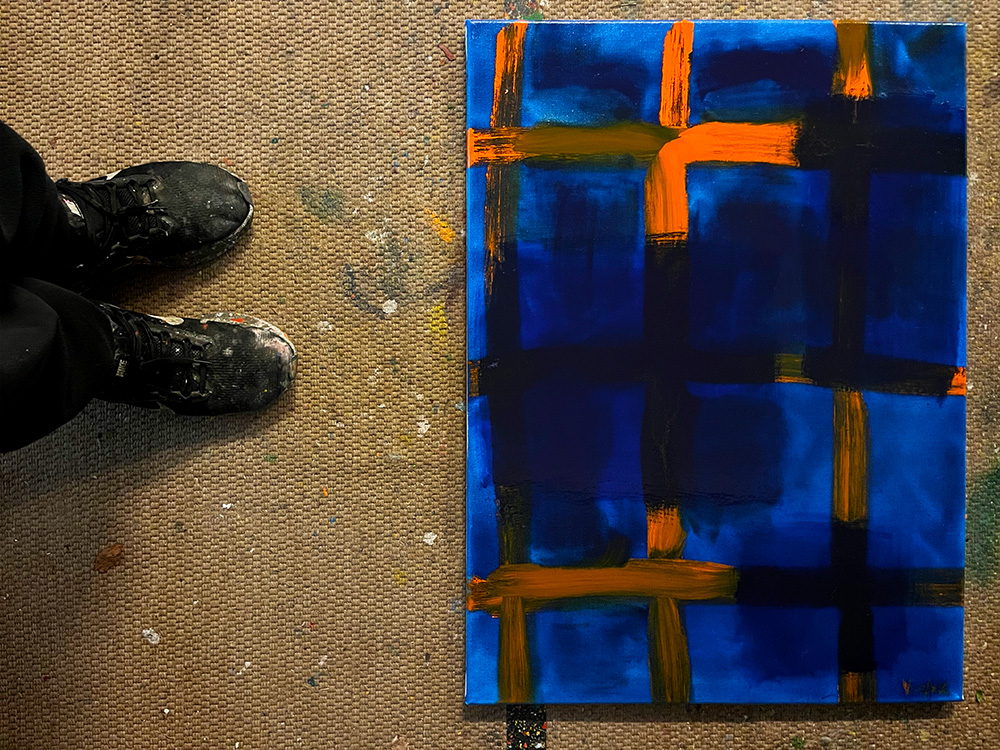
"Dead of Night" (oil & glaze medium on canvas, 60 x 80 cm).
I think a work of art without emotional content isn't good work. It could be about many things, but not about us as human beings. After all, emotions are not something theoretical. People are not theories.
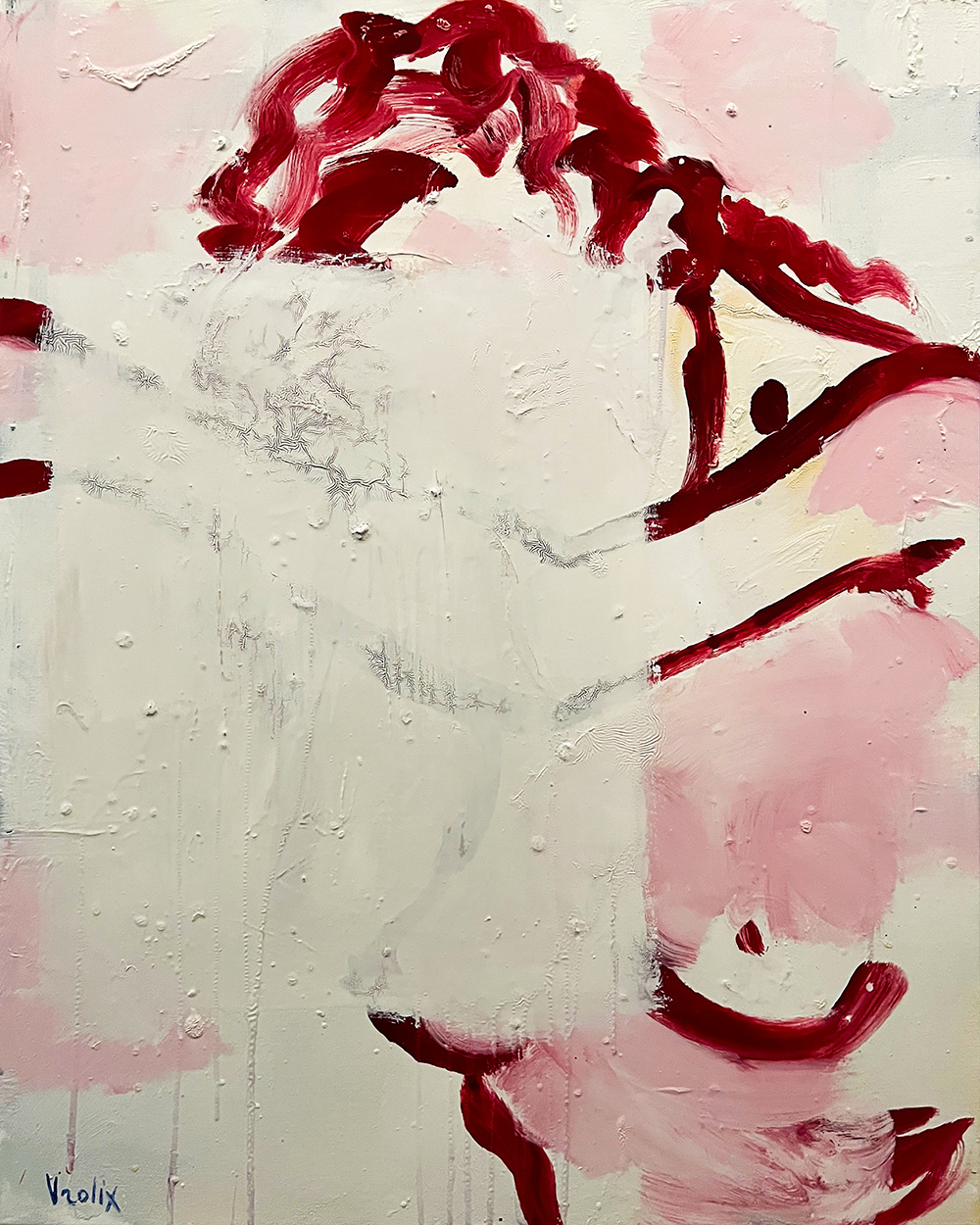
"Tell Nobody" (oil & glaze medium on canvas, 80 x 100 cm).
Maybe I could call it an intervention. Something that doesn't quite belong, but is there nonetheless. An emotion, perhaps?
INTERVENTIONS
The Marker
When a final layer becomes a kind of marker, it takes on a completely different meaning.
These markings, like all markings, are meant to disturb, to make it clear that you should not be looking at the subject, but at the painting.
They (markings) can be subtle, almost non existent, almost.
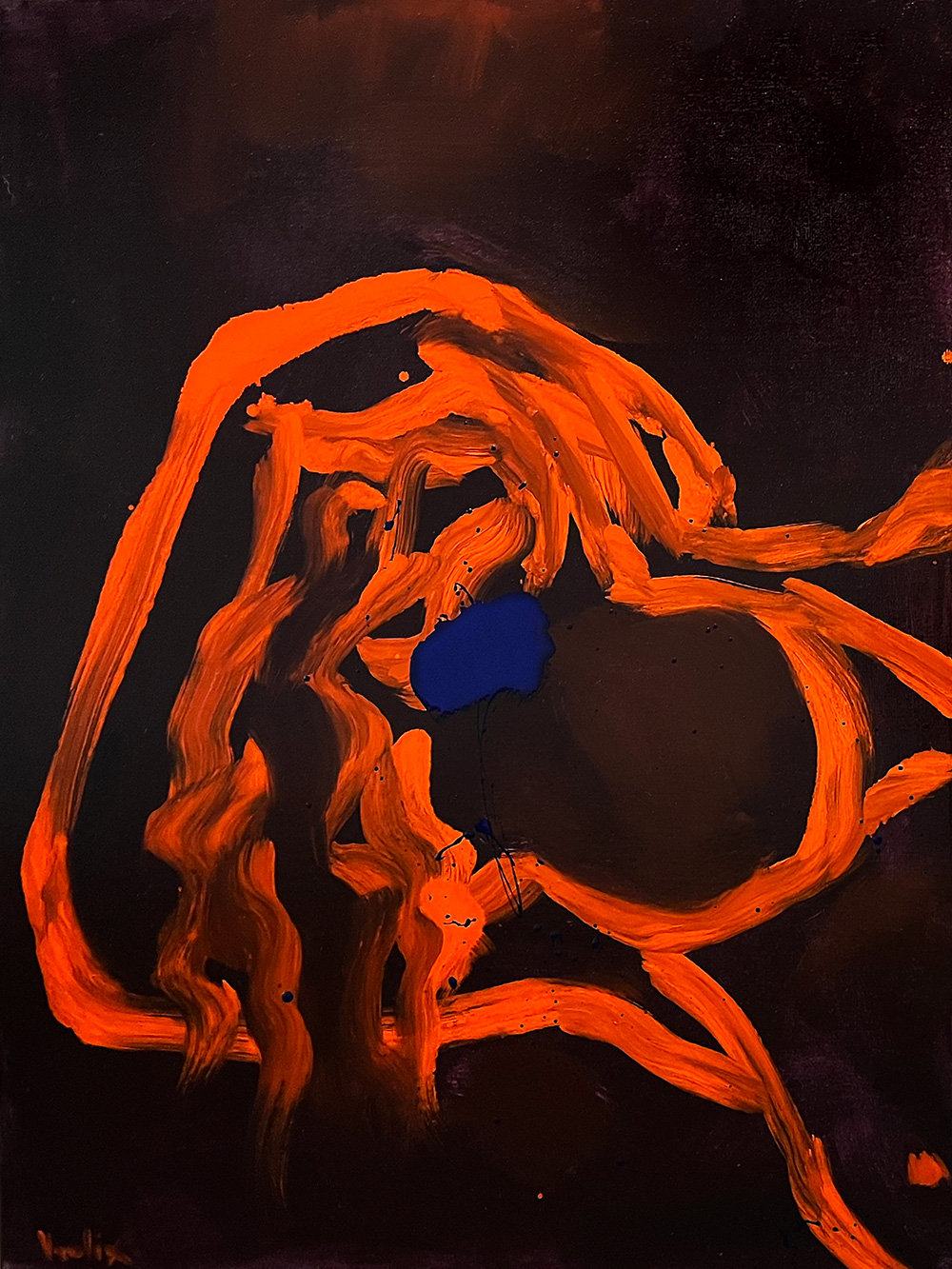
"Melancholia" (oil & glaze medium on canvas, 60 x 80 cm).
Or not so subtle. As in the next series, which started with the idea of censorship, woke or otherwise.
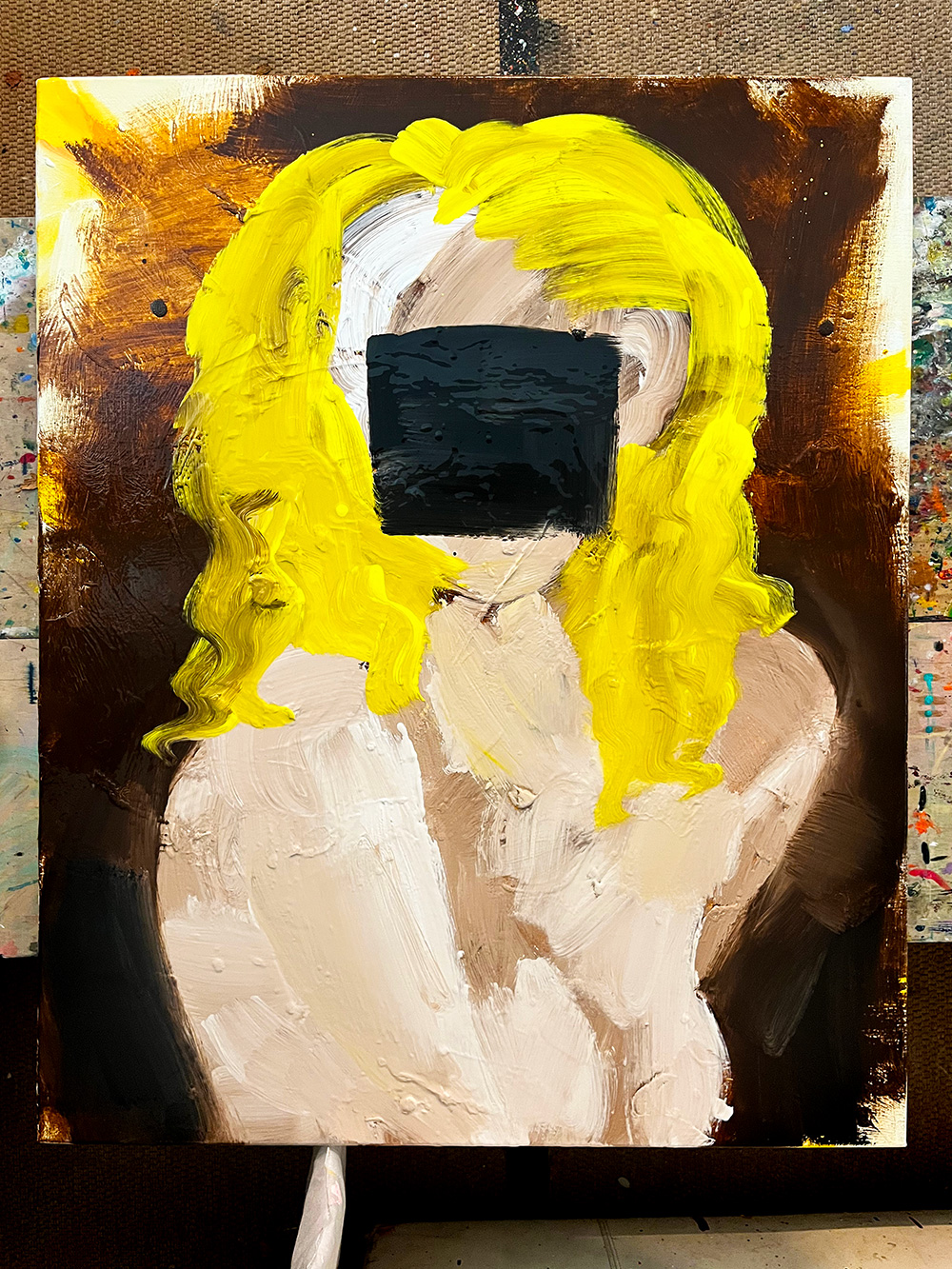
"Canceled" (oil & glaze medium on canvas, 80 x 100 cm).
The infamous black band is well-known. You can use it in many different ways, but they all involve prohibiting communication. That's why I use it, of course.
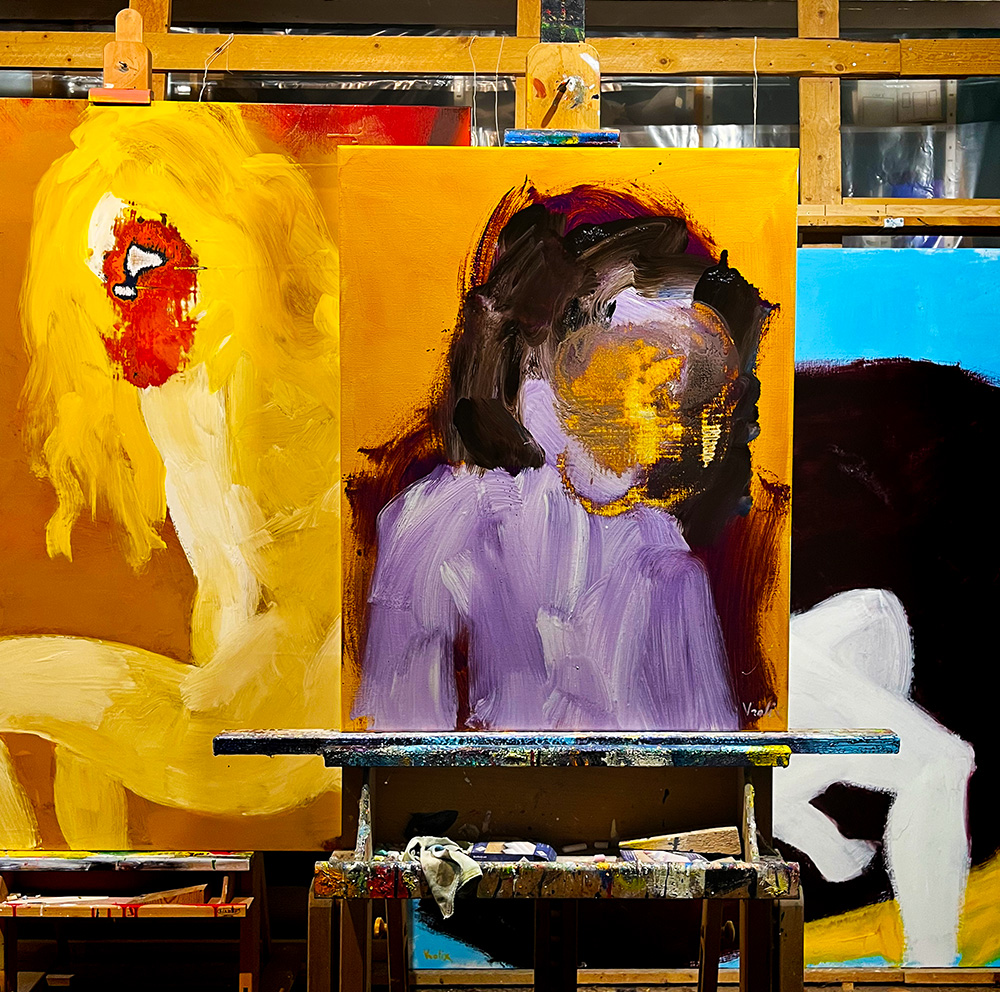
"J. Erased" (oil & glaze medium on canvas, 60 x 80 cm).
The same result can be achieved with a sander. It is also much more aggressive and suits the subject and side of the painting well.
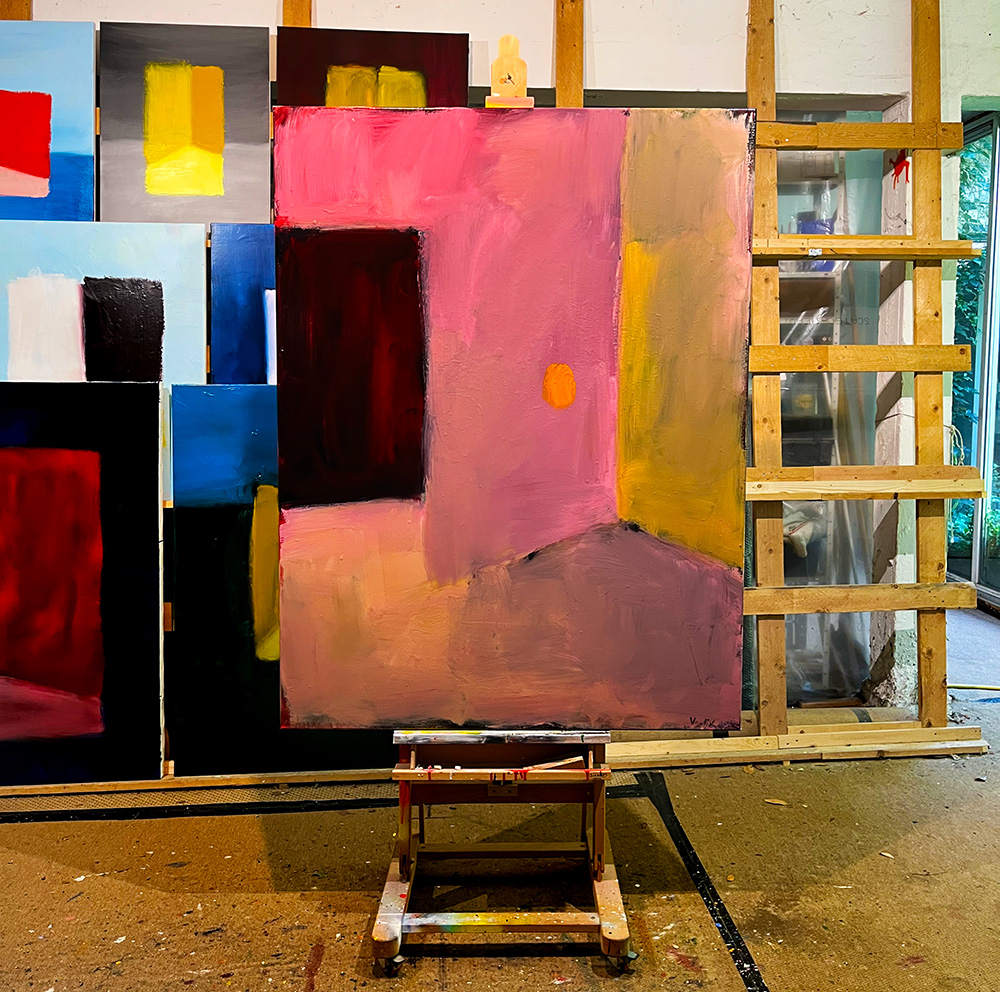
"The Other Room" (oil & glaze medium on canvas, 120 x 160 cm).
The mark or dot in these works becomes a foreign object that defines the entire painting.
To be honest, it's a well-known trick in the history of painting. If you know how to look for it, you'll find it in most works of art, albeit less conspicuously as a dot.
FLOATING WORLDS
Nothing is Fixed
The following series of paintings are, as it were, one or more paintings in one. They seem to float, sometimes above each other , sometimes on top of each other.
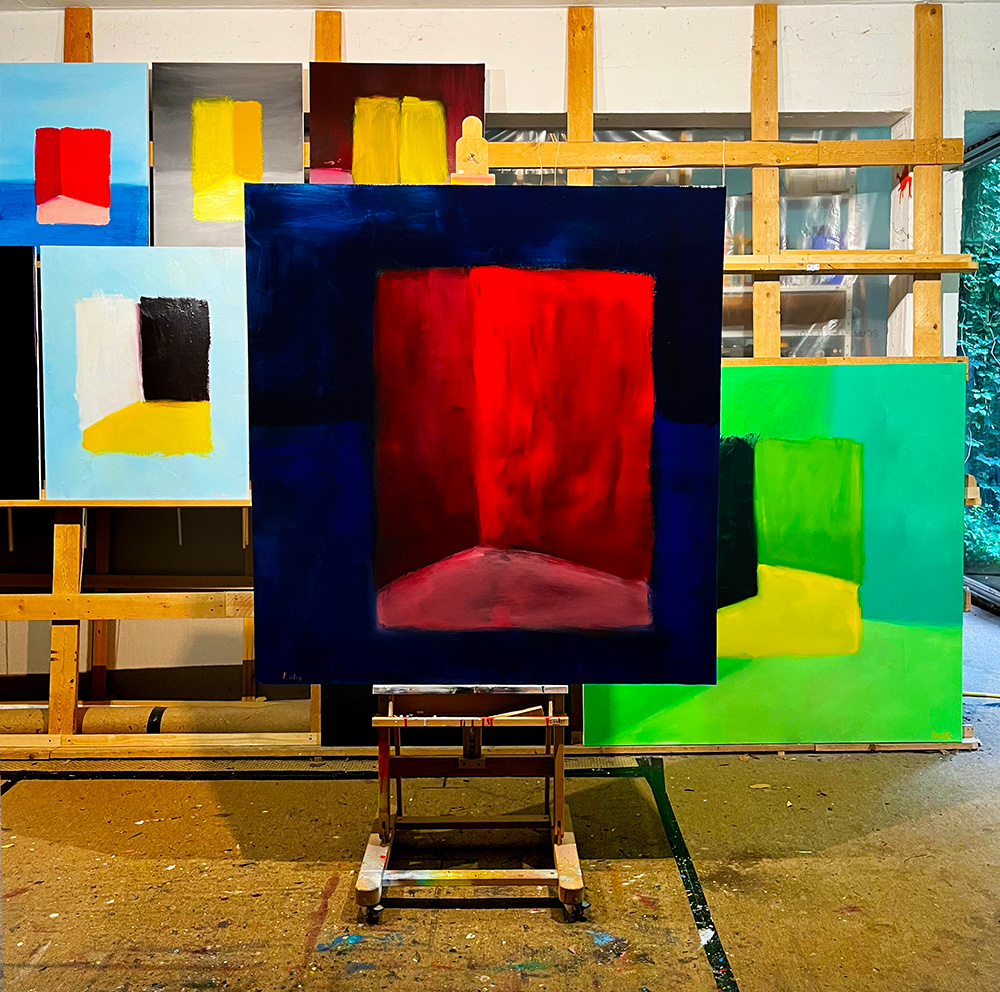
"The Shakedown" (oil & glaze medium on canvas, 136 x 141 cm).
Just empty rooms. Or so it seems. When I paint an empty room, corner, or hallway, it doesn't feel empty at all. Painting brings any subject to life, no matter how abstract.
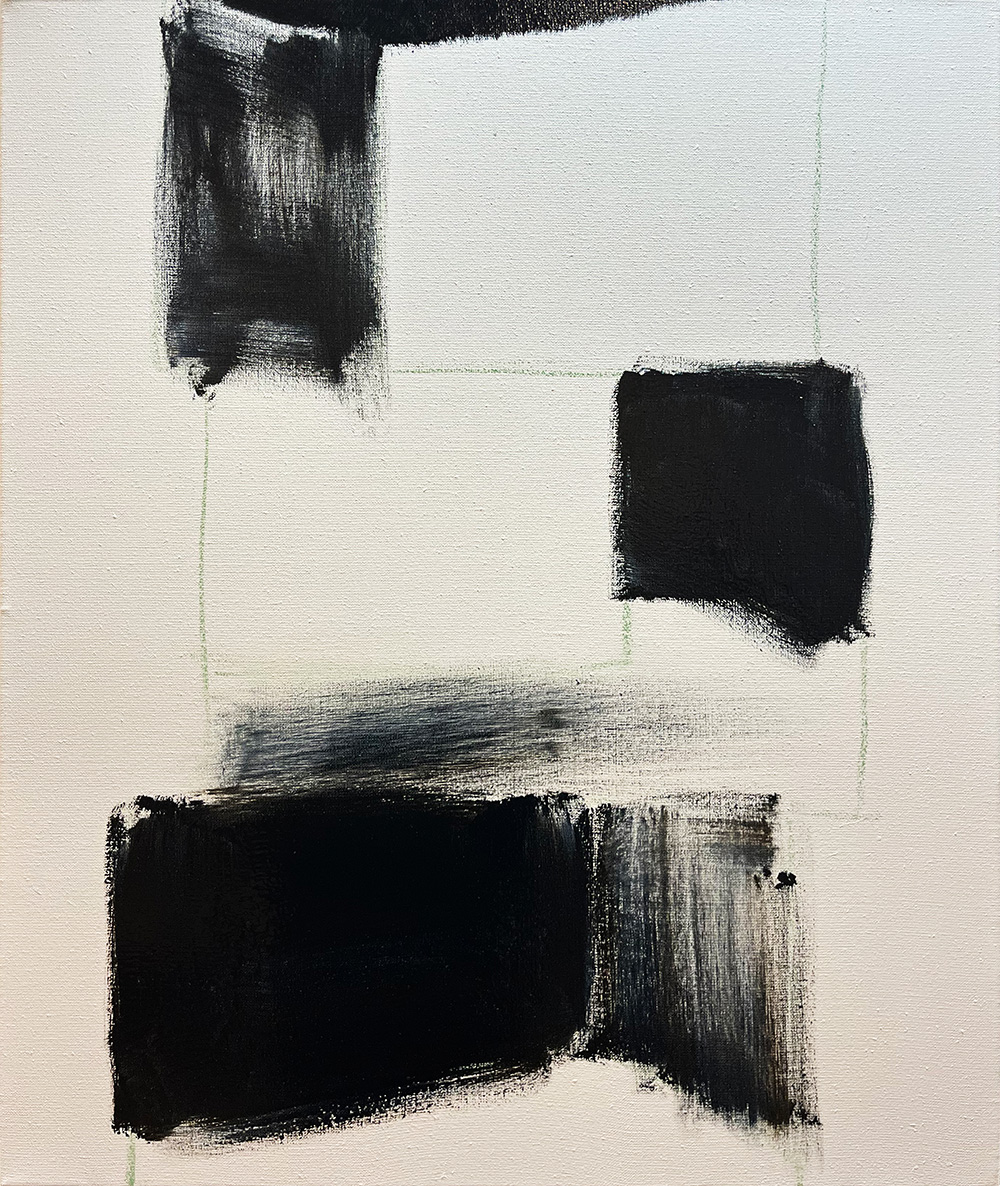
I start by painting the rooms roughly with black, as if they were shadows. (I never use black straight from the tube, but usually a mixture of ultramarine blue and burnt umber.)
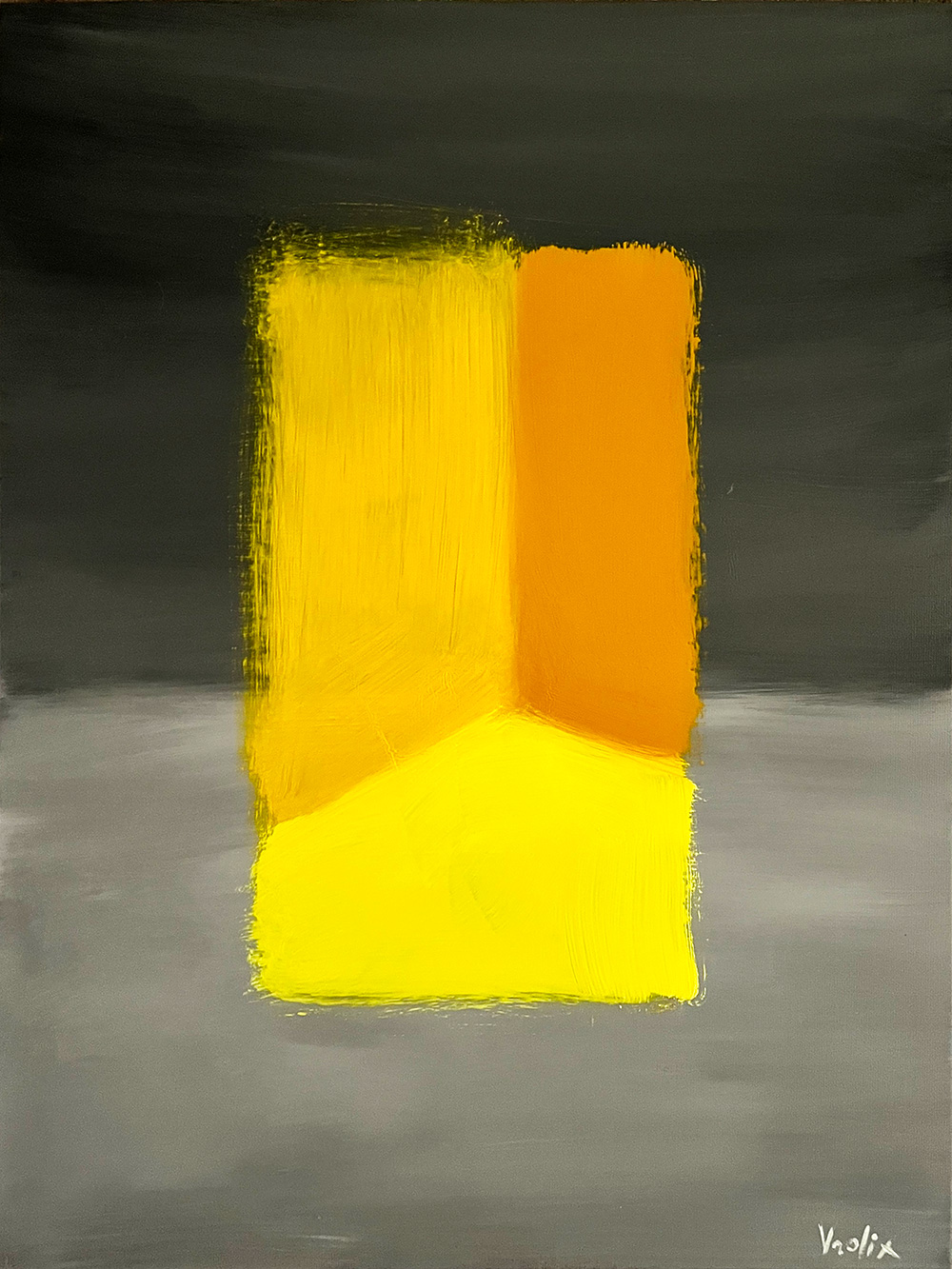
"Death in Venice" (oil & glaze medium on canvas, 60 x 80 cm).
In painting, there's no such thing as emptiness. The subject, perhaps, but never the painting itself (provided it's painted well enough, of course).
SHADOWS
We are.
The use of the silhouette in my work is a form of layering. I never go into details, hence the use of silhouettes or as I like to call them, shadows. For example, I never show faces in my paintings. The intention is to show the person, not the individual. For me, not painting facial features is one of many ways to paint a layer.
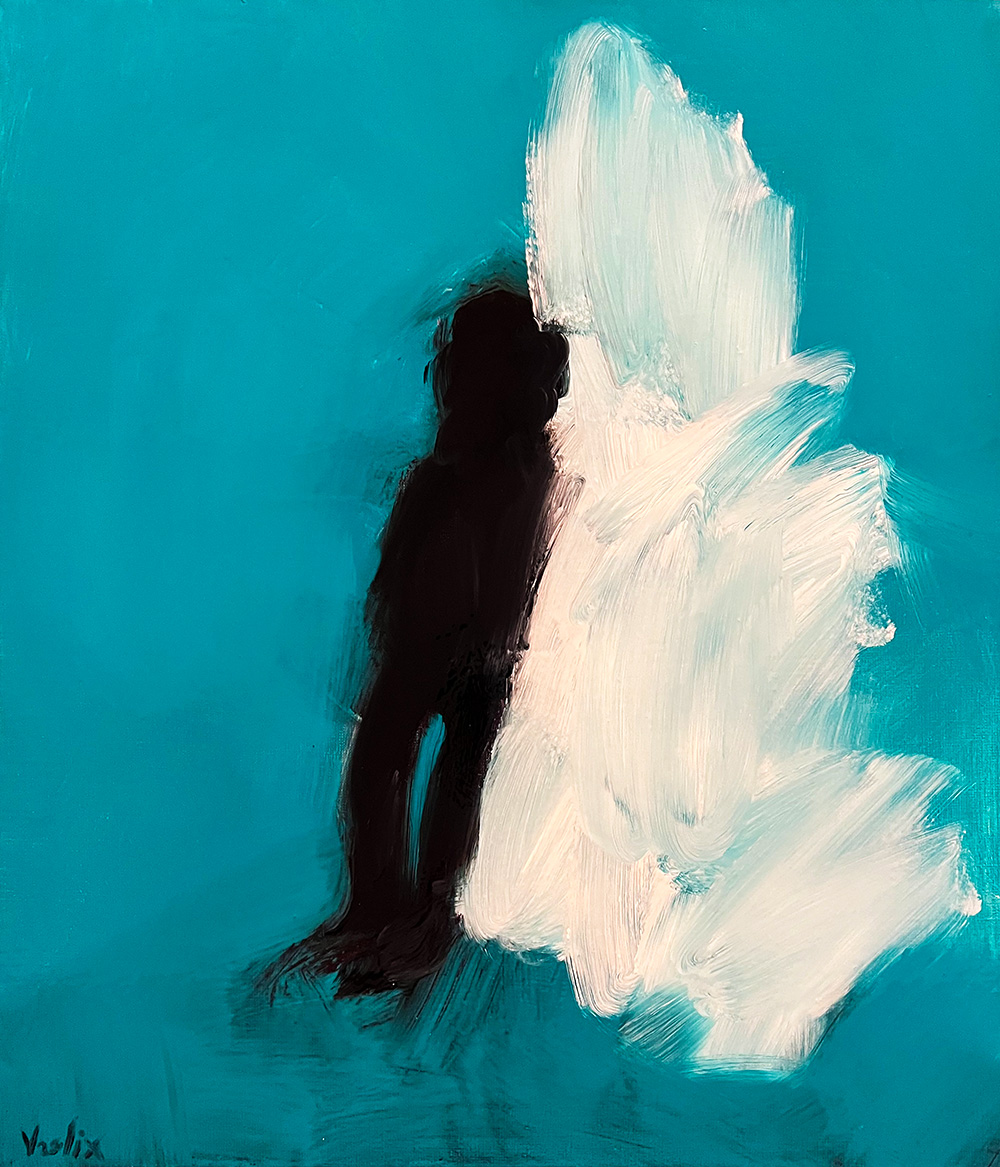
"The Long Wait" (oil & glaze medium on canvas, 60 x 70 cm).
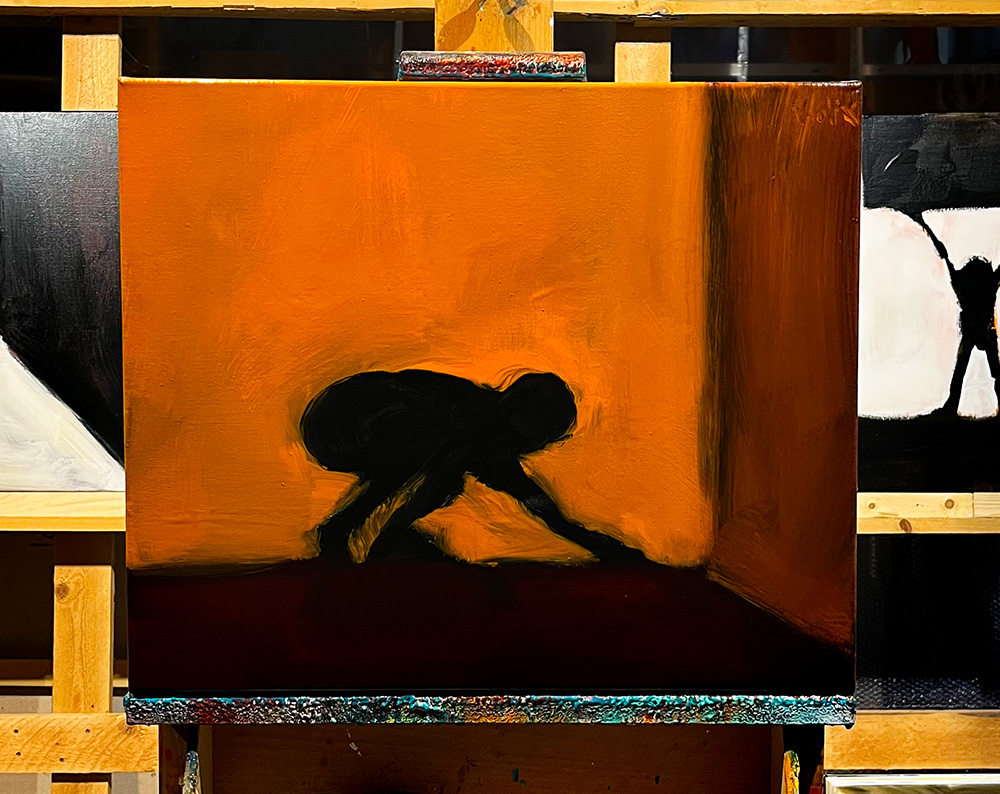
"The Metamorphosis" (after Kafka, oil & glaze medium on canvas, 50 x 60 cm).
People's shadows will never feel empty or meaningless. We can never think of them that way. Our minds don't work that way. The same, of course, applies to a painting of a room or a landscape.
INTERIORS
Theaters of Live
The same goes for landscapes. It's never a specific tree, but The Tree. When I start a painting, I sketch the idea with black paint, as if they were shadows.
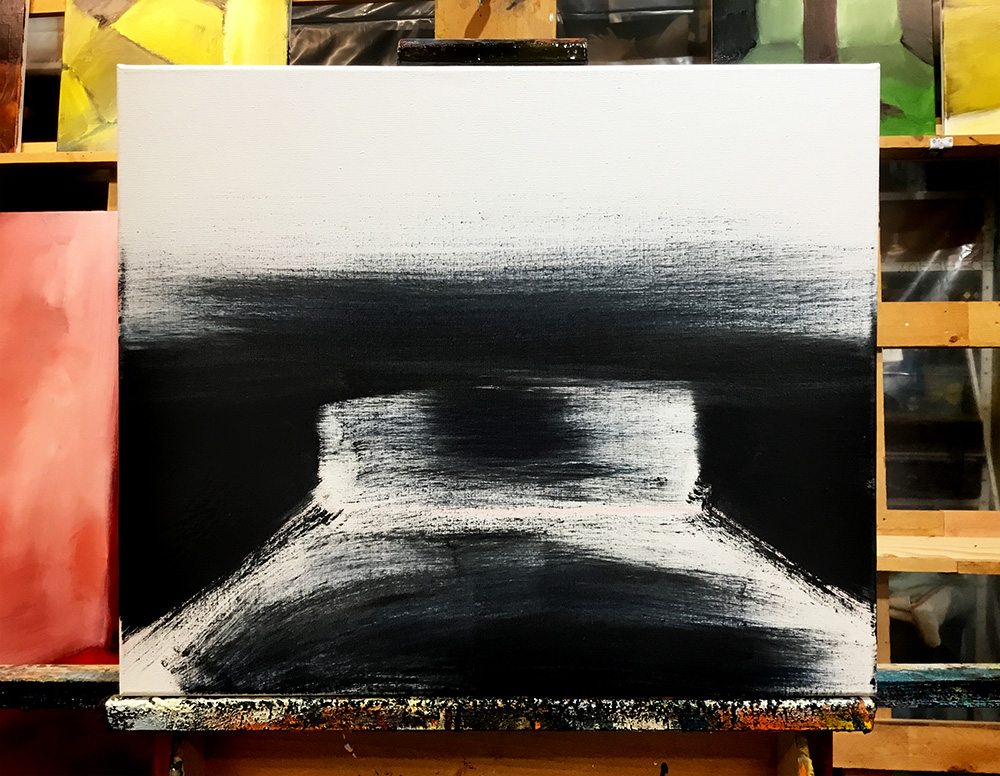
It doesn't matter whether the subject is a room, a landscape, or people: they all start out as shadows.
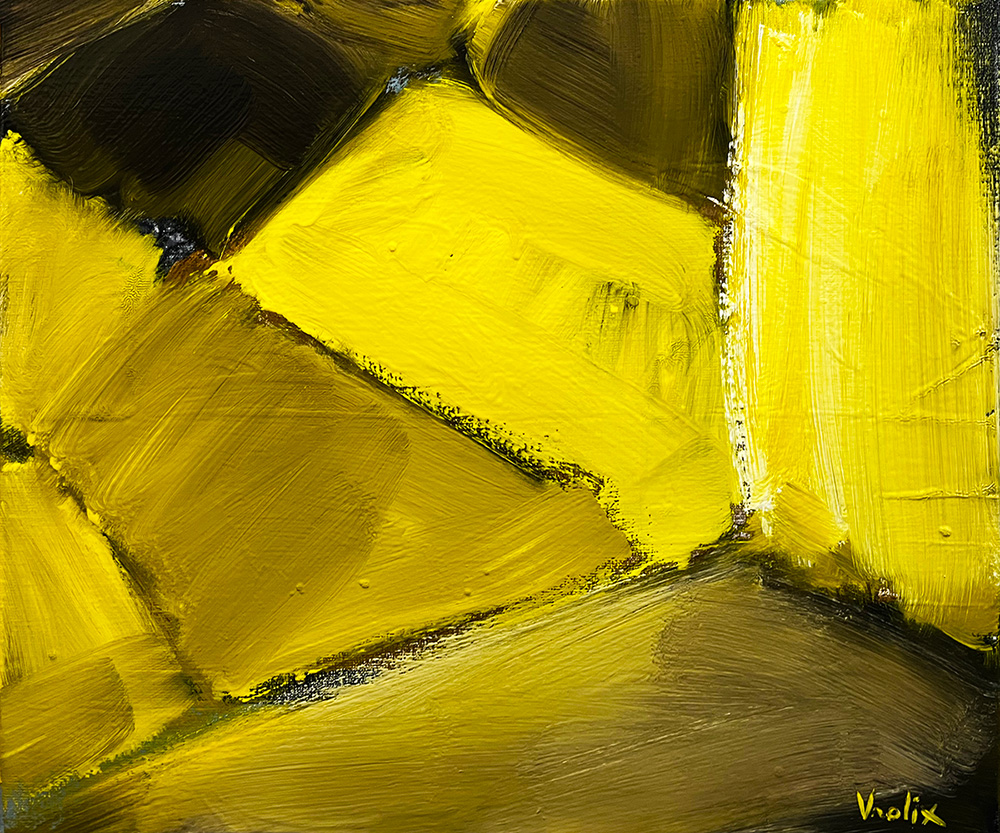
"Retreat" (oil & glaze medium on canvas, 50 x 60 cm).
When I start a painting, I sketch the idea with black paint, as if they were shadows.
Painting (interior) spaces is a lot like painting what's going on in someone's head. They seem empty, but they are full of moments, memories and thoughts.
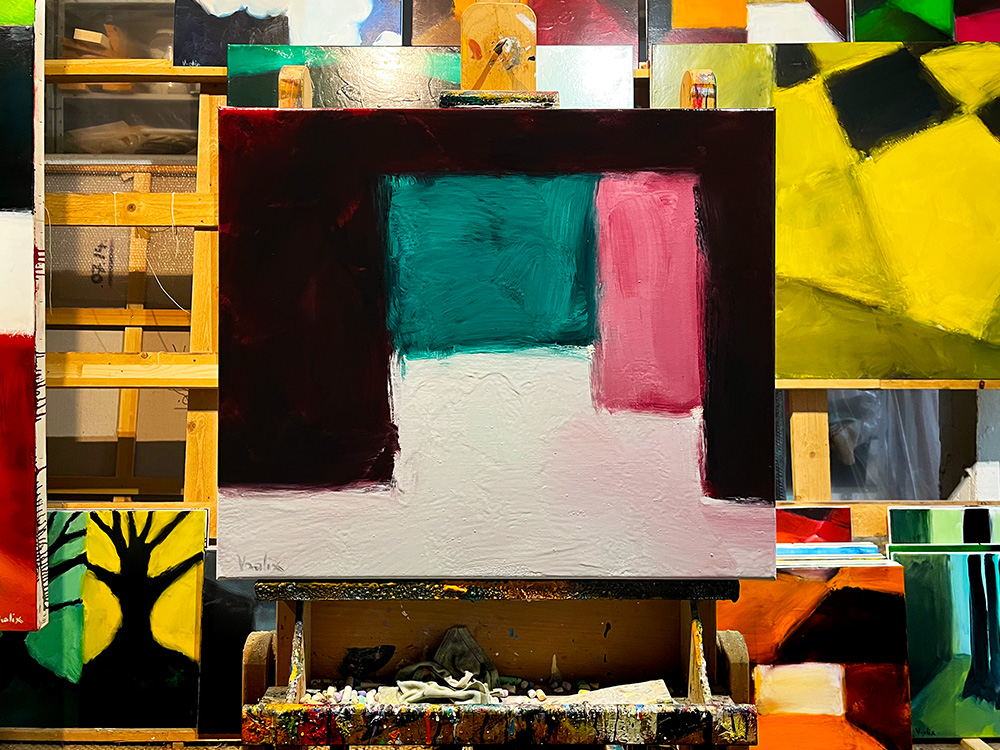
"The Passage of Time" (oil & glaze medium on canvas, 60 x 70 cm).
Emotions don't always have to look like people or portraits, an empty space filled with color can also do the trick.
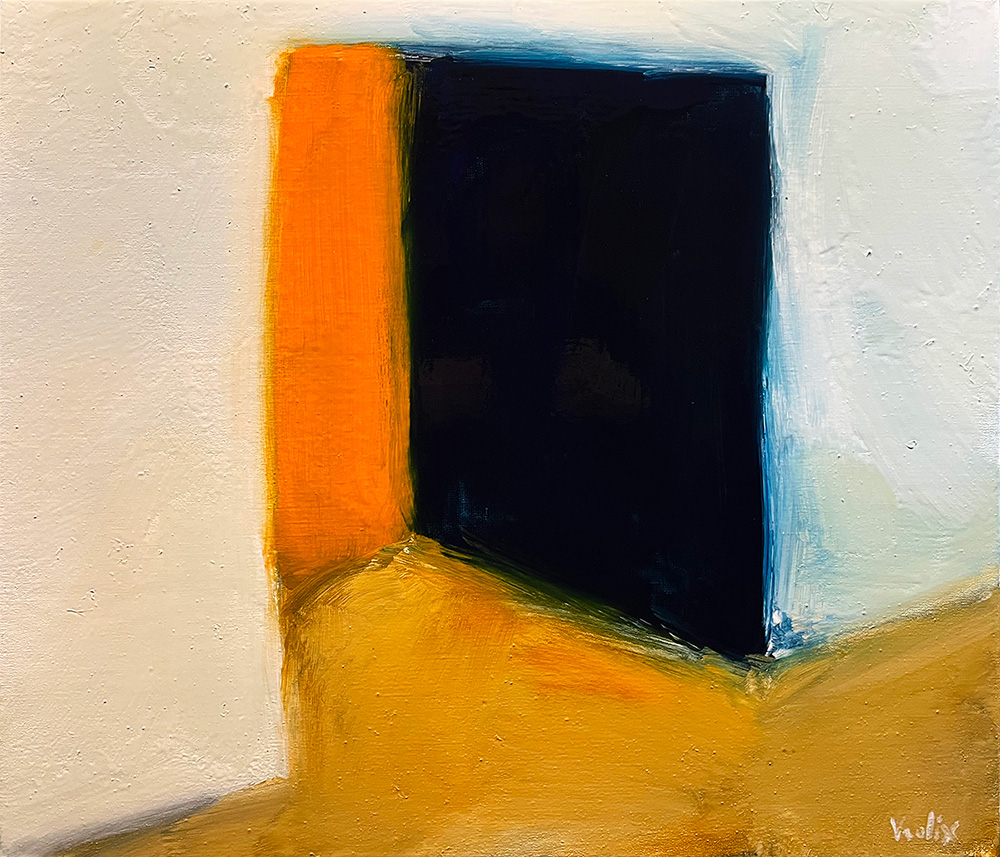
"No Way Out" (oil & glaze medium on canvas, 60 x 70 cm).
Ultimately, the vibration of colors is the real story that unfolds in painting.
COLLIDING WORLDS
One canvas diptychs.
By a diptych on a single canvas, I mean that I combine different perspectives on a single canvas. If I had painted them on two separate canvases, they would never interact.
If you think about it, the possibilities are endless.
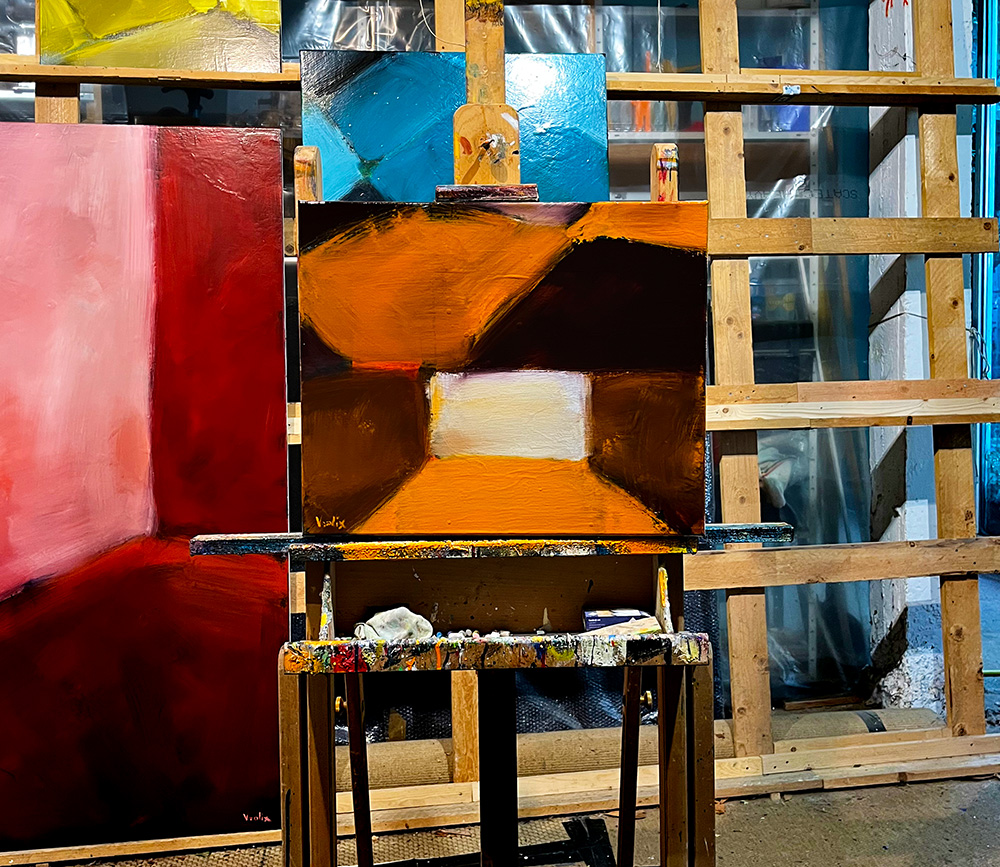
"On the Run" (oil & glaze medium on canvas, 50 x 60 cm).
Everything has a story to tell and this is a good way to do it.
So in a sense, I could call this a series of paintings where stories converge. A place where they meet.
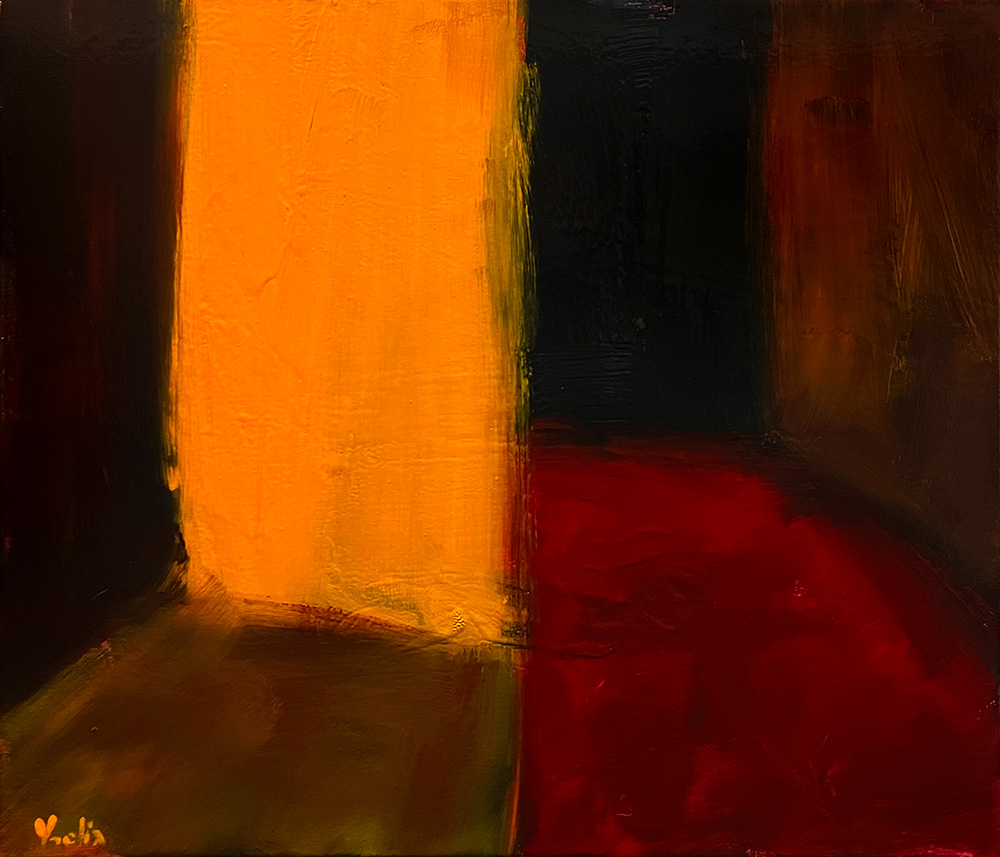
"House of Darkness" (oil & glaze medium on canvas, 60 x 70 cm).
For me as an artist, it feels wonderful to be a kind of mediator between stories. It's certainly exciting.